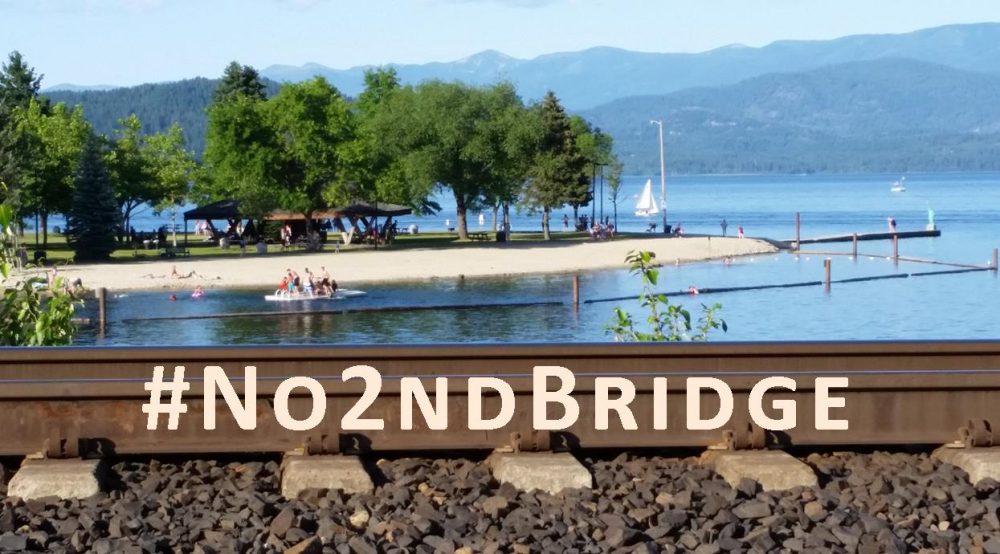
WIRT Comments on Draft Oregon DEQ Permits


June 12, 2013

DEQ: Comment Coal Export

475 NE Bellevue Drive, Suite 110

Bend, Oregon 97701

Oregon Department of Environmental Quality staff:

On behalf of the 1600-plus members of Wild Idaho Rising Tide (WIRT), we respectfully submit and request inclusion in the public record of these comments on three draft permits recently issued by the Oregon Department of Environmental Quality (DEQ) for Ambre Energy’s controversial Morrow Pacific Project, to regulate air, water, and storm water quality at the proposed Coyote Island coal export terminal at the Port of Morrow near Boardman.  For the record, we also ask that you integrate with this statement the comments of our allies, Columbia Riverkeeper, Friends of the Columbia Gorge, Sierra Club, Spokane Riverkeeper, and other regional organizations opposing coal export.

WIRT activists are outraged by Ambre Energy’s proposed industrial rampages beyond the geographically limited scope of rushed Oregon hearings and comment periods on these draft air and water pollution permits.  We thus demand that the Oregon DEQ further extend environmental review of this dirty energy scheme.  As DEQ has never before permitted a coal export terminal, it should support and await a more stringent U.S. Army Corps of Engineers mine-to-port programmatic environmental impact statement analysis than the Corps’ current environmental assessment.

Additional 1.5-mile-long, uncovered coal trains, each with 125 cars carrying almost nine million metric tons of strip-mined Montana/Wyoming coal per year across lands and along water bodies in Montana, Idaho, and Washington to the port, would spew toxic coal dust, diesel fumes, derailed loads, and incessant noise, disrupt local transportation, businesses, emergency responses, and economies, and degrade public health, quality of life, property values, and regional identity.  The Morrow Pacific Project open coal transfer dock and storage buildings, covered coal barges through the critical, high quality Columbia River habitat of endangered salmonid species, and exposed Port Westward docks for ocean‐going coal ships – all constructed and/or utilized to transport coal to Asian markets for combustion – would increase river traffic, compromise air and water quality, jeopardize aquatic ecosystems, fisheries, wildlife, and recreation, and significantly exacerbate global climate change.  Substantial taxpayer investments across four states would support the required infrastructure and mitigate the predictable damages of this corporate onslaught.

But the Oregon DEQ draft permits do not adequately address or circumscribe these numerous impacts of the Northwest’s first coal export terminal, sought by an inexperienced, untrustworthy, financially unstable Australian company that has never operated such facilities with unproven technologies [1].  Is DEQ aware that Ambre officials have misled Washington state and Cowlitz County personnel about the size of the proposed Millennium Bulk Logistics coal port near Longview, Washington, while obtaining permits for a much smaller export terminal than its plans for moving 60 million tons of coal per year out of the region?  How will DEQ protect the air, water, lands, wildlife, and communities of four Northwestern states from this disreputable corporation, if Oregon administrators insist on fast-tracking draft state permits before federal decisions on this project, while ignoring its full impacts and waiving their authority over them?  DEQ and the State of Oregon should consider the following contingencies and revisions, prudently require a full, rigorous analysis of coal port impacts (like the Oregon Department of State Lands did), and coordinate their presently piecemeal coal facility permits, before issuing any permits to Ambre Energy. Continue reading

Gas Exploration Benefits Southwest Idaho Farmers


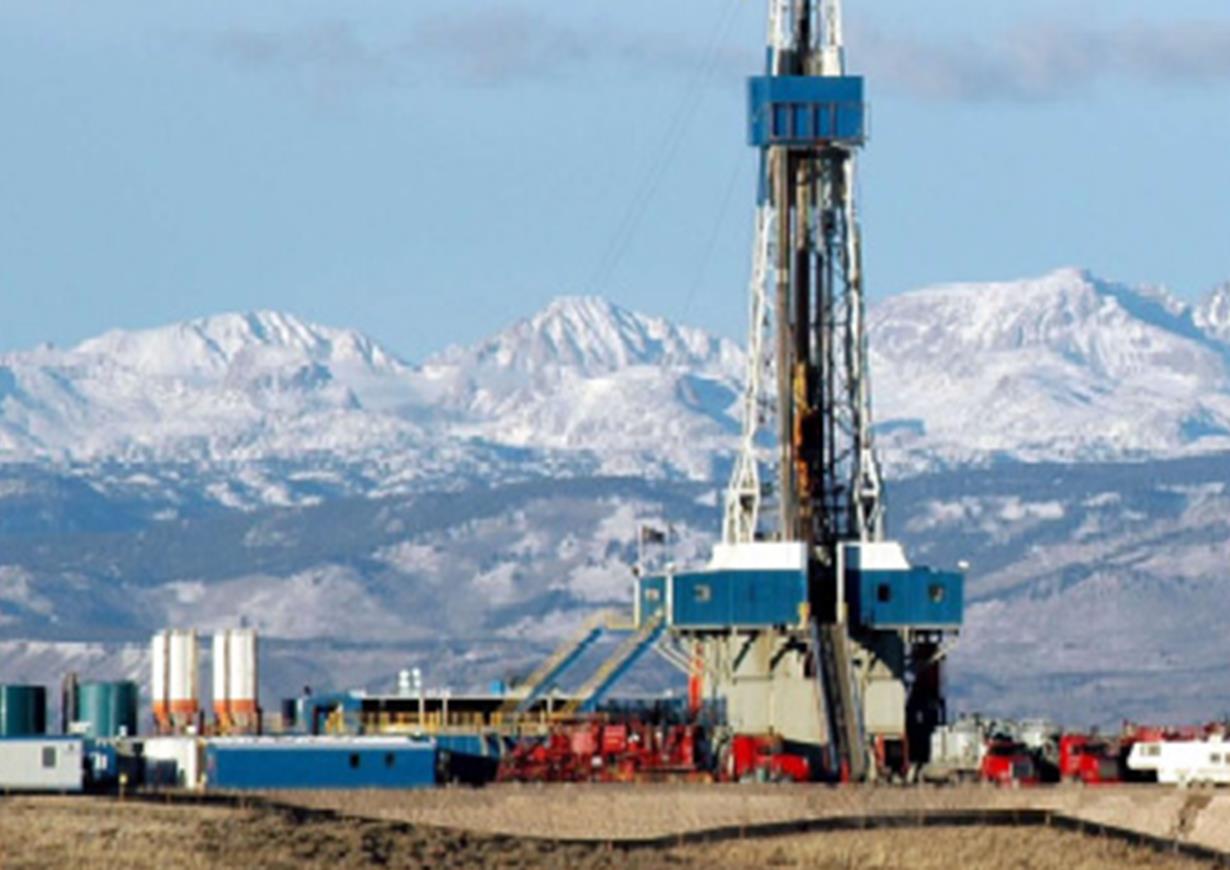
Snake River Oil and Gas officials explain details of gas exploration in southwest Idaho last fall, during a legislative tour.  Many farmers and ranchers stand to benefit from the drilling and exploration taking place in the region (Capital Press/industry photo).

Snake River Oil and Gas officials explain details of gas exploration in southwest Idaho last fall, during a legislative tour. Many farmers and ranchers stand to benefit from the drilling and exploration taking place in the region (Capital Press/industry photo).

Now that seismic testing has proven what folks in this area have known for decades – there is a substantial amount of natural gas below them – farmers, ranchers, and other landowners in this region are beginning to reap the benefits.

“You talk to any farmer or rancher whose family has been over there for a couple of generations, and everybody has stories of methane in their well water or bubbling up from a creek,” John Foster, a spokesman for the Idaho Petroleum Council, said.

While it’s been clear for many years that there is natural gas in that area of southwest Idaho, the infrastructure never existed to retrieve and transport it to market economically.  But a major seismic exploration project by Snake River Oil and Gas last year is changing that.

The company says there are substantial natural gas deposits in an area known as a “play” that stretches from part of Canyon County through New Plymouth, Fruitland, and Payette in Payette County, and up into Weiser in Washington County.

It’s is beginning to drill wells, and the gas will be transferred via a major, multi-state, gas pipeline that passes near New Plymouth.

Read more: Gas Exploration Benefits Southwest Idaho Farmers

(By Sean Ellis, Capital Press)

Protesters Cited for Railroad Bridge Trespassing during Fearless Summer Rally


In solidarity with grassroots organizations across the country, Rising Tide and allied groups throughout the Northwest organized region-wide direct actions for the Fearless Summer Escalating Week of Action during June 24 to 29 [1].  In Coeur d’Alene, Missoula, Portland, Seattle, and Spokane on June 25, 27, and 28, climate activists protested extreme energy extraction, transportation, and combustion through coordinated demonstrations confronting dirty energy industrial projects including Northwest coal mining, hauling, and burning [2-5].

Like citizens in the Northwest and beyond, activists and allies of Occupy Spokane, Spokane Coalition Builders, and Wild Idaho Rising Tide (WIRT) take issue with a U.S. Army Corps of Engineers (Corps) disclosure at a June 18 U.S. House Energy and Power Subcommittee hearing [6].  The federal agency stated that it will not undertake a programmatic environmental impact statement considering the broader climate change impacts and the effects of rail transport of coal in its review of three proposed Northwest coal export terminals [7-9].  The Corps has also unjustifiably fast-tracked its environmental assessment of Ambre Energy’s Morrow Pacific Project plans for the Coyote Island coal export terminal at the Port of Morrow in Boardman, Oregon [10].

On behalf of the health and environment of eastern Washingtonians, Idahoans, and Montanans dismissed by the Corps, about two dozen people staged two demonstrations called Fearless Summer: Coal Export Sacrifice Zone Uprising in Coeur d’Alene, Idaho, and Spokane, Washington [11-13].  On Thursday, June 27, protesters encountered a deserted Corps regulatory field office in Coeur d’Alene, with a note posted on its door saying that “staff members are working in the field during the afternoon of Thursday, June 27.”  Through photographs, activists nonetheless documented citizen outrage with Corps coal export decisions, before personnel at the private office building expressed their displeasure with their presence.

During evening rush-hour traffic on North Division Street in Spokane on Thursday, June 27, over 20 people gathered for a sign-waving rally denouncing coal export train routes and increased rail traffic through northern Idaho and Spokane.  While most of the participants stood  near the Sprague Avenue and Martin Luther King Jr. Way intersections, two activists walked toward the Burlington Northern Santa Fe (BNSF) railroad bridge over Division Street near Sprague Avenue, to obtain higher traffic visibility for their protest signs juxtaposed to the loaded coal train cars temporarily stopped on the bridge.  BNSF patrols cited Tony Dellwo and “Ziggy” with second degree criminal trespass [14].  Along with supportive fellow coal export opponents, the defendants will appear in Spokane district court for hearings on July 5 and 11. Continue reading

Stop the Frack Attack, Idaho! Weekend


Idaho Gas Drill without Margins

In the wake of the Stop the Frack Attack, Idaho! Week and Month of Actions, Idaho Residents Against Gas Extraction (IRAGE), Wild Idaho Rising Tide (WIRT), and United Vision for Idaho (UVI) are launching the Stop the Frack Attack, Idaho! Weekend to conclude an undeniably successful June full of citizen resistance to oil and gas drilling and impending fracking in Idaho [1, 2, 3].  As mercenary natural gas development companies and the colluded state government accelerate pillage of public resources, Idahoans are increasingly confronting politicians and profiteers through actions to protect shared surface, ground, and irrigation waters, wildlife, agriculture, and recreation, air quality and climate, and the subsequent health of current and future generations.

From Coeur d’Alene to Boise, we started the month with statewide protests at six offices of the Idaho Department of Lands (IDL), the agency charged with permitting oil and gas exploration, extraction, and production in Idaho.  Initially through these WIRT actions and comments, we voiced opposition to IDL leasing of state lands along and under the Payette River for drilling and rallied against an IDL permit sought by Alta Mesa Services (AMS) to drill the Smoke Ranch well in a Payette River island floodplain near a confluence and wildlife refuge, wetlands, prior Native lands, and downstream city water intake.  In response, IDL issued a media counter-release that disclosed that IDL had leased the Payette River Wildlife Management Area for drilling and that it anticipated “small frac jobs” on half of the previously established eleven wells in Payette County.  IDL also inexplicably disregarded and refused to post WIRT’s extensive comments on the AMS permit application, despite their relevance.  Twenty-plus participants in the June 7 protest outside the main IDL office and minerals division during afternoon rush-hour traffic in downtown Boise waved signs and banners, chalked sidewalk notes, and engaged IDL director Tom Schultz in a brief conversation.  Several widely circulated press releases and the WIRT rebuttal to IDL’s counter-release motivated Boise Weekly, Earthworks Earthblog, EcoWatch, and KRFP Radio Free Moscow to cover our extensive demonstrations. Continue reading

Fearless Summer: Coal Export Sacrifice Zone Uprising


Black Thunder Mine, Wright, Wyoming (Associated Press photo)

Since late May, Rising Tide and allied groups across the Northwest have been organizing region-wide direct actions for the Fearless Summer of resistance to extreme energy extraction, transportation, and combustion, starting with the Escalating Week of Action during June 24 to 29.  In Coeur d’Alene/Spokane, Missoula, Portland, and Seattle, climate activists are integrating their messages and images for coordinated demonstrations confronting Northwest coal mining, hauling, and burning on June 25, 27, and 28.  In solidarity with grassroots organizations across the country, regional protests strive to stop some of the worst dirty energy industrial projects in America.

On behalf of the health and environment of Idahoans and Montanans recently dismissed by the U.S. Army Corps of Engineers (Corps) at a U.S. House Energy and Power Subcommittee hearing on Tuesday, June 18, Wild Idaho Rising Tide (WIRT) activists and allies will stage a demonstration at the Coeur d’Alene Corps office (2065 West Riverstone Drive) at 3 pm on Thursday, June 27.  Jennifer Moyer of the Corps stated at the hearing that the federal agency will not undertake a programmatic environmental impact statement considering the broader climate change impacts and the effects of rail transport of coal in its review of three proposed Northwest coal export terminals.  WIRT takes issue with Ms. Moyer’s announcement and the Corps’ fast-tracked Morrow Pacific environmental assessment of Ambre Energy’s Boardman, Oregon, port plans.  (See the following links to pertinent videos, articles, and a protest location map.)

Activists in Montana, Idaho, and eastern Washington encounter difficulty targeting corporate offices and industrial polluters, because thankfully not many sully the inland Northwest’s more breathable environs.  Nonetheless, like comrades in other Northwest cities and beyond, members of Occupy Spokane, Spokane Coalition Builders, and WIRT will gather in Spokane for a sign-waving rally and biking event denouncing coal export/Bakken shale oil train routes and increased rail traffic through northern Idaho and Spokane.  Participants will meet at 4:30 pm on Thursday, June 27, in the lobby of the Community Building (35 West Main Avenue, Spokane) before standing at the busy, evening rush-hour intersection of North Division Street and East Martin Luther King Jr. Way.  A Spokane bike action may also emerge at 6 pm in High Bridge Park just off West Sunset Boulevard, with people riding trails near train tracks through the west side of Spokane.

Please RSVP to let WIRT know if you can attend any of these events.  Carpools to Coeur d’Alene/Spokane will depart the WIRT Activist House in Moscow, Idaho, at 1 pm on Thursday, June 27, and return by 8 pm that evening.  For further information, email WIRT at wild.idaho.rising.tide@gmail.com or call 208-301-8039.  Before the massive 350.org Summer Heat convergence in Portland on Saturday, July 27, co-sponsored by Portland Rising Tide and expanded by representative contingents from across the region, other Fearless Summer actions this week in the Northwest include: Continue reading

WIRT Comments on Alta Mesa Services Application to Drill ML Investments Well 2-10


ML Investments 2-10 Well Site

June 21, 2013

Idaho Department of Lands, Boise Staff Office

P.O. Box 83720, Boise, ID 83720-0050

comments@idl.idaho.gov

Director Schultz and IDL staff,

On behalf of over 1500 members of Wild Idaho Rising Tide (WIRT), I offer these comments concerning the application submitted to the Idaho Department of Lands (IDL) by Alta Mesa Services (AMS) requesting permits to drill the ML Investments 2-10 well in Payette County, Idaho.  Unlike my previous comments addressing the Alta Mesa Services application to drill the Smoke Ranch 1-21 well, which IDL inexplicably dismissed despite their relevance to the application in question, I request inclusion of these comments in the public record.

WIRT members oppose permitting, drilling, and potential hydraulic fracturing (“fracking”) of the proposed Alta Mesa Resources ML Investments 2-10 well due to the inadequacy and incompleteness of AMS plans submitted for public review.  Considering that additional documents were added to the Smoke Ranch 1-21 well application after the public comment period and before IDL permitting of said application, we request that, if the currently submitted AMS application to drill the ML Investments 2-10 well is modified or augmented in any way, the Idaho Department of Lands re-open the comment period for this application.  We also ask that IDL re-open the comment period for the Smoke Ranch 1-21 well for the same reasons.  Failure to both post revised applications and re-open public review of them violates section 51 of 20.07.02 Rules Governing Oil and Gas Conservation in the State of Idaho. Continue reading

Gas, Oil Regulation on Agenda


Payette County Commissioners set to decide rules for drilling on Monday

Payette County Commissioners are scheduled to make a decision on Monday on a new ordinance regulating gas and oil drilling in the county.

During a public hearing last week, community members told commissioners that the proposed ordinance needed to be more specific about work times, financial assistance from the state, and training for local fire stations.

Snake River Oil and Gas is purchasing mineral rights in Payette and Washington counties for the purpose of drilling for natural gas.  The company has already begun to drill wells in preparation for commercial use.

Company officials have said that all the wells in Idaho were drilled conventionally, without hydraulic fracturing, or “fracking.”  The wells are similar to a water well, except much deeper and with a lot more cement and steel casing.

The natural gas business has moved into Malheur County, Oregon, as well, with Western Land Services doing seismic testing earlier this year. Continue reading

Attend Payette County Commission Meeting


Alma Hasse, Payette County

The Argus Observer 6/20/13

On Monday, June 24, at 11 am, the Payette County Board of County Commissioners will be making their decision on the draft oil and gas ordinance before them.

Our Planning and Zoning Commission spent six months working on this ordinance.  They held two public hearings and a by-invitation panel discussion that included Michael Lewis, Director of the Idaho U.S. Geological Survey office, Mark Hilty, Nampa land use attorney, and residents from both Payette and Washington counties.

What the Commissioners learned – contrary to what they had been told by industry – was that they could indeed regulate this industry and that, in Mr. Hilty’s legal opinion, they have an OBLIGATION to do so.  Oil and gas drilling is a heavy industrial activity.  Normally, heavy industrial activities are limited to operating inside areas specifically zoned for heavy industrial use.  Our land use decision makers – both the Planning and Zoning Commission and our Commissioners – have the moral responsibility to enact good, protective ordinances that will protect our greatest resource, our drinking water.  They need to ensure that they have taken EVERY precaution to protect our drinking water aquifers AND our surface waters.  The City of Fruitland gets a lot of its drinking water from the Payette River. Continue reading

Educate Yourselves about Oil and Gas


Tina Fisher, New Plymouth

The Argus Observer 6/20/13

Currently, our Payette County Commissioners are considering a draft oil and gas ordinance.  On Monday, June 24, at 11 am, they will be making a decision on this draft ordinance.  Here are some facts that every resident of Payette County should be aware of and that our Commissioners should be taking into consideration as they debate the merits of this ordinance.

Industry’s own documents show that approximately six percent of all new wells leak immediately and that eventually most, if not all of them, will leak!  I choose to live in New Plymouth because of the quality of my drinking water, clean air, and enjoyable rural lifestyle.  Drilling of gas wells carries with it all of the toxins and pollutants required to “frack” or “chemically stimulate” these wells: many, such as benzene, are cancer-causing.  The produced or flowback water is not only toxic but can be radioactive as well!

These poisons can get into our groundwater – yours, too.  They enter the corn and hay that farmers grow and feed to chickens, cows, pigs, etc.  The eggs you cook for breakfast and the burgers you grill for your family can make you sick.  Ask yourself, “What does rich mean to me?”  If it means healthy bodies, abundant wildlife, beautiful vistas, clean, sweet-smelling air and water, then heed my warning and move to protect your riches.  It’s time to wake up.

Priority Should Be to Protect Health


Pattie Young, New Plymouth

The Argus Observer 6/20/13

Following the progression of oil and gas coming into our state, the main focus has been on monetary gains and fear of monetary losses in lawsuits from reasonable limitations for the safety of residents.

The Texas fertilizer accident originated in a location where there was little development or population at the time.  Development moved in afterwards, making vulnerable choices.  Here we have an industry with known accident and contaminant possibilities setting down in the middle of us.

In the hurry for possible business gains, we are allowing an industry with obvious hazardous elements and activities associated with it to move in prior to necessary safeguards and procedures to be planned or in place.  Lifting the previous ban on injection wells without adequate regulations and oversight is also a new risk element. Continue reading