‘Healing Walk’ Looks at Tar Sands


Six people from Moscow spent a weekend this past summer getting an up-close look at the Alberta tar sands, the destination point for the controversial megaloads that have passed through the Northwest, including Moscow.

On Saturday, those people shared their story of that weekend during a presentation in Moscow’s 1912 Center sponsored by several environmental groups, including the Palouse Environmental Sustainability Coalition.

“It is out of sight, out of mind and people have to understand what’s going on up there,” Dan Rathmann said about the tar sands.

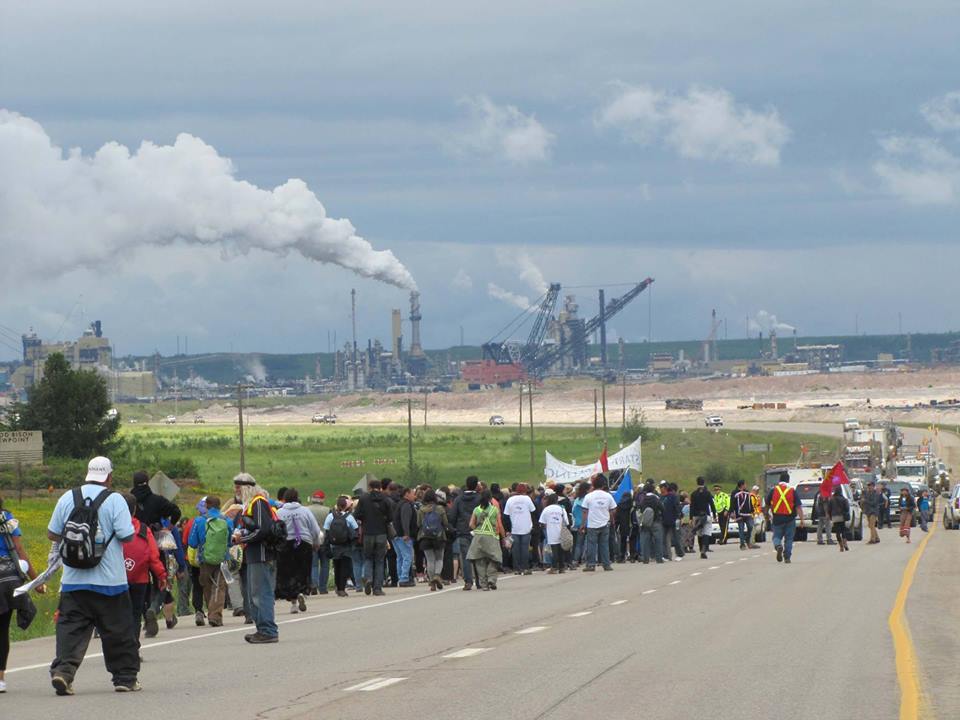
Rathmann and the rest of the group traveled to Canada in July to take part in a “healing walk,” a tour of the tar sands facilities alongside members of local First Nations groups.

The tour spanned about 8 miles near the town of Fort McMurray, where the facilities are located. There they got to see the oil facilities and learn about the extraction and mining of bitumen, the substance that is eventually processed into synthetic crude oil. They also heard from tribe members about how the operations are affecting their livelihood and the environment. Continue reading

Vancouver Crude Oil Terminal Hearing and Comments


Oil Trains

Express your concerns to Washington’s Energy Facility Site Evaluation Council by the December 18 comment deadline.

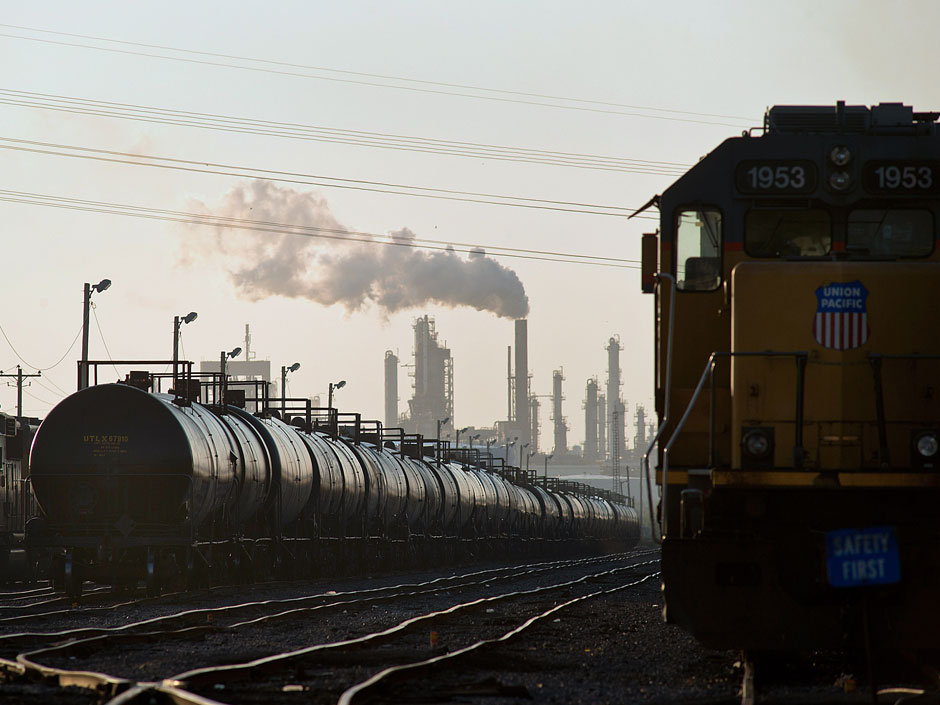
Almost a dozen new crude oil terminal and refinery infrastructure projects currently proposed for the Oregon and Washington coasts could drastically increase the amount of oil trains moving across northern Idaho and Spokane, as these rail shipments escalate across the country [1].  The most advanced in the permitting process, Tesoro Savage plans to construct and operate the largest crude oil storage and transfer facility of all, at the Port of Vancouver, Washington, to transport nearly half the capacity of the Keystone XL pipeline: 380,000 barrels of oil per day [2].

The fracked Bakken shale oil fields in North Dakota and surface and the in-situ and surface tar sands mines in Alberta supply this volatile crude “pipeline on rails.”  Continent-wide, over 30 accidents on such conduits have occurred during the last year.  A Bakken oil train derailed, exploded, and killed 47 people in Lac-Megantic, Quebec, this summer, and an Alabama wreck burned for days and ruined wetlands in November [3].  The British Petroleum oil drilling rig blowout in the Gulf of Mexico and the Enbridge tar sands pipeline breach along the Kalamazoo River in 2010, and the Exxon Valdez oil tanker grounding and spill into Prince William Sound in 1989 all serve as reminders that transporting oil guarantees accidents with devastating consequences.  Although state, county, and city agencies do not currently have emergency response plans for oil train accidents in place, it is not a matter of if, but when, similar disasters could happen in the interior Northwest.

Additional rail traffic carrying dangerous crude oil through the region raises numerous community concerns about conditions similar to coal train passage, such as the impacts of diesel exhaust and coal dust on human and environmental health, of vehicle congestion and strained rail line capacity on regional commerce, and of infrastructure upgrades on public funds.  More coal trains and coal dust on the same tracks could compromise their integrity and stability and cumulatively increase the probability of hazardous rail scenarios. Continue reading

A Healing Walk through the Alberta Tar Sands


A Healing Walk through the Alberta Tar Sands 1

Tar Sands, Megaloads, Pipelines, Climate Change: What’s the Connection?

Tar sands, megaloads, pipelines, climate change: What’s the connection?  Explore these issues with six concerned local citizens from Idaho, who journeyed in 2012 and 2013 to the tar sands region of northern Alberta, to gather with First Nations and non-tribal activists and journalists from across the continent, for the annual Tar Sands Healing Walk.  Led and inspired by indigenous elders and leaders, participants experienced first-hand the scale of environmental devastation caused by tar sands mining and resulting crude oil production.

Through a slide show presentation and discussion, six local healing walkers – James Blakely, Pat Fuerst, Pat and Dan Rathmann, Anne Remaley, and Helen Yost – will share what they learned on their solidarity journey, connecting tar sands exploitation with regional megaload transports, huge pipeline projects, impacts on people and places, and overarching climate change and moral issues.  Join co-sponsors 350 Idaho, the Idaho Sierra Club, Palouse Environmental Sustainability Coalition (PESC), and Wild Idaho Rising Tide for this insightful talk from 3 to 5 pm on Saturday, December 7, in the 1912 Center Arts Workshop Room, 412 East Third Street in Moscow, Idaho.  For further information, contact Pat Fuerst of PESC at epfuerst@frontier.com.

Payette County P&Z Approves Conditional Use Permits for Alta Mesa


Facilities would allow company to collect and treat natural gas.

Payette County Planning and Zoning Commission (P&Z) members have approved two conditional use permits for two facilities that would allow a natural gas company to collect and treat natural gas.

So far this year, two wells have been drilled in Payette County, and the state has approved a third.  With the approval of these two conditional use permits, the company, Alta Mesa, will be able to sell the natural gas commercially, and Idaho would officially become a gas-producing state.

One of the permits approved by commission members on Thursday was for a hydrocarbon liquid treatment facility near 4303 Highway 30 South in New Plymouth.  This facility would take up nearly six acres of land outside New Plymouth.

The facility would have no liquids open to the atmosphere but held in a sealed, closed container, according to John Peiserich, representing Alta Mesa.

The facility would require a turnaround for 18-wheelers to come through, though Peiserich said the number of trucks would be in the single digits in a week’s time.  A small truck would service the area, and an employee would be present every day, with additional remote monitoring by a computer checking for any fluctuations in the liquids.

A dehydrator would be on the location to extract water vapor from the natural gas.  This dehydrator, which would be out in the open, would run nearly 24 hours per day, seven days per week, Peiserich said.

The size of the dehydrator that would go on the property is built for 40 wells serviced at constant capacity, or approximately 20 million cubic feet of gas per day, Peiserich said. Continue reading

Idaho Global Frackdown 2


FWW Horizontal Global Frackdown 2013 Logo

During the last two Idaho legislative sessions, a majority of our state senators and representatives succumbed to the mercenary ambitions of the oil and natural gas industry and the state of Idaho.  They passed state laws, rules, and regulations allowing hydraulic fracturing or “fracking” that pollutes surface and ground water, sanctioning associated waste injection wells that leak or re-use water wells, permitting seismic testing and gas flaring that jeopardize geologic stability and air quality, granting corporate hegemony over local jurisdictions that undermines democratic oversight of oil and gas facilities, and consenting to drilling on state lands and near or under rivers, wetlands, and wildlife refuges that sustain drinking water, agriculture, and native species [1, 2].

Despite ongoing outcry from thousands of citizens and diligent input from scientists, attorneys, elected officials, and conservation organizations, our delegates have negligently accommodated oil and gas exploration, production, and transportation in Idaho, especially where the state owns the subsurface mineral rights, at the likely expense of their constituents’ health, safety, livelihoods, and self-governance.  In the wake of increasingly erratic weather and horrific oil and gas spills in the flooded South Platte River bottomlands of Colorado, honest, hard-working Idahoans dread the impacts of similar probable scenarios on their families and communities, homes and businesses, and resources and recreation in the Payette River floodplains, where drilling resumed this summer, and in the wild, downstream Snake River canyons [3, 4]. Continue reading

Longview Coal Export Protest and Hearing


Tri-Cities Coal Scoping Hearing Meme - Power Past Coal

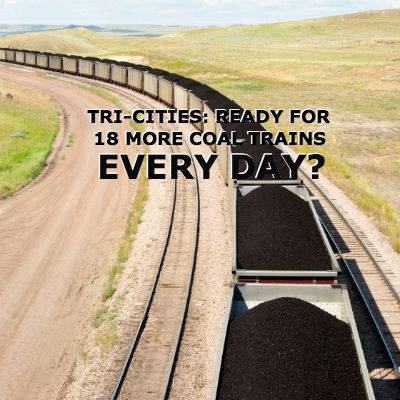
Eastern Washington and northern Idaho activists are gathering in Spokane at noon on Tuesday, October 1, to carpool, coordinate, and participate in a public protest and scoping hearing in Pasco, Washington, about the Millennium Bulk Terminals proposal for coal export facilities in Longview, Washington.  The Tri-Cities area, where a unit train derailed and 31 of its cars spilled six million pounds of coal on July 2, 2012, could experience up to 18 more coal trains rolling through these communities every day.  The Longview coal port and accompanying train traffic would threaten the human, environmental, and climate health as well as the public safety and economic vitality of the region.

Do not miss your only other inland Northwest opportunity, after the September 25 Spokane rally and hearing, to speak out against coal exports from Longview!  Please get an online lottery ticket to testify or share, wear red in opposition to coal, bring your friends, family, and protest signs, and voice your concerns on Tuesday about the broad coal export impacts that county, state, and federal agencies should consider in an upcoming draft environmental impact statement.  The Pasco protest commences at 3 pm outside and before the doors to The Trac Center at 6600 Burden Boulevard open at 4 pm, with proposal information displays available until 8 pm.  Citizens can offer oral comments between 5 and 8 pm either privately or publicly.  Call 509-879-7470 or 208-301-8039 for carpool arrangements with Occupy Spokane, Wild Idaho Rising Tide, and other regional coal export resisters.  For further issue and comment process information, see: Continue reading

ITD to Hold Public Meetings Statewide Starting October 7 on 129,000-Pound Truck Legislation


Public comment is solicited on proposed administrative rules governing 129,000-pound truck routes on the state highway system, the Idaho Transportation Department (ITD) announced.

The rules are necessary to implement three bills from the 2013 Legislature.

The legislation follows a pilot project that began in 1998 and recently ended.  The project allowed trucks and their cargo weighing a total of 129,000 pounds to use 35 test routes in Idaho.

Senate Bill 1064 made the test routes permanent on July 1 this year.

Senate Bill 1117 allows additional routes to be designated by the Idaho Transportation Department and by local highway agencies.  House Bill 322 clarifies the intent of the legislation.

Comment will be taken until Thursday, October 24, at 5 pm on four administrative rules related to 129,000-pound trucks.  Among the rules is Administrative Rule 39.03.22-1302, which implements the provisions of SB1117 and outlines the process for considering additional routes for vehicles weighing up to 129,000 pounds. Continue reading

Cargo Contractors Company Megaload Schematics


As mentioned in the August 27 Lewiston Tribune article, Megaload Ban Could Cost General Electric Millions, the Highway 12 megaload route “continues to attract attention from other shippers.  Leon Franks, of Contractors Cargo Company based at Compton, California, said his company wants to ship three massive refinery vessels from the Port of Lewiston to Great Falls, Montana, by November.  He said the route is vital for the movement of large equipment like refinery vessels, wind turbines, and power plant generators that provide electricity and fuel for a growing population.”

Thanks to the public records requests of our allies, here are the schematics of the three Contractors Cargo Company megaloads, weighing over 1,100,000 pounds, measuring up to 324 feet long, and requiring two push trucks:

43 Hydrotreater Great Falls Montana REV1 CA

43 Hydrtreater Great Falls Montana REV2 Idaho

51 Hydrotreater Great Falls Montana REV3

One Gas Well Drilled in Payette County


One natural gas well has been drilled and a second is nearly done in Payette County, as the natural gas industry settles into the local area.

A total of three permits have been submitted to drill wells in the county, with one permit awaiting approval for the third well location.

“It’s going well,” said John Foster, spokesman for Snake River Oil and Gas.  “We’ve been very fortunate to be able to utilize a lot of Idaho businesses and residents in moving forward in drilling.”

The first well, which is located outside of New Plymouth, is completed, Foster said.  You wouldn’t know it is even there, he said.

But one local resident, Alma Hasse, filed a public records request to the Idaho Department of Lands for an oil spill report. Continue reading

Put Residents Above Oil Companies


Linda Widner, Weiser

The Argus Observer 8/29/13

(Washington County) Commissioner Anderson and Commissioner Chandler, I’m writing this letter to ask you why you feel following reasonable ordinances is too much for oil companies?  Are they not a multibillion-dollar industry?

Yes, I agree we need more job opportunities in Washington County.  However, I also believe if the oil company causes damage to land, water, animals, and people, it needs to be responsible to take care of whatever damages it causes.  If it decides to drill on your property and it stirs up methane gas, are you going to pay to fix that problem?  Do you think your insurance company will gladly pay?  I don’t think so.

I recently read an MSN article regarding fracking and how banks and lending agencies are revisiting their lending policies to account for potential impacts of drilling.  Also, home insurance policies do not cover residential properties with gas leases or gas wells.

You, like other politicians, were elected by voters to watch out for our best interests.  Instead, it seems politicians only want the job for their own personal agendas.  Please work for our community.