Port of Lewiston Wants Megaloads Back


Megaloads are still on the table, as the Port of Lewiston crafts its budget for the coming fiscal year.

The port is seeking to increase the amount it sets aside for legal expenses, from $9,000 this year to $33,000 next year, to be prepared for litigation to keep the U.S. Highway 12 corridor open for megaloads.  It has also more than doubled the money available for administration travel to $21,500.

Those two items are part of a draft budget for the fiscal year that begins July 1, which Lewiston port commissioners reviewed on Wednesday.

No megaload taking up two lanes of traffic has moved on U.S. Highway 12 since last summer, after a federal judge imposed a preliminary injunction halting the shipments in response to a lawsuit filed against the U.S. Forest Service by the Nez Perce Tribe and Idaho Rivers United.  The two groups are in mediation on the issue.

Even though that matter hasn’t been resolved, port commissioners are giving Port Manager David Doeringsfeld the go-ahead to recruit more megaloads. Continue reading

Goliath Staggered: Highway 12 Megaloads Book Author Visits Moscow


Goliath Staggered Flyer Photo

Idaho author Steve Bunk, who covered resistance to the tar sands “megaloads” on Highway 12 for the Missoula-based online journal New West, has written a book called Goliath Staggered: How the People of Highway 12 Conquered Big Oil (New West Books, 2014).  Throughout April, bookstores in Boise, Clarkston, and Moscow, Idaho, and Missoula, Montana, are launching the book, warmly received by regional conservationists.

Mr. Bunk will visit …and BOOKS, too! in Clarkston on Saturday, April 19, at 4 pm and BookPeople of Moscow on Wednesday, April 23, at 7 pm, for book signings and lively discussions about “Why the Megaloads Resistance Matters.”  Highway 12 outdoor travel company ROW Adventures will co-sponsor the Clarkston event at 918 Sixth Street.  Borg Hendrickson and Linwood Laughy, the central figures in Goliath Staggered and the couple who galvanized the Idaho megaload resistance, will join Steve and answer audience questions.

Friends of the Clearwater (FOC) and Wild Idaho Rising Tide (WIRT) are co-sponsoring the Moscow event happening at BookPeople of Moscow, 521 South Main Street.  Both groups have played key roles in the grassroots opposition to oil company attempts to transform Highway 12’s federally protected Wild and Scenic River corridor into a high-and-wide industrial thoroughfare to Alberta tar sands mines.  Helen Yost of WIRT, who leads a continuing campaign against megaloads traveling through the Northwest, and Brett Haverstick of FOC will also address the audience. Continue reading

Idaho Gas Lease Auction Protest & Petition Report


20140417_092224

Idaho Gas Lease Auction Protest & Petition 4-17-14 (April 17, 2014, Wild Idaho Rising Tide photos)

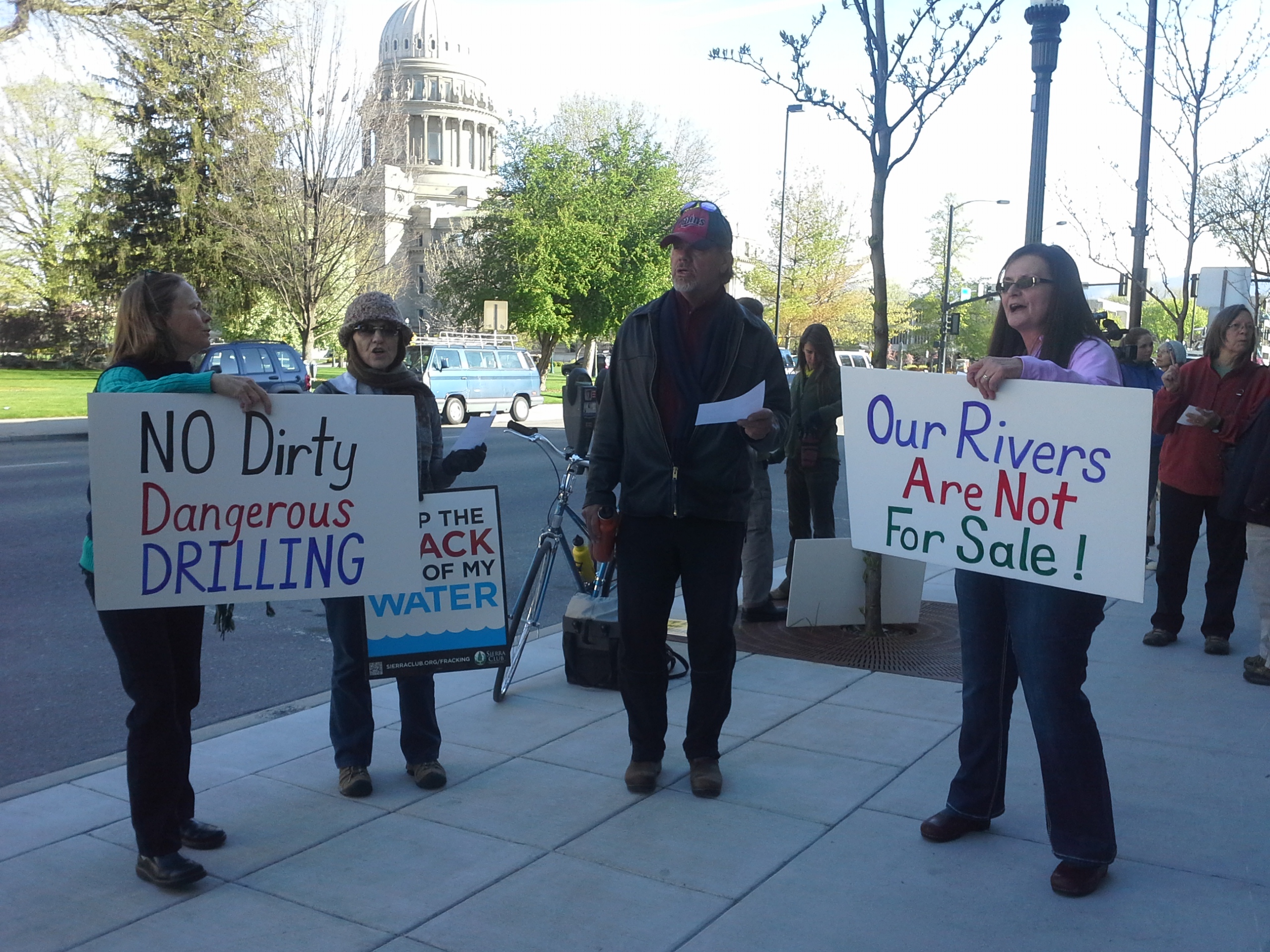
On Thursday, April 17, 2014, twenty members of Idaho Residents Against Gas Extraction (IRAGE), the Muse Project, and Wild Idaho Rising Tide (WIRT) staged a successful protest of the Idaho Department of Lands (IDL) auction of oil and gas leases of state rivers, lands, and mineral rights to the highest bidders among two drilling companies [1-4].  Converging at 8:30 am MDT outside the IDL main office in Boise, Idaho, participants arrived with their protest signs, friends, and family members, including an infant and toddler, and their spirit of solidarity with communities devastated by fossil fuels.  Together they sang multiple rounds of the climate activism song Do It Now near the IDL entrance, as five or more news agencies interviewed and filmed the demonstrators, and as bidders, government officials, and their associates hurried inside.

When protesters filed into the building only minutes before the auction began, the receptionist insisted that they could not bring their posters or voices to the auction.  One organizer asked to see the Idaho code that disallowed this practice, and the crowd soon occupied and packed the back of the conference room.  As bids on 150 public tracts started at $1 per acre and ended as high as $505 per acre, some defaulting to Alta Mesa without competitive bidding, the demonstrators held their protest signs, placed them on tables surrounded by bidders, and scrutinized, videotaped, and photographed the proceedings among irritated oil and gas industry representatives.  Immediately after the auction concluded, two activists asked how the public can comment before state auctions on parcels of their lands and minerals planned for fossil fuel development leases.  To expand Idaho citizens’ right to knowledge of these lands as well as more stringent water protections for leased rivers and increased public engagement in leasing processes, they also requested comprehensive maps of the leased parcels and the auction’s list of tracts, leasees, and bids.

As described in a petition addressed to Idaho Governor Butch Otter and signed by hundreds of Idaho citizens, the auction protesters plan to discuss and democratize these processes with the Idaho Board of Land Commissioners at their next regular meeting on May 22, 2014 [5].  They also request independent baseline testing of all bodies of water near state lands and minerals, prior to their inclusion in future state lease auctions, and the open availability of this water quality data to the public.  Additionally, IRAGE, Muse Project, and WIRT activists assert that: Continue reading

Idaho Gas Lease Auction Protest, Petition, & Preparatio​n


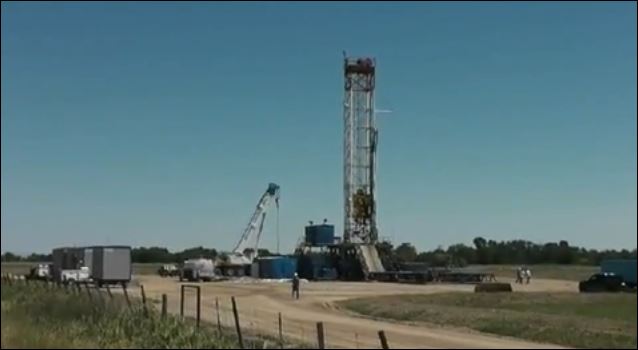
Smoke Ranch Well 7-9-13

Smoke Ranch Well, Payette County, Idaho 7-9-13 (Alma Hasse photo)

On Thursday, April 17, 2014, beginning at 9:30 am MDT, the Idaho Board of Land Commissioners will offer oil and gas leases of state lands and sub-surface mineral rights for sale to the highest bidder, at the director’s office of the Idaho Department of Lands (IDL), 300 North Sixth Street, Suite 103, in Boise, Idaho [1]. IDL periodically conducts these public auctions and administers subsequent leases, with oversight and approval by the Land Board. The 12.5-percent royalty derived from extracted oil and gas raises funds from lands held for the public trust and state wildlife and transportation departments and for specified beneficiary institutions through the state endowment trust. Of the 150 tracts in Ada, Canyon, Gem, Owyhee, Payette, and Washington Counties, 36 parcels are located under or adjacent to the Boise and Snake Rivers and many involve the split estates of private landowners and state mineral holders [2].

Minimum, competitive bids by drilling companies at the oral auction open at only $0.25 per acre for the 17,700-plus acres available for leasing. Successful bidders must pay their bid and the first year’s annual rental of $1.00 per acre for leases lasting up to ten years. If the lease is not drilled or productive, IDL assesses an additional drilling penalty of $1.00 per acre per year starting in the sixth year. The state requires a $1,000 bond for exploration on each lease, which increases to $6,000 prior to drilling, in addition to a drilling permit bond issued by the Idaho Oil and Gas Conservation Commission. Before entry on state lands for seismic exploration, the company must acquire an IDL permit costing $100 per mile across contiguous tracts or a minimum of $100 per section.

The last state lands and minerals auction on January 16, 2014, in Boise, Idaho, generated $694,000 in bids for the state of Idaho [3, 4]. The Idaho Department of Lands leased 8,714 acres for oil and gas drilling – including 4,130 acres in and alongside the Boise, Payette, and Snake river beds – for an average of $80 per acre to the lone bidder, Alta Mesa Idaho. The April 17 auction will double this previously largest amount of Idaho public lands and minerals leased in one period, bringing the total to nearly 98,000 state acres, leased for as low as $2.35 per acre on average, besides the thousands more private acres leased in six southwestern counties [5]. Fourteen drilled but capped wells, awaiting pending pipelines and processing infrastructure, have prefaced the first producing well in Idaho in February 2014, on the Teunissen Dairy near New Plymouth. The Idaho Department of Environmental Quality found toluene from drilling mud in a water well several hundred feet away in fall 2012 [6].

If the people of Idaho own all of these myriad acres of public trust and endowment trust state lands and minerals auctioned for oil and gas exploitation, which respectively “benefit” the general fund and public schools, how can Idahoans influence and determine how our state stewards these shared resources? Allowing the same agency – the Idaho Department of Lands – to both regulate and lease oil and gas development on state holdings seems like a conflict of interest, especially because the Oil and Gas Conservation Commission that oversees industry regulation is politically appointed and receives a 1.5-percent severance tax on oil and gas production for its “responsibility.” At least Idahoans can vote out of office the state’s highest elected officials on the Land Board, for leasing and selling off our precious, impacted lands, resources, and waterways for bargain basement prices.

Because the last five years of frenzied oil and gas rule-making, legislation, drilling, and exploration, centered primarily in Payette County and the Boise halls of government, represent industry’s first forays into Idaho’s still relatively pristine, and thus increasingly valuable, watersheds, the time has now arrived for communities across the state to organize and resist looming drilling, fracking, and acidizing of oil and gas wells. Historic and current fossil fuel development in the state infers that major portions of Idaho are ripe for development and could eventually suffer in the boom-and-bust crosshairs of dirty energy corporations [7]. Please participate in one or hopefully all of these opportunities for citizen protection of our clean air, water, and lands: Continue reading

A Healing Walk through the Alberta Tar Sands


Fourth Healing Walk Group Photo 1 Cropped

What are the connections among climate change, the Alberta tar sands, megaloads, the Keystone XL pipeline, and the health of the planet and all of its inhabitants?

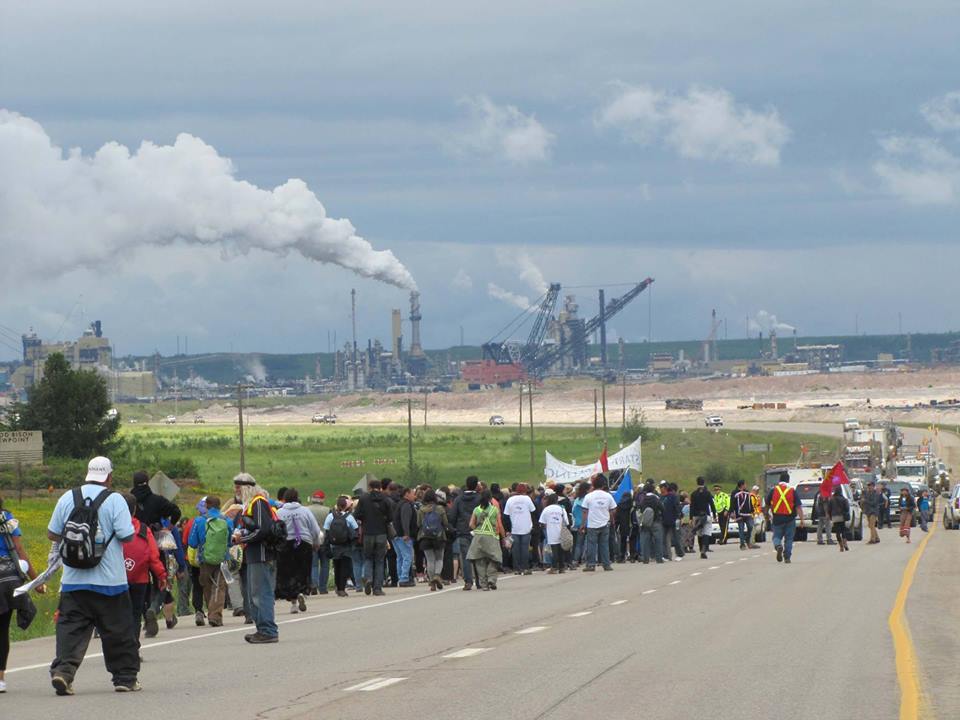
Explore these and related issues with local citizens on Thursday, March 27, at 7 pm in College of Law Room 103 at the University of Idaho in Moscow.  Area activists journeyed to the tar sands region of northern Alberta to join First Nations (Native Americans) and concerned citizens from across the continent for the 2013 Tar Sands Healing Walk.  Led by First Nations elders and leaders, participants witnessed the scale of environmental and social devastation caused by tar sands mining and crude oil processing.

Several local healing walkers, including James Blakely, Pat Fuerst, Dan and Pat Rathmann, Anne Remaley, and Helen Yost, will share what they learned on their solidarity journey, connecting local and regional megaloads, huge pipeline projects, impacts on people and places, and overarching climate change, cultural, and ethical issues.  During a discussion period following their presentation, the speakers welcome all questions, comments, and suggestions of solutions to these national, continental, and worldwide problems.

Continue reading

Comments on the Trendwell West Application to Drill the Smith 1-10 Well


February 12, 2014

Sent via email and attachment

Idaho Department of Lands

Boise Staff Office

P.O. Box 83720

Boise, ID 83720-0050

comments@idl.idaho.gov

Director Schultz and IDL staff,

On behalf of over 2200 members of Wild Idaho Rising Tide (WIRT), I respectfully offer and request inclusion in the public record of these comments concerning the application submitted to the Idaho Department of Lands (IDL) by Trendwell West, Inc. (“Trendwell”) requesting permits to drill the Smith 1-10 well, the first recently proposed oil or natural gas well in Canyon County, Idaho (LU600553 Trendwell West Application for Permit to Drill 2-12-14).

WIRT activists oppose permitting, drilling, and potential hydraulic fracturing (“fracking”) of the proposed Trendwell West Smith 1-10 well, due to the inadequacy and incompleteness of Trendwell’s plans submitted for public review and the potential impacts of the well and its development on human and environmental health and safety.  Considering that corrections to the original, posted application, compelled by Trendwell’s non-compliance with the IDL instructions stated in the application, and additional documents such as the Surface Use Agreement, are currently missing and thus unavailable for public review during the comment period before potential IDL permitting of this application, we request that, if the Trendwell application to drill the Smith 1-10 well is modified or augmented in any way, the Idaho Department of Lands re-open the comment period for this application.  Failure to post this revised application and re-open its public review violates section 51 of IDAPA 20.07.02 Rules Governing Oil and Gas Conservation in the State of Idaho. Continue reading

‘Healing Walk’ Looks at Tar Sands


Six people from Moscow spent a weekend this past summer getting an up-close look at the Alberta tar sands, the destination point for the controversial megaloads that have passed through the Northwest, including Moscow.

On Saturday, those people shared their story of that weekend during a presentation in Moscow’s 1912 Center sponsored by several environmental groups, including the Palouse Environmental Sustainability Coalition.

“It is out of sight, out of mind and people have to understand what’s going on up there,” Dan Rathmann said about the tar sands.

Rathmann and the rest of the group traveled to Canada in July to take part in a “healing walk,” a tour of the tar sands facilities alongside members of local First Nations groups.

The tour spanned about 8 miles near the town of Fort McMurray, where the facilities are located. There they got to see the oil facilities and learn about the extraction and mining of bitumen, the substance that is eventually processed into synthetic crude oil. They also heard from tribe members about how the operations are affecting their livelihood and the environment. Continue reading

Vancouver Crude Oil Terminal Hearing and Comments


Oil Trains

Express your concerns to Washington’s Energy Facility Site Evaluation Council by the December 18 comment deadline.

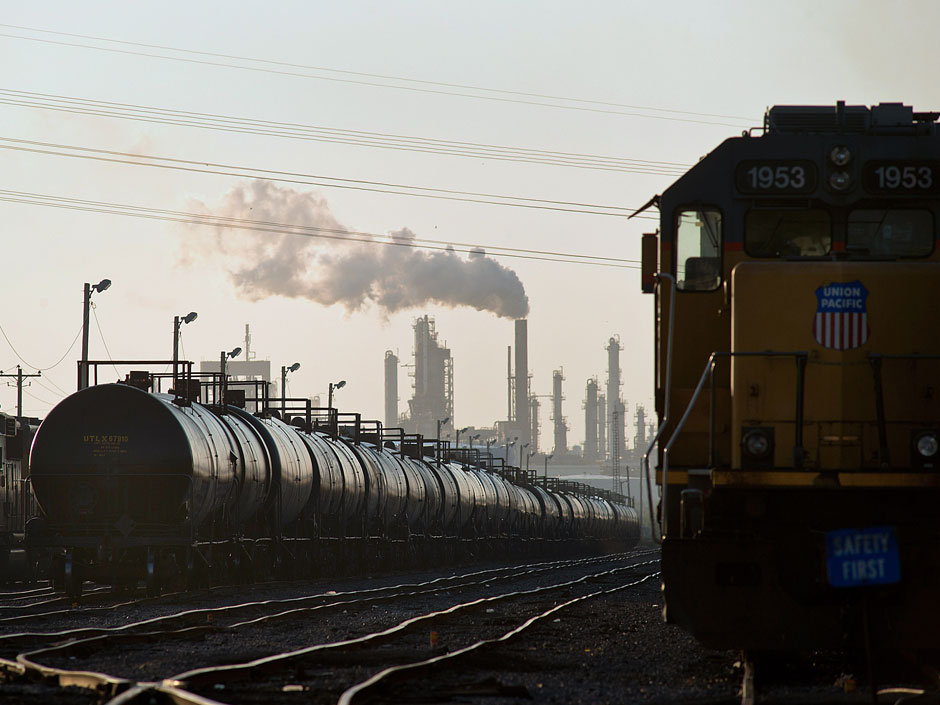
Almost a dozen new crude oil terminal and refinery infrastructure projects currently proposed for the Oregon and Washington coasts could drastically increase the amount of oil trains moving across northern Idaho and Spokane, as these rail shipments escalate across the country [1].  The most advanced in the permitting process, Tesoro Savage plans to construct and operate the largest crude oil storage and transfer facility of all, at the Port of Vancouver, Washington, to transport nearly half the capacity of the Keystone XL pipeline: 380,000 barrels of oil per day [2].

The fracked Bakken shale oil fields in North Dakota and surface and the in-situ and surface tar sands mines in Alberta supply this volatile crude “pipeline on rails.”  Continent-wide, over 30 accidents on such conduits have occurred during the last year.  A Bakken oil train derailed, exploded, and killed 47 people in Lac-Megantic, Quebec, this summer, and an Alabama wreck burned for days and ruined wetlands in November [3].  The British Petroleum oil drilling rig blowout in the Gulf of Mexico and the Enbridge tar sands pipeline breach along the Kalamazoo River in 2010, and the Exxon Valdez oil tanker grounding and spill into Prince William Sound in 1989 all serve as reminders that transporting oil guarantees accidents with devastating consequences.  Although state, county, and city agencies do not currently have emergency response plans for oil train accidents in place, it is not a matter of if, but when, similar disasters could happen in the interior Northwest.

Additional rail traffic carrying dangerous crude oil through the region raises numerous community concerns about conditions similar to coal train passage, such as the impacts of diesel exhaust and coal dust on human and environmental health, of vehicle congestion and strained rail line capacity on regional commerce, and of infrastructure upgrades on public funds.  More coal trains and coal dust on the same tracks could compromise their integrity and stability and cumulatively increase the probability of hazardous rail scenarios. Continue reading

A Healing Walk through the Alberta Tar Sands


A Healing Walk through the Alberta Tar Sands 1

Tar Sands, Megaloads, Pipelines, Climate Change: What’s the Connection?

Tar sands, megaloads, pipelines, climate change: What’s the connection?  Explore these issues with six concerned local citizens from Idaho, who journeyed in 2012 and 2013 to the tar sands region of northern Alberta, to gather with First Nations and non-tribal activists and journalists from across the continent, for the annual Tar Sands Healing Walk.  Led and inspired by indigenous elders and leaders, participants experienced first-hand the scale of environmental devastation caused by tar sands mining and resulting crude oil production.

Through a slide show presentation and discussion, six local healing walkers – James Blakely, Pat Fuerst, Pat and Dan Rathmann, Anne Remaley, and Helen Yost – will share what they learned on their solidarity journey, connecting tar sands exploitation with regional megaload transports, huge pipeline projects, impacts on people and places, and overarching climate change and moral issues.  Join co-sponsors 350 Idaho, the Idaho Sierra Club, Palouse Environmental Sustainability Coalition (PESC), and Wild Idaho Rising Tide for this insightful talk from 3 to 5 pm on Saturday, December 7, in the 1912 Center Arts Workshop Room, 412 East Third Street in Moscow, Idaho.  For further information, contact Pat Fuerst of PESC at epfuerst@frontier.com.

Payette County P&Z Approves Conditional Use Permits for Alta Mesa


Facilities would allow company to collect and treat natural gas.

Payette County Planning and Zoning Commission (P&Z) members have approved two conditional use permits for two facilities that would allow a natural gas company to collect and treat natural gas.

So far this year, two wells have been drilled in Payette County, and the state has approved a third.  With the approval of these two conditional use permits, the company, Alta Mesa, will be able to sell the natural gas commercially, and Idaho would officially become a gas-producing state.

One of the permits approved by commission members on Thursday was for a hydrocarbon liquid treatment facility near 4303 Highway 30 South in New Plymouth.  This facility would take up nearly six acres of land outside New Plymouth.

The facility would have no liquids open to the atmosphere but held in a sealed, closed container, according to John Peiserich, representing Alta Mesa.

The facility would require a turnaround for 18-wheelers to come through, though Peiserich said the number of trucks would be in the single digits in a week’s time.  A small truck would service the area, and an employee would be present every day, with additional remote monitoring by a computer checking for any fluctuations in the liquids.

A dehydrator would be on the location to extract water vapor from the natural gas.  This dehydrator, which would be out in the open, would run nearly 24 hours per day, seven days per week, Peiserich said.

The size of the dehydrator that would go on the property is built for 40 wells serviced at constant capacity, or approximately 20 million cubic feet of gas per day, Peiserich said. Continue reading