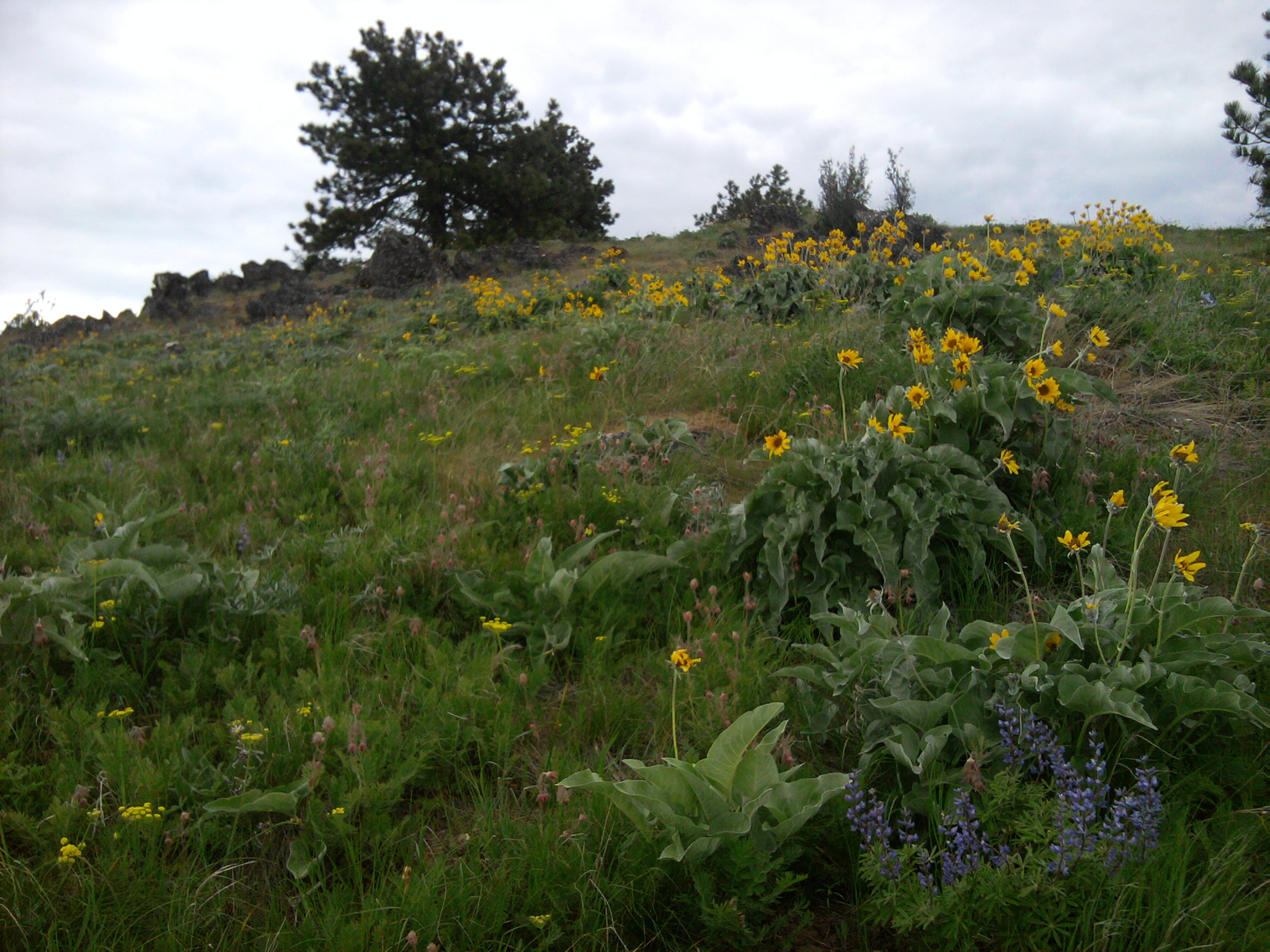

To avert potential damages to fragile, remnant Palouse Prairie during this outing, the Paradise Ridge Defense Coalition (PRDC) is limiting participation in a guided wildflower hike on Paradise Ridge to PRDC members and member organizations (Palouse Audubon Society, Palouse Broadband of the Great Old Broads for Wilderness, Palouse Environmental Sustainability Coalition, Palouse Group of the Sierra Club, and Wild Idaho Rising Tide). Please meet at 1:30 pm on Sunday, May 31, at the University of Idaho Arboretum parking lot off Palouse River Drive, west of Highway 95 in Moscow, Idaho. Attendees will carpool to the starting point for a hike to the top of Paradise Ridge, where we will visit the best sites of the last one percent of original Palouse Prairie. Wear good walking/hiking shoes and bring a water bottle. Event coordinators plan to offer plenty of opportunities for questions during the event lasting 2 1/2 to 3 hours, including travel time. PRDC board members invite you to join as a member and a Sunday hike participant!
Category Archives: Issues
Idaho BLM Oil & Gas Lease Protest
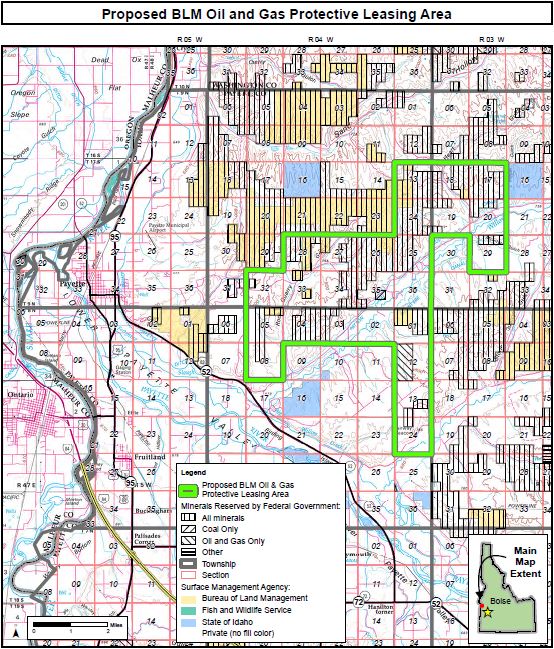
On Thursday, May 28, 2015, Wild Idaho Rising Tide and allied activists plan to protest the Bureau of Land Management (BLM) oral auction and sale of leases of public oil and gas and minerals in the Little Willow Creek watershed six miles east of Payette, Idaho [1]. Managing 700 million acres of sub-surface minerals and more acreage (245 million) than any other federal agency, mostly in the western U.S. and Alaska, the BLM operates under the U.S. Department of the Interior. Its Idaho State Office, at 1387 South Vinnell Way in Boise, will open registration to the public and prospective buyers at 7:45 am on Thursday and will begin the auction at 9 am in the Sagebrush Conference Room, offering five parcels totaling 6,475 acres for minimum lease bids of $2 per acre, following the national standard. According to a map of the BLM proposed Little Willow Creek oil and gas leasing area, only one of the smaller parcels is available for oil and gas development, while the majority of the tracts could provide opportunities for private extraction of all federal minerals present [2].
Although the BLM asserts that this lease sale would “prevent federally owned oil and gas from being drained without compensation to the United States in the form of royalties,” “by law the Bureau of Land Management cannot auction off public lands to the oil and gas industry unless drainage is actually occurring” [2, 3]. For years, the primary architect of recent oil and gas wells, a processing plant expanded before completion, and gathering lines connecting all of this Payette County infrastructure, Alta Mesa Idaho (AMI) has pressured the BLM to open its public resources to its pursuits. AMI’s environmentally, socially, and financially irresponsible onslaught of development has begrudged mandated, protracted, public review of BLM leasing proposals within the context of broader federal regulations, significantly more stringent that state oversight. The Boise-based BLM Four Rivers Field Office confirmed in April 2015 that “no surface occupancy and no subsurface occupancy will be permitted until the Four Rivers Resource Management Plan is completed, which is scheduled for 2016” [1]. Continue reading
Highway 95 Realignment Debate Continues

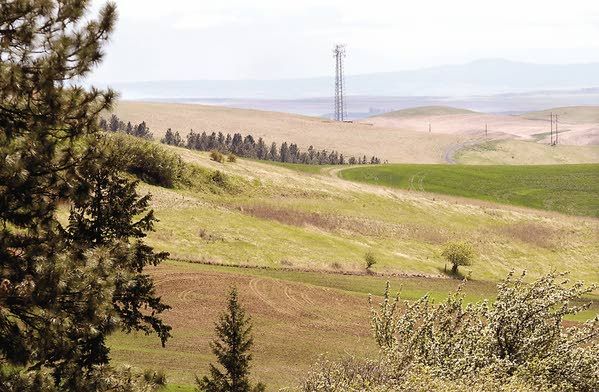
If built on the eastern route referred to as E-2, a new section of U.S. Highway 95 would start near this cell tower, travel north through a grove of trees, and continue across this grassland (Geoff Crimmins /Moscow-Pullman Daily News photo).
The scene to the west of U.S. Highway 95 – and its three proposed realignment route choices – is breathtaking from Paradise Ridge, with rolling green meadows and the occasional picturesque structure in spacious rural settings.
The existing highway is off in the distance and only takes up a small section of the view as cars and trucks appear to be rolling specks. But look down at the knoll underfoot and prairie flowers – iris, camas, lupine, groundsel, lomatium, prairie smoke and arrow leaf balsamroot within other native plants, invasive weeds and planted grass – pop up here and there.
Thin, long deer trails also run through the grass.
Steve and Mary Ullrich, both members of the Paradise Ridge Defense Coalition, live nearby the section of the ridge, where they marked a site with a long line of red balloons stretching about 600 feet. The section is one where plenty of animals roam and some ponds are on the far side of the balloons.
The balloons marked the approximate width and location where the highway realignment preferred by the Idaho Department of Transportation would run. ITD refers to it as E-2. That plan and the other two options, C-3 and W-4, will improve 6 1/2 miles of the highway running south from Moscow to Thorncreek Road.
Group Seeks Different Bend for U.S. 95
Fight against state’s route for wider road south of Moscow reaching critical point
About 50 people attending the annual meeting of the Paradise Ridge Defense Coalition on Thursday night focused on how to stop the Idaho Transportation Department from carrying out its preferred plan to realign and widen U.S. Highway 95 south of Moscow to Thorncreek Road.
The coalition is vehemently opposed to the plan that would use a 6 1/2-mile route referred to as “E-2.”
Several key members of the coalition set up displays in a meeting room of the Unitarian Universalist Church of the Palouse in Moscow, and fielded questions about topics such as recreation, area history, and numerous environmental characteristics of the location.
Coalition member Steve Flint talked about safety issues in areas surrounding E-2 that don’t seem to be adequately addressed: potential for more collisions with big game, weather-related accidents because of heavier snowfall in that area, and continued accidents on the portion of U.S. 95 that would become a county road. Continue reading
Paradise Ridge Defense Coalition Annual Meeting
Residents of the Palouse Prairie and region,
Will the Idaho Transportation Department (ITD) sacrifice the last one percent of original Palouse Prairie? Could ITD choose a safe, environmentally sound re-route of U.S. Highway 95 south of Moscow? ITD and the Federal Highway Administration could issue the final U.S. 95 Thorncreek Road to Moscow Project Environmental Impact Statement, a 30-day review period, and a Record of Decision in summer and fall 2015 [1, 2]. With this final decision and its announcement imminent, you can help make a difference!
As one of five organizational members of the Paradise Ridge Defense Coalition (PRDC), Wild Idaho Rising Tide joins PRDC in inviting you to bring your friends and family and participate in the first PRDC Annual Meeting at 7 pm on Thursday, April 16 [3-5]. Among refreshments and concerned citizens gathered around exhibit tables and assembled for brief talks by PRDC board members, you will receive printed and mapped information and learn the most current updates on three Highway 95 realignments proposed by ITD. Please circulate the attached event flyer, come to the Unitarian Universalist Church of the Palouse lower floor at Second and Van Buren streets (behind the 1912 Center in Moscow), and sign-up as a supporting member of PRDC for as little as $5.
For further event and issue information or if you cannot attend, please respond with your questions, suggestions, and/or intentions to become a PRDC member, by e-mailing PRDC board members Mary Ullrich at marysteve@palouse.net and/or Diana Armstrong at diauladell43@yahoo.com, or by mailing your donation to the enclosed address. Your PRDC membership can greatly assist in supporting an environmentally responsible decision on the Highway 95 realignment south of Moscow. We hope to see you at this important meeting during a crucial time in the long process of determining a reasonable re-routing of U.S. Highway 95.
Thanks! Continue reading
Utah/Alberta Tar Sands Documentary Screens in Moscow
New Documentary Exposes Destructive Tar Sands Mining Plans in Utah
Last Rush for the Wild West Screens in Moscow on February 23
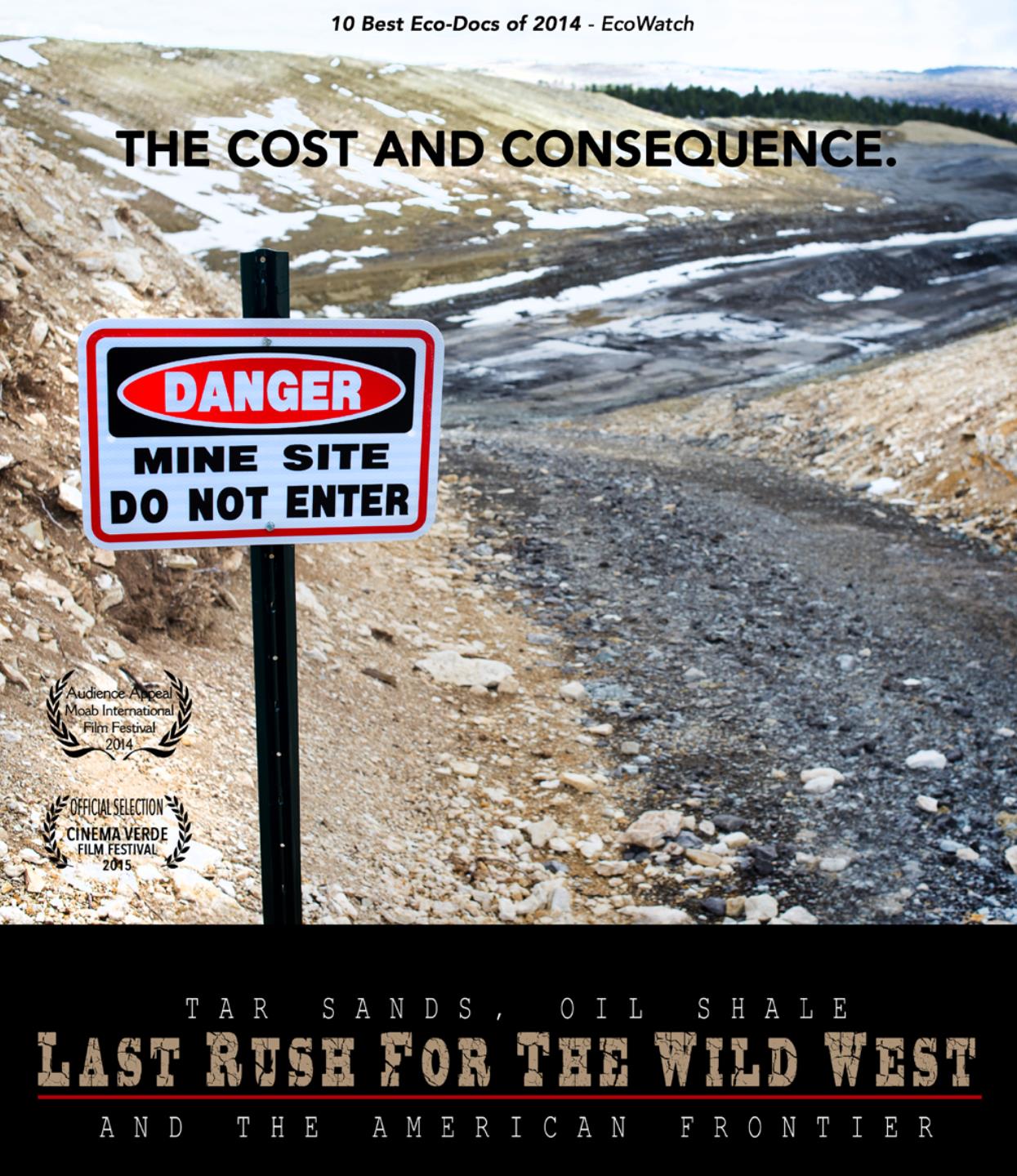
An award-winning, documentary film that exposes plans to strip mine vast landscapes in the upper reaches of the Colorado River watershed in Utah will screen at 7 pm on Monday, February 23, at the Unitarian Universalist Church of the Palouse, 420 East Second Street in Moscow, Idaho. The Palouse Environmental Sustainability Coalition (PESC) and Wild Idaho Rising Tide (WIRT) will provide snacks and beverages and accept donations for this co-hosted event that is free and open to the public.
Last Rush for the Wild West: Tar Sands, Oil Shale, and the American Frontier earned the Audience Appeal Award at the 2014 Moab International Film Festival, and EcoWatch named the movie one of the Ten Best Eco-Docs of 2014. The film highlights industry efforts already underway to strip mine almost one million acres of tar sands and oil shale deposits across eastern Utah and Colorado and Wyoming. Potential strip mines would overuse and pollute the delicate Colorado River watershed, on which 36 million people living in downstream, drought-stricken areas depend for drinking water, agriculture, and recreation.
The film’s director, Jennifer Ekstrom, will attend this Moscow premier to introduce the film and host a post-screening, question-and-answer session. Before turning to filmmaking in 2012, Jennifer was born and raised in eastern Washington and has worked as communications director for the statewide Wild Washington Campaign, which met initial success with the designation of the Wild Sky Wilderness near Index, Washington. Besides assisting several citizen initiative, electoral political, and education campaigns promoting sound environmental and social policies on clean air, smart growth, health care, and the minimum wage, Jennifer recently served as the waterkeeper and executive director for Lake Pend Oreille Waterkeeper in Sandpoint, Idaho. Along with Pat Rathmann of PESC and Helen Yost of WIRT, she was among the first Idahoans to participate in the indigenous-led Tar Sands Healing Walk near Fort McMurray, Alberta, during August 2012. Continue reading
Stop the New Keystone XL: Northwest Tar Sands Trains!
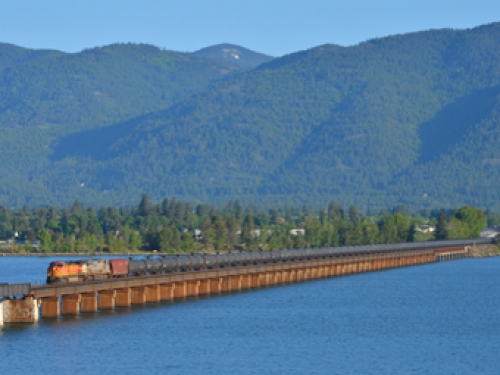
Please help FBI-targeted Wild Idaho Rising Tide activists stage direct action training workshops and actions resisting the new Keystone XL: Alberta tar sands moving by train across the Northwest since late November 2014, from Idaho and Montana rail gateways! Spread the word!
The Northwest tar sands-by-rail story: http://on.fb.me/16NrAaV
FBI contact of Northwest climate activists: http://on.fb.me/1KvJ6ja
Your chance to give: http://bit.ly/1C9KDVR
U.S. 95: Three Alternatives
Steve Flint, Moscow
The Moscow-Pullman Daily News 1/29/15
I’ve heard some people comment they had a difficult time following the different options discussed in Kas Dumroese’s letter (January 14) on the planned U.S. Highway 95 realignment south of Moscow. There are three different routes being considered. All three routes are four lanes, meet current design standards for safety and ease of travel, but differ considerably in other features.
The Idaho Transportation Department, for unknown reasons, has favored E-2, the eastern route that stays high on Paradise Ridge. I think of the “E” actually standing for “extreme weather,” as this route is up in the “snow zone,” just like Steakhouse Hill north of Moscow, where there are frequent winter accidents. (See the Reader Photo of the Day on January 28, for an excellent example of the “snow zone.”)
There is a central route (C-3) that is often close to the existing highway but on a completely new roadbed. It will be the most useful route for local residents. The data from the draft environmental impact statement repeatedly show this as the most logical choice (see the summary in Dumroese’s letter). I suggest we think of the “C” as standing for the “common sense” route.
Then there’s W-4, the poor, orphaned, western route that no one talks much about. It’s a longer route, so has generated less interest. How about “W” being “wayward, way-out-west” route?
Three choices but a straightforward decision – just remember the phrases.
WIRT Report on Sandpoint Oil and Coal Train Traffic Public Forum
Various north Idaho city, county, and state government elected and agency officials and two environmental organization representatives banned the public from several closed meetings during recent months, while they discussed the environmental and public health and safety threats and opportunities for resolution of increased coal and oil train traffic across the Panhandle [1-3]. In the wake of critical news stories denouncing this fiasco from Sandpoint to Boise, Idaho, and from Spokane, Washington, to Washington D.C., excluded, rightfully appalled citizens expressed regrets that participating government entities and environmental groups denied them access to these essential conversations about such crisis topics, even while public awareness has grown in response to fiery oil train derailments across North America during the 18 months since the tragic Lac Megantic disaster that incinerated 47 lives in July 2013.
Perhaps in embarrassment, the City of Sandpoint, Idaho, sponsored and hosted a community forum on north Idaho coal and oil train issues at 5:30 pm on Wednesday, January 14, 2015, in Sandpoint City Council Chambers at Sandpoint City Hall, 1123 Lake Street [4]. Sandpoint Mayor Carrie Logan called for this public meeting in mid-December, to provide an opportunity for citizens to hear current information about expanding coal and oil rail traffic and to discuss the risks, challenges, and possible solutions of community safety and wellbeing currently compromised by air, water, and noise pollution, crossing delays, economic impacts, and potential train derailments.
The city invited the public and local, state, and federal representatives, along with spokespersons of Burlington Northern Santa Fe (BNSF), Montana Rail Link (MRL), and Union Pacific (UP) railroads. Event moderator Chris Bessler, owner and publisher of Sandpoint Magazine, offered an issue overview and introduced the eight citizen, city and county government, and railroad company panelists. In order of appearance, Mayor Carrie Logan, citizen advocate Gary Payton, Jared Yost of the Sandpoint Mapping and GIS Department, Bob Howard of Bonner County Emergency Services, Gus Melonas and Ross Lane of BNSF, and Jim Lewis and Casey Calkin of MRL each gave approximately ten-minute presentations. Anticipating a lively evening with good citizen turnout, the panel accepted written questions, comments, and concerns collected from the audience and asked by the moderator. During the last 15 minutes of the forum, city and county residents approached the panel with their verbal queries and assertions. Continue reading
No Reisenauer Hill Fix
David Hall, Moscow
The Moscow-Pullman Daily News 1/15/15
Oh, a fairy tale from Viola (Letter to the Editor, Van Thompson, December 28): Perhaps we should look at reality here.
Very few Paradise Ridge Defense Coalition members live on Paradise Ridge. (When someone who does live there speaks up on the issue, people cry “NIMBY.” When people who do not live there speak out, they are told to stay out of it and let those who are directly affected talk.)
The [proposed] eastern alignment [of U.S. Highway 95] is perhaps shorter by a few hundred feet. And it is not safer than are other alignments.
Mr. Thompson ignores the fact that the highway, had it been built – illegally – ten years ago, would have left Reisenauer Hill as it is, and accidents would have continued to occur on the hill in that decade. Were the eastern alignment that ITD prefers to be built now, again Reisenauer Hill would be left, dangerous as it is, likely never to be made safer. The “family at the bottom of the hill” will continue to have unwanted vehicles in their front yard.