Paradise Ridge Defense Coalition Annual Meeting


PRDC Annual Meeting 2015 Flyer, final

Residents of the Palouse Prairie and region,

Will the Idaho Transportation Department (ITD) sacrifice the last one percent of original Palouse Prairie?  Could ITD choose a safe, environmentally sound re-route of U.S. Highway 95 south of Moscow?  ITD and the Federal Highway Administration could issue the final U.S. 95 Thorncreek Road to Moscow Project Environmental Impact Statement, a 30-day review period, and a Record of Decision in summer and fall 2015 [1, 2].  With this final decision and its announcement imminent, you can help make a difference!

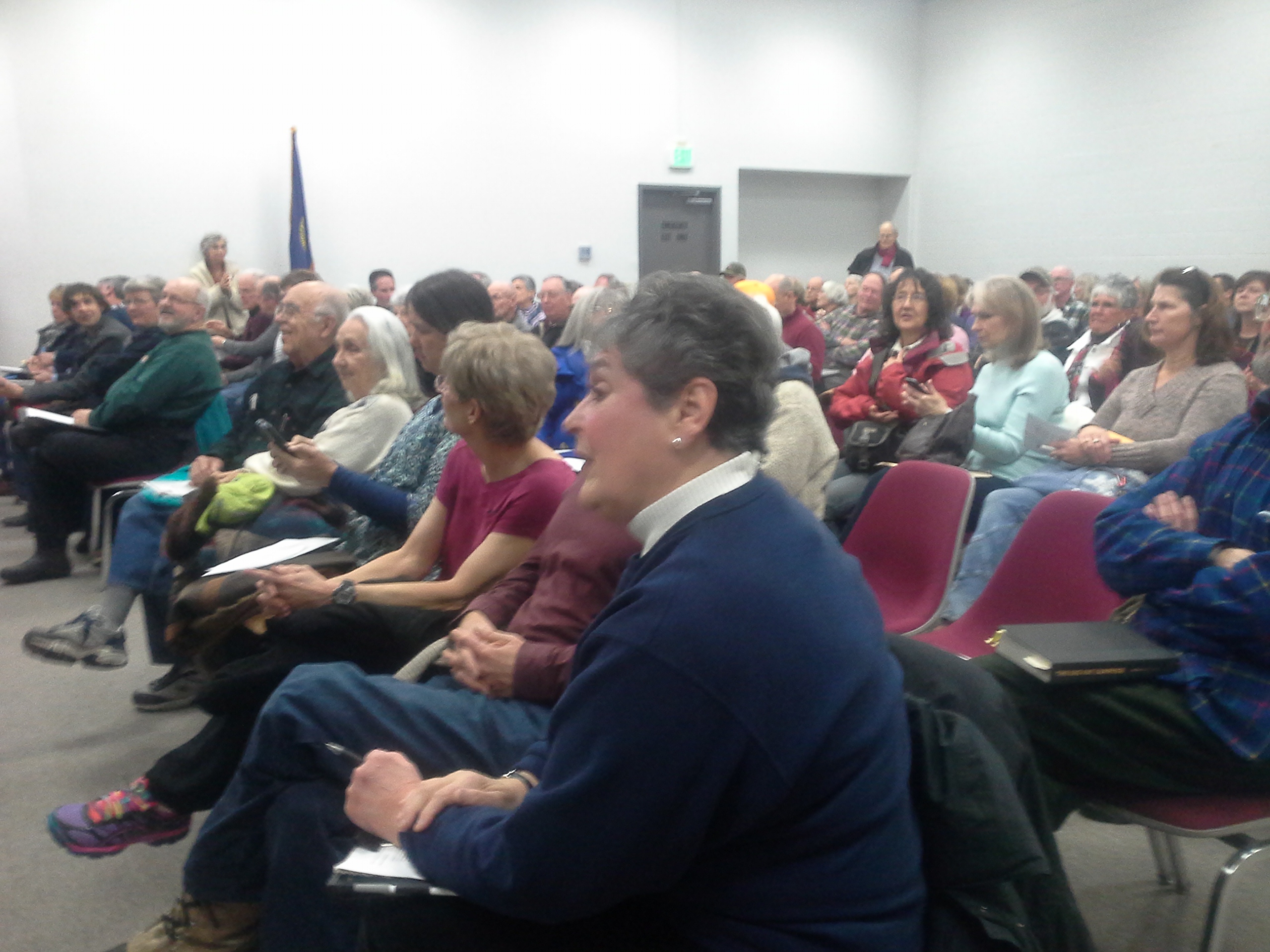
As one of five organizational members of the Paradise Ridge Defense Coalition (PRDC), Wild Idaho Rising Tide joins PRDC in inviting you to bring your friends and family and participate in the first PRDC Annual Meeting at 7 pm on Thursday, April 16 [3-5].  Among refreshments and concerned citizens gathered around exhibit tables and assembled for brief talks by PRDC board members, you will receive printed and mapped information and learn the most current updates on three Highway 95 realignments proposed by ITD.  Please circulate the attached event flyer, come to the Unitarian Universalist Church of the Palouse lower floor at Second and Van Buren streets (behind the 1912 Center in Moscow), and sign-up as a supporting member of PRDC for as little as $5.

For further event and issue information or if you cannot attend, please respond with your questions, suggestions, and/or intentions to become a PRDC member, by e-mailing PRDC board members Mary Ullrich at marysteve@palouse.net and/or Diana Armstrong at diauladell43@yahoo.com, or by mailing your donation to the enclosed address.  Your PRDC membership can greatly assist in supporting an environmentally responsible decision on the Highway 95 realignment south of Moscow.  We hope to see you at this important meeting during a crucial time in the long process of determining a reasonable re-routing of U.S. Highway 95.

Thanks! Continue reading

Utah/Alberta Tar Sands Documentary Screens in Moscow


Last Rush for the Wild West Photo

New Documentary Exposes Destructive Tar Sands Mining Plans in Utah

Last Rush for the Wild West Screens in Moscow on February 23

An award-winning, documentary film that exposes plans to strip mine vast landscapes in the upper reaches of the Colorado River watershed in Utah will screen at 7 pm on Monday, February 23, at the Unitarian Universalist Church of the Palouse, 420 East Second Street in Moscow, Idaho.  The Palouse Environmental Sustainability Coalition (PESC) and Wild Idaho Rising Tide (WIRT) will provide snacks and beverages and accept donations for this co-hosted event that is free and open to the public.

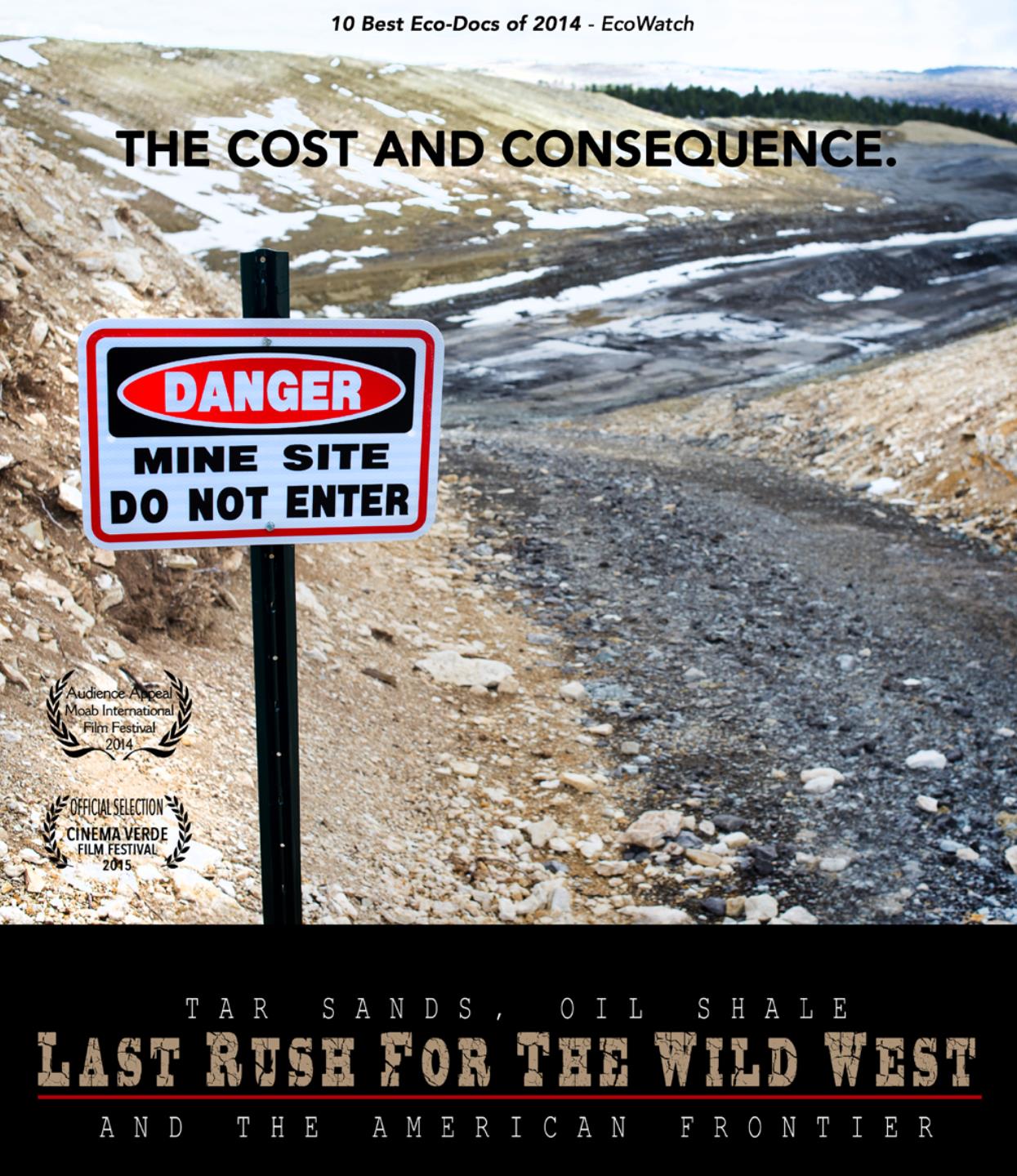
Last Rush for the Wild West: Tar Sands, Oil Shale, and the American Frontier earned the Audience Appeal Award at the 2014 Moab International Film Festival, and EcoWatch named the movie one of the Ten Best Eco-Docs of 2014.  The film highlights industry efforts already underway to strip mine almost one million acres of tar sands and oil shale deposits across eastern Utah and Colorado and Wyoming.  Potential strip mines would overuse and pollute the delicate Colorado River watershed, on which 36 million people living in downstream, drought-stricken areas depend for drinking water, agriculture, and recreation.

The film’s director, Jennifer Ekstrom, will attend this Moscow premier to introduce the film and host a post-screening, question-and-answer session.  Before turning to filmmaking in 2012, Jennifer was born and raised in eastern Washington and has worked as communications director for the statewide Wild Washington Campaign, which met initial success with the designation of the Wild Sky Wilderness near Index, Washington.  Besides assisting several citizen initiative, electoral political, and education campaigns promoting sound environmental and social policies on clean air, smart growth, health care, and the minimum wage, Jennifer recently served as the waterkeeper and executive director for Lake Pend Oreille Waterkeeper in Sandpoint, Idaho.  Along with Pat Rathmann of PESC and Helen Yost of WIRT, she was among the first Idahoans to participate in the indigenous-led Tar Sands Healing Walk near Fort McMurray, Alberta, during August 2012. Continue reading

Stop the New Keystone XL: Northwest Tar Sands Trains!


a7fb8b6bd6b993846ce02bb84a04f7ce_XL

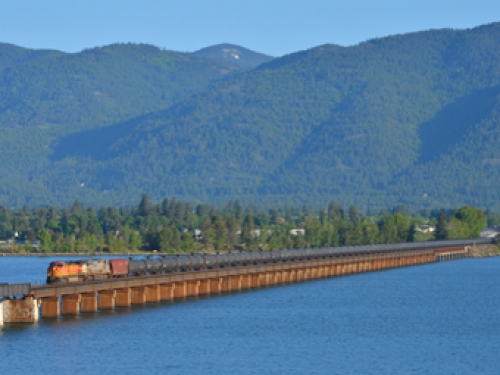
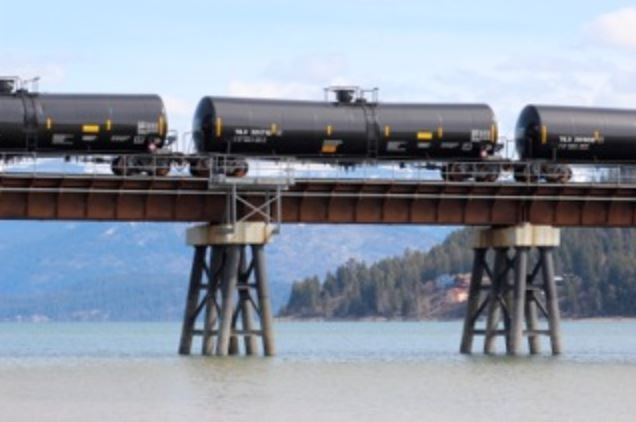
Please help FBI-targeted Wild Idaho Rising Tide activists stage direct action training workshops and actions resisting the new Keystone XL: Alberta tar sands moving by train across the Northwest since late November 2014, from Idaho and Montana rail gateways!  Spread the word!

The Northwest tar sands-by-rail story: http://on.fb.me/16NrAaV

FBI contact of Northwest climate activists: http://on.fb.me/1KvJ6ja

Your chance to give: http://bit.ly/1C9KDVR

U.S. 95: Three Alternatives


Steve Flint, Moscow

The Moscow-Pullman Daily News 1/29/15

I’ve heard some people comment they had a difficult time following the different options discussed in Kas Dumroese’s letter (January 14) on the planned U.S. Highway 95 realignment south of Moscow.  There are three different routes being considered.  All three routes are four lanes, meet current design standards for safety and ease of travel, but differ considerably in other features.

The Idaho Transportation Department, for unknown reasons, has favored E-2, the eastern route that stays high on Paradise Ridge.  I think of the “E” actually standing for “extreme weather,” as this route is up in the “snow zone,” just like Steakhouse Hill north of Moscow, where there are frequent winter accidents.  (See the Reader Photo of the Day on January 28, for an excellent example of the “snow zone.”)

There is a central route (C-3) that is often close to the existing highway but on a completely new roadbed.  It will be the most useful route for local residents.  The data from the draft environmental impact statement repeatedly show this as the most logical choice (see the summary in Dumroese’s letter).  I suggest we think of the “C” as standing for the “common sense” route.

Then there’s W-4, the poor, orphaned, western route that no one talks much about.  It’s a longer route, so has generated less interest.  How about “W” being “wayward, way-out-west” route?

Three choices but a straightforward decision – just remember the phrases.

WIRT Report on Sandpoint Oil and Coal Train Traffic Public Forum


20150114_173042

Various north Idaho city, county, and state government elected and agency officials and two environmental organization representatives banned the public from several closed meetings during recent months, while they discussed the environmental and public health and safety threats and opportunities for resolution of increased coal and oil train traffic across the Panhandle [1-3].  In the wake of critical news stories denouncing this fiasco from Sandpoint to Boise, Idaho, and from Spokane, Washington, to Washington D.C., excluded, rightfully appalled citizens expressed regrets that participating government entities and environmental groups denied them access to these essential conversations about such crisis topics, even while public awareness has grown in response to fiery oil train derailments across North America during the 18 months since the tragic Lac Megantic disaster that incinerated 47 lives in July 2013.

Perhaps in embarrassment, the City of Sandpoint, Idaho, sponsored and hosted a community forum on north Idaho coal and oil train issues at 5:30 pm on Wednesday, January 14, 2015, in Sandpoint City Council Chambers at Sandpoint City Hall, 1123 Lake Street [4].  Sandpoint Mayor Carrie Logan called for this public meeting in mid-December, to provide an opportunity for citizens to hear current information about expanding coal and oil rail traffic and to discuss the risks, challenges, and possible solutions of community safety and wellbeing currently compromised by air, water, and noise pollution, crossing delays, economic impacts, and potential train derailments.

The city invited the public and local, state, and federal representatives, along with spokespersons of Burlington Northern Santa Fe (BNSF), Montana Rail Link (MRL), and Union Pacific (UP) railroads.  Event moderator Chris Bessler, owner and publisher of Sandpoint Magazine, offered an issue overview and introduced the eight citizen, city and county government, and railroad company panelists.  In order of appearance, Mayor Carrie Logan, citizen advocate Gary Payton, Jared Yost of the Sandpoint Mapping and GIS Department, Bob Howard of Bonner County Emergency Services, Gus Melonas and Ross Lane of BNSF, and Jim Lewis and Casey Calkin of MRL each gave approximately ten-minute presentations.  Anticipating a lively evening with good citizen turnout, the panel accepted written questions, comments, and concerns collected from the audience and asked by the moderator.  During the last 15 minutes of the forum, city and county residents approached the panel with their verbal queries and assertions. Continue reading

No Reisenauer Hill Fix


David Hall, Moscow

The Moscow-Pullman Daily News 1/15/15

Oh, a fairy tale from Viola (Letter to the Editor, Van Thompson, December 28): Perhaps we should look at reality here.

Very few Paradise Ridge Defense Coalition members live on Paradise Ridge.  (When someone who does live there speaks up on the issue, people cry “NIMBY.”  When people who do not live there speak out, they are told to stay out of it and let those who are directly affected talk.)

The [proposed] eastern alignment [of U.S. Highway 95] is perhaps shorter by a few hundred feet.  And it is not safer than are other alignments.

Mr. Thompson ignores the fact that the highway, had it been built – illegally – ten years ago, would have left Reisenauer Hill as it is, and accidents would have continued to occur on the hill in that decade.  Were the eastern alignment that ITD prefers to be built now, again Reisenauer Hill would be left, dangerous as it is, likely never to be made safer.  The “family at the bottom of the hill” will continue to have unwanted vehicles in their front yard.

The Numbers on C-3


Kas Dumroese, Moscow

The Moscow-Pullman Daily News 1/14/15

Just because everyone wants an improved U.S. Highway 95 Thorncreek to Moscow doesn’t justify ignoring law, especially by the government.  We still drive on old U.S. 95 because the Idaho Transportation Department (ITD) ignored law concerning selection of E-2, which required an extensive, expensive, and time-consuming Environmental Impact Statement.  Instead, we could be celebrating a decade of driving on an equally well-designed, safe C-3 that uses more of the existing U.S. 95 footprint than E-2 would on the flank of Paradise Ridge.

E-2 is touted by its proponents as having less impact on farming, and is cheaper, shorter, and safer than C-3.  What does ITD’s Draft EIS say?  Compared to C-3, E-2 converts 55 percent more total land, 100 percent more prime farm land, and 36 percent more farmland of state importance (Table 42, pages 147-148).  It also removes 34 percent more land from the Latah County tax base, through new right-of-way acquisitions.  E-2 would cost $4 million more to construct than C-3 (page 11).  For the nearly six miles of new alignment with either alternative, C-3 would be a whopping 475 feet longer than E-2 (Table 52, page 174).  Using ITD’s data (Safety Technical Report Appendix D and page 174) and doing some simple calculations, the chance of safely traversing the “least safe” C-3 route is 99.99951 percent per trip, and it skyrockets to 99.99966 percent if you travel on the “safest” route, E-2.  And your chance of an accident at any access/entry point along E-2 (0.0022 percent) is actually double that for C-3 (0.0011 percent).

If you think those differences in length and safety seem tiny, you might be surprised to hear that ITD agrees with you (page 204): “the travel times and safety between Action Alternatives [C-3 and E-2] do not differ substantially.”

Wednesday Sandpoint Oil/Coal Train Forum & Other Events


Lake Pend Oreille Oil Train

Climate concerned comrades,

This Wild Idaho Rising Tide (WIRT) event alert and upcoming newsletter cover mostly Idaho- and Montana-centric developments in the oil and coal train and terminal issues since late October 2014, in hopes of eventually sharing more news about hundreds-strong turnouts at Spokane and Olympia hearings on the Washington Marine and Rail Oil Transportation Study in October, along with stories about several blockades of train tracks and a state agency by our great Rising Tide and allied comrades in the Pacific Northwest, since WIRT’s mid-July Sandpoint “bomb train” protest and regional actions with Spokane Rising Tide.

Postponed Keystone XL Pledge of Resistance Trainings

After scrutinizing bus schedules, car rentals, and travel logistics over the weekend, WIRT activists have discussed and decided to postpone announcing and staging the Keystone XL Pledge of Resistance training workshops in five regional cities until February 2015.  Thanks for your patience with this situation.  We just do not have the $250 to $300 travel funds or the survival-drained, physical energy to make this rigorous tour happen.  Allowing a week for response, we have not received a reply from the larger, national organizers of the trainings, who garnered almost 100,000 pledges and presumably would supply some of the training materials and share much needed inland Northwest contacts.  While we would appreciate attracting with these workshops some of the middle ground of the climate movement from Big Green bandwagons toward more assertive, local direct actions, we must remain focused on more pressing regional fossil fuels resistance during January, which only a few grassroots groups are supporting.

Although we will miss commemorating the informal fourth anniversary of WIRT (January 17) with a similar Moscow training in our former meeting space, The Attic, we will likely reschedule Sandpoint/Spokane, Boise/Moscow, and Missoula trainings on three successive February weekends, depending on venue availability.  By then, various colleges and universities will have rejoined the academic year, and activists may already be in these areas for protests or hearings, as we together raise the hundreds of dollars required in advance for trainer transportation.  Attendees may especially benefit from the legal expertise of much appreciated attorneys leading “know your rights” portions of these workshops.  Thanks to all of the participants in the Third Annual Stand Up! Fight Back! Against Fossil Fuels in the Northwest! meetings, who have graciously provided input and worked on arrangements for these trainings [1].

Sandpoint Oil/Coal Train Public Forum

The City of Sandpoint, Idaho, is finally sponsoring a community forum on north Idaho coal and oil train issues at 5:30 pm on Wednesday, January 14, 2015, in Sandpoint City Council Chambers at 1123 Lake Street [2].  Sandpoint Mayor Carrie Logan called for this public meeting in mid-December, to provide an opportunity to hear current information about expanding coal and oil rail traffic and to discuss the risks, challenges, and possible solutions of citizen and community safety and wellbeing currently compromised by air, water, and noise pollution, crossing delays, economic impacts, and potential train derailments.  The city has invited the public and local, state, and federal representatives, along with spokespersons of Burlington Northern Santa Fe (BNSF), Montana Rail Link (MRL), and Union Pacific (UP) railroads.  As tentatively scheduled, Chris Bessler, owner and publisher of Sandpoint Magazine, will offer an issue overview and introductions and moderate presentations by Casey Calkin and Jim Lewis of MRL, Bob Howard of Bonner County Emergency Services, Ross Lane and Gus Melonas of BNSF, Mayor Carrie Logan, citizen advocate Gary Payton, and Jared Yost of the Sandpoint Mapping and GIS Department.  Anticipating a lively evening with good citizen turnout, the government/railroad panel will accept written questions, comments, and concerns collected from the audience and asked by the moderator.  Contact the Mayor’s office at 263‐3310 or cityclerk@ci.sandpoint.id.us, for further information about this event. Continue reading

Report on Highway 95 Safety Petition & Demonstration


PRDC Safety Petition

Thanks to everyone who signed, circulated, and wrote compelling comments for the Paradise Ridge Defense Coalition (PRDC) petition advocating safety measures and sensible re-routing for dangerous U.S. Highway 95 south of Moscow, Idaho! [1]  In just three weeks, almost 500 Idaho and American taxpayers contributed their signatures and thoughts to this community effort.  Tim Hatten, a PRDC board member, wrote a much appreciated letter to the editor of the Moscow-Pullman Daily News, inviting petition signatures before the 11 pm Wednesday, December 17 deadline [2].  PRDC organizers and board members Diane Baumgart, Stephan Flint, Joann Muneta, Mary Ullrich, and Helen Yost worked hours of outreach to collectively gather 230 hard-won, hand-written signatures, almost matching the 257 online signatures.  On Thursday, December 18, Diane and Mary sent 487 copies of the paper and online petition signatures via overnight mail to the Idaho Transportation Department (ITD) in Lewiston and to ITD Director Brian Ness and the Federal Highway Administration, both in Boise.  Unfortunately, the half dozen reporters who covered the December 19 PRDC safety demonstration underquoted signature tallies or only mentioned 270 online signatures, as supporters continue to sign the PRDC safety petition.

During the culminating week of this safety campaign, KRFP Radio Free Moscow station manager Leigh Robartes thoroughly covered the background of PRDC’s petition and upcoming Friday demonstration targeting ITD inaction and PRDC proposed resolutions of Highway 95 traffic safety problems [3-5].  The December 16, 17, and 18 KRFP Evening Reports offered excellent, full news stories and an interview with PRDC board member Steve Ullrich, exploring regionally shared concerns about Highway 95 safety and re-routing impacts on native Palouse Prairie remnant habitat and wildlife.

In 2003 and again in 2013, PRDC wrote to ITD, requesting that the state agency implement additional, site-specific, safety measures to mitigate U.S. Highway 95 conditions in the Reisenauer Hill area south of Moscow, Idaho.  PRDC suggested flashing caution signs and enforceable, reduced speed limits to improve safety on the notoriously dangerous stretch of U.S. 95 prone to numerous traffic accidents and fatalities.  Because these previous requests have not produced ITD results, PRDC prepared the current petition urging ITD to immediately take these and other appropriate, interim actions and to consider public safety and highway realignment options that ITD has neglected for decades.  Such efforts could save traveler lives and property, especially during inclement and winter weather, and could preserve the unique, rare, native Palouse Prairie ecosystem that Highway 95 re-routing may soon threaten.

PRDC Safety Demonstration

Regional media and residents and PRDC members made and brought signs and/or gathered on the Highway 95 sidewalk around the Palouse River bridge, south of Palouse River Drive in Moscow, between 1:30 and 4:00 pm on Friday, December 19 [6-8].  The resulting public, roadside demonstration in rotating shifts highlighted shared citizen concerns and supported PRDC-proposed measures to improve public safety on U.S. Highway 95 south of Moscow. Continue reading

Drastic Action Needed


Tom Fellows, Lewiston

The Lewiston Tribune 12/21/14

Recently three individuals, one being Walt Minnick, formed The Partnership for Responsible Growth (see http://www.partnershipforresponsiblegrowth.org).

Its purpose is to lobby Congress to approve a carbon tax on fossil fuels.  After reading the recent Intergovernmental Panel on Climate Change report on climate change titled “Risky Business,” they believed doing nothing could result in an uninhabitable planet.  They wrote: “This is not the legacy any of us wish to bequeath to our children and grandchildren.”

They stated the reports said without acting now the world “may have as little as 15 years” to keep the planet’s temperature at a tolerable level.  They failed to mention that all of the IPCC reports have underestimated the rate at which the climate is changing.  They also believe that “carbon-funded tax-cuts” will solve the problems caused by carbon emissions.

Continue reading