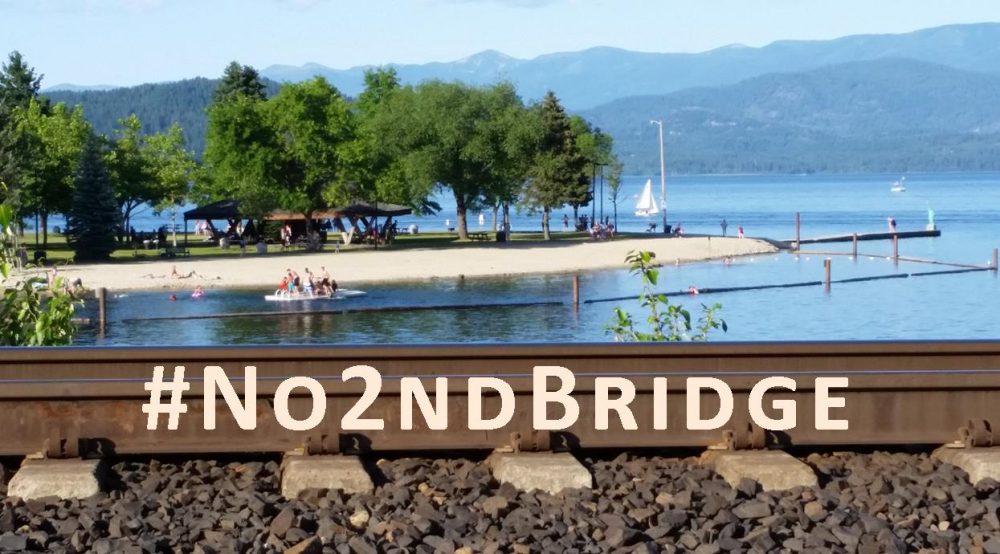
 Wild Idaho Rising Tide (WIRT) and climate activists throughout the West are organizing solidarity protests of oil trains and infrastructure, for a day of action against the Uinta Basin Railway (UBR), supporting campaigns against the Utah oil-by-rail scheme and in north Idaho, denouncing completion of BNSF Railway’s second, almost mile-long, rail bridge across the state’s largest, deepest lake: mountainous Lake Pend Oreille. Utah and Colorado comrades are calling for community-led actions on Saturday, December 10, 2022, to show that concerned citizens object to the devastating UBR project, and to pressure federal lawmakers, state representatives, and local governments to prevent building of the Uinta Basin Railway. They ask everyone to explore the #StopUintaBasinRailway action toolkit with information about the UBR and action coordination, sign a letter to Agriculture Department Secretary Tom Vilsack, demanding that he revoke the U.S. Forest Service permit for the railway, participate in actions happening in a dozen locations, register to join a remote phone bank on Tuesday, December 13, at 10 am Pacific time, and tell UBR opponents that you are interested in assisting this campaign [1-2].
To involve local communities across the United States in advocating against UBR permits and their potential disasters for climate and environmental justice, Colorado groups held a public, online, action training on November 10 [3]. Organizers with years of experience shared ideas about planning effective actions and helped participants learn about the UBR oil trains that would threaten lives and livelihoods along rail routes from Utah to Oklahoma, Texas, and Louisiana, and around the southern Northwest, Union Pacific Railroad (UP) line across southern Idaho and eastern Oregon to western Washington.
Most of WIRT and allied resistance to behemoth oil and coal train shipments has successfully focused on dozens of BNSF Railway fossil fuels pipeline-on-rails routes from the Great Plains to the West Coast. We rarely demonstrate against Union Pacific, except while decrying its few weekly, Northwest, tar sands trains and myriad derailments, including the Mosier, Oregon, oil train spill and fire in June 2016. Based on our experiences of BNSF’s ongoing malfeasance, WIRT encouraged and sent extensive comments on the draft environmental impact statement (EIS) in 2021, opposing the Uinta Basin Railway, and talked about the issue during recent years on our weekly, Climate Justice Forum, radio program [4]. WIRT remains steadfast in our thorough monitoring, reporting, and protesting of daily, BNSF, Bakken crude oil trains across north Idaho, as we gratefully accept dedicated co-workers’ invitations to alert our regional neighbors to the impending dangers and direct action opportunities of Utah oil transport across the Northwest.
Uinta Basin & BNSF Railways Protest
As part of countless demonstrations against the fossil fuel causes of the climate crisis and their insidious pollution, risks, and impacts on north Idaho and Northwest rail line communities, we plan to protest both the proposed Uinta Basin Railway oil trains and tracks and the BNSF Railway expansion of its industrial infrastructure into Lake Pend Oreille and Sandpoint, with three second rail bridges and two miles of doubled main line. Please dress for warmth and dryness, bring your signs and banners, voices and drums, friends and family, and joy and courage, and join WIRT and inland Northwest activists for the Stop Uinta Basin Railway Solidarity Action at 12 noon on Saturday, December 10, at the Serenity Lee trailhead near the East Superior Street and Highway 95 intersection and/or on the public, pedestrian, and bike path to Dog Beach Park in Sandpoint, Idaho. WIRT will provide on-site action advice and chants and pizza for appreciated participants after the gathering. Respond in advance with your questions and suggestions, share this event information and flyer among your associates and contacts, and see previous and upcoming, website- and facebook-posted, WIRT newsletters and alerts, for further updates on these issues.
Uinta Basin Railway Opposition Continue reading
 GTN Xpress & Idaho & Northwest Stakeholders
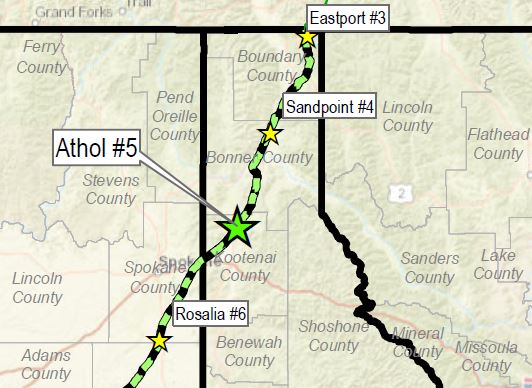
 Regional organizations and grassroots activists of 350 Spokane, Idaho Chapter Sierra Club, Palouse Extinction Rebellion, Rogue Climate, Veterans for Peace Spokane Chapter 35, and Wild Idaho Rising Tide (WIRT) request your participation and support of public protests of three corporations pushing the dangerous Gas Transmission Northwest (GTN) Xpress pipeline expansion project. We are collectively co-hosting these actions in solidarity with sovereign Wet’suwet’en land defenders and water protectors opposing Coastal GasLink pipeline construction through their unceded, indigenous territories in British Columbia, Canada. Allied groups are planning peaceful, safe, and effective citizen pickets on nearby public walkways outside fossil fuel company offices during early November, to attract a broad range of involvement and responses from the public, issue coalition groups, and media. Several partner organizations are graciously offering travel funds and providing Stop GTN Xpress/Coastal GasLink logo designs, T-shirts, signs, banners, and other equipment. Volunteer activists are eager to engage you in resistance to both Northwest gas pipelines owned by TC Energy, notorious for its Keystone XL tar sands pipeline. Please share this event announcement and flyer and other campaign outreach materials via text, social media, email, and website, invite and bring your friends, family, and protest signs, create props and coordinate carpools and various logistics, and join us at one or all of these lively demonstrations!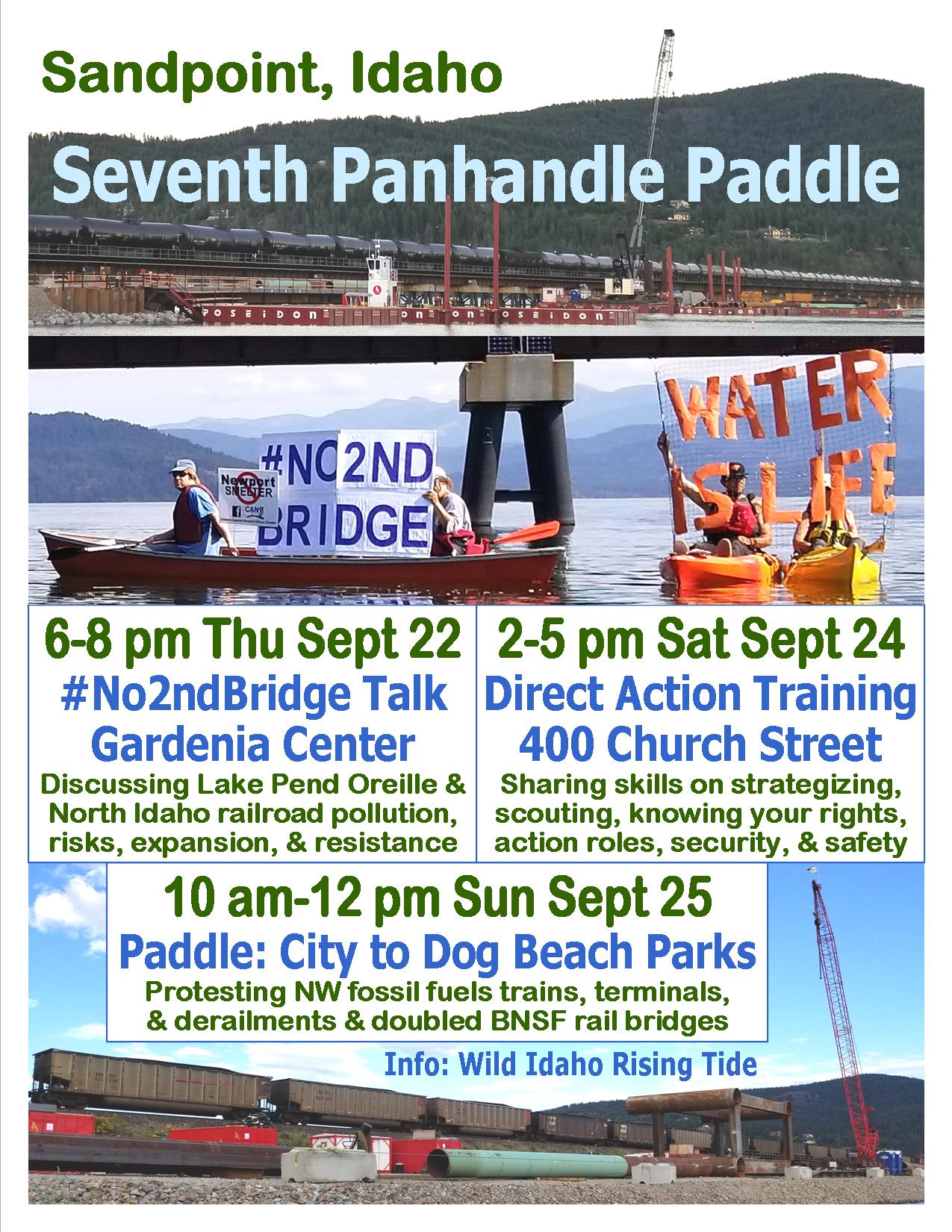
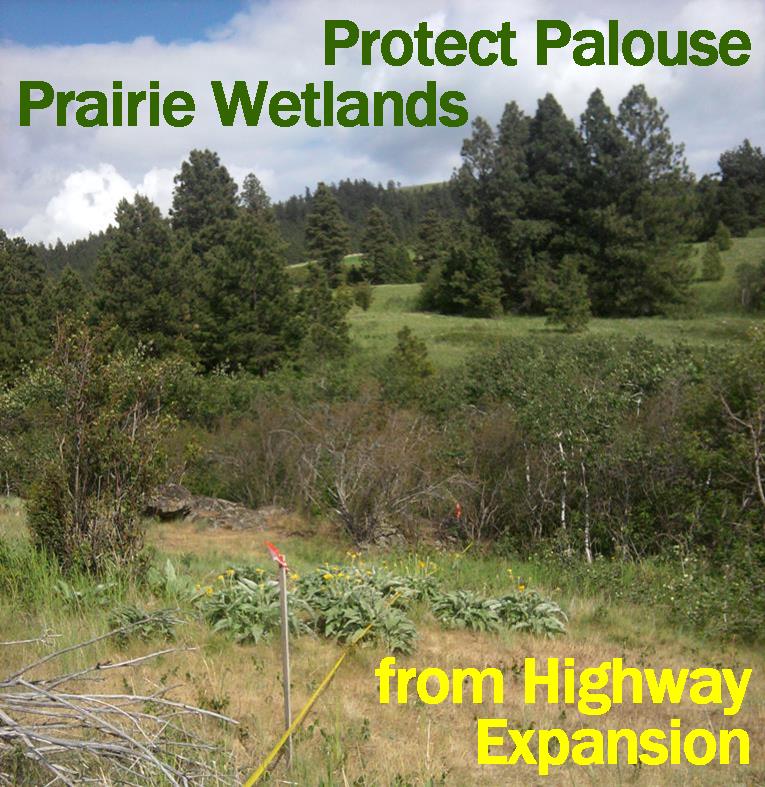 Protect Palouse Prairie Wetlands from Highway Expansion
 On Tuesday, August 2, through Saturday, August 7, Kalispel and regional tribal members and the River Warrior Society are holding the annual Remember the Water canoe journey [1]. The paddle usually voyages between Qpqpe (Sandpoint, Idaho) and the Qlispe (Kalispel) Tribal Powwow Grounds, during the days before and beginning the yearly Kalispel Powwow and around the time of the Festival at Sandpoint music concerts. Families and friends are again paddling over 35 miles in traditional, dugout, wooden and sturgeon nose canoes, through their home lands and waters in the tributaries, lake, and river of the Pend Oreille watershed. While oil and gas pipeline expansions and fossil fuels pipeline-on-rails infrastructure and transportation impose and risk further harms to indigenous people and places across Turtle Island (North America), Native neighbors continue to revive, uphold, and practice their ancient cultures and sustainable ways, through admirable endeavors like this canoe journey and culminating powwow.
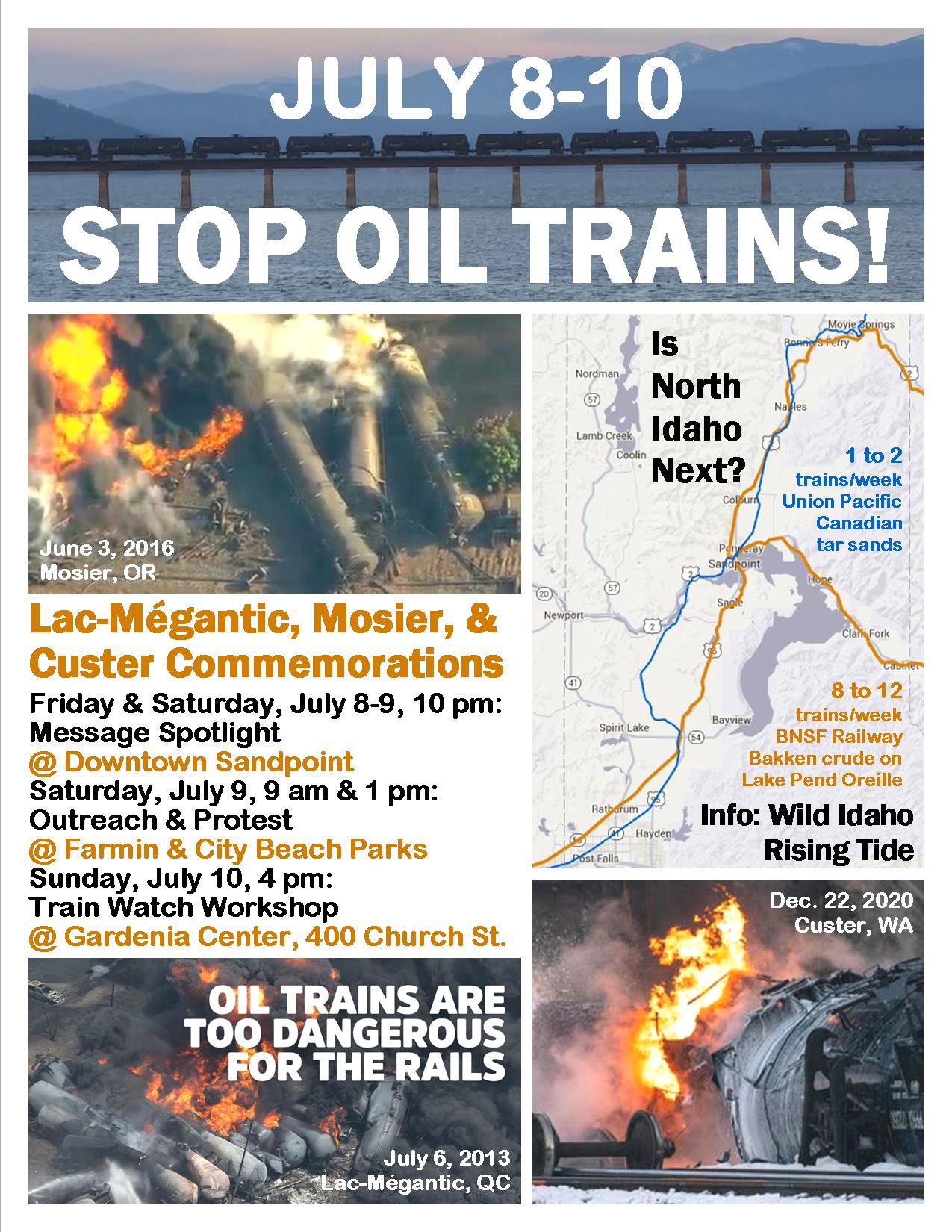 July 8-10 annual actions remember the Lac-Mégantic, Mosier, & Custer disasters
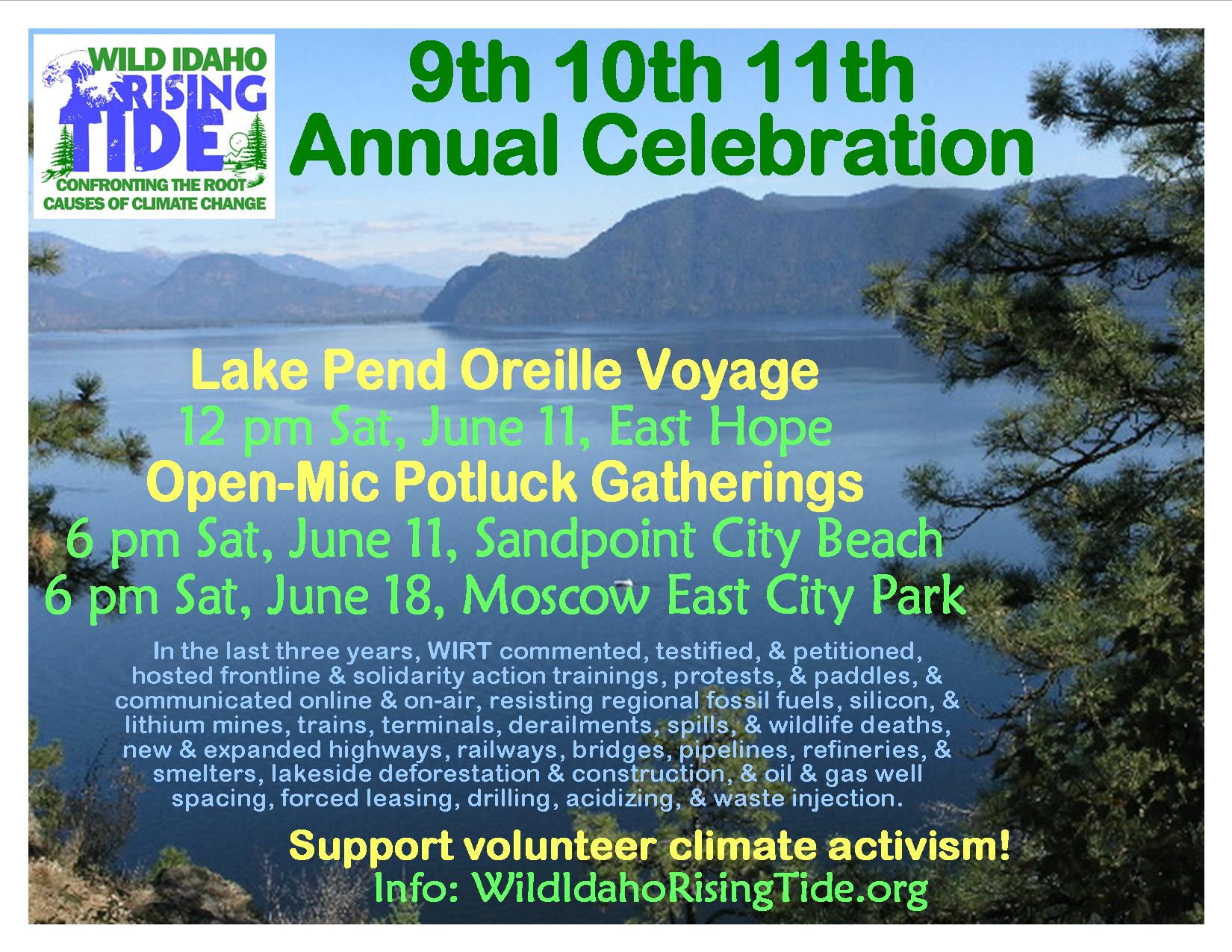 Wild Idaho Rising Tide (WIRT) is celebrating three March 31 anniversaries during recent, pandemic years, as a regional, activist collective confronting the root causes and perpetrators of climate change, through direct actions and locally organized solutions, in solidarity with frontline communities and grassroots networks of fossil fuels resistance [1-5]. We invite and welcome everyone of all ages to share this decade-plus milestone at two Ninth, Tenth, and Eleventh Annual Celebrations of Wild Idaho Rising Tide, held as outdoor, COVID-19-safe gatherings in Sandpoint and Moscow, Idaho. Please join dirty energy resisters for an afternoon voyage on Lake Pend Oreille and two evening celebrations, all full of well-deserved, reinvigorating, shared camaraderie, spirited conversations, good food and drink, and talented performances.
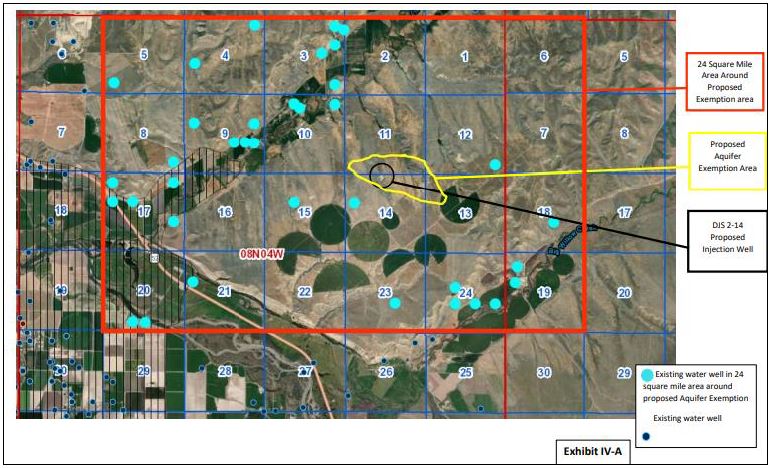 On February 18, Citizens Allied for Integrity and Accountability (CAIA), Wild Idaho Rising Tide (WIRT), and concerned, regional residents testified at a WIRT-recorded, remote, public hearing, held via teleconference by the Region 10 water division of the U.S. Environmental Protection Agency (EPA) in Seattle, Washington. Most citizens who participated in oral remarks denounced a Snake River Oil and Gas (SROG) permit application to convert the DJS 2-14 oil and gas extraction well into the first, Idaho, Class II oil and gas waste, underground injection control (UIC) well, in the Willow Sands field northeast of New Plymouth in Payette County [1, 2]. The Friday morning meeting also addressed SROG’s request for an exemption of the surrounding aquifer from its current designation as an underground drinking water source. The EPA has issued a draft record of decision claiming that the aquifer is so contaminated, either by the incompatible presence of hydrocarbons or by operation of dozens of nearby oil and gas wells, that it cannot practically provide recovery of water for human consumption in the future. Idaho activists continue to assert in testimony and comments that the EPA should reject both proposals, due to the myriad, well-documented dangers of oil and gas waste injection wells.
