October 28 & 30 Rallies & Hearings on Washington Marine & Rail Oil Transportation Study


Spokane: Tuesday, October 28, 5 to 10 pm

The doors to the public hearing room at the Hilton Double Tree Hotel, 322 North Spokane Falls Court, open at 5 pm. Gather at the Riverfront Park Rotary Fountain at 5 pm for a rally with music, youth climate ambassadors, and other dynamic speakers, then march three blocks to the hearing, where public comment begins at 6 pm and a hospitality suite will provide snacks.

Olympia: Thursday, October 30, 5 to 10 pm

The hearing room doors at the Red Lion Inn, 2300 Evergreen Park Drive SW, open at 5 pm. Meet outside for a coastal jam session at 4 pm and for a rally and music at 5 pm, before a Department of Ecology presentation at 6 pm and public input starting at 6:30 pm.

On October 1, 2014, the Washington state Department of Ecology released for public review the 2014 Marine and Rail Oil Transportation Study Preliminary Findings and Recommendations Report, which assesses the serious health, safety, and environmental risks and impacts of the onslaught of Northwest oil shipments by rail and vessel [1]. When the 2014 Washington Legislature failed to pass a bill assuaging growing concerns about more volatile and unpredictable crude oil traffic, lawmakers directed and funded the state agency to conduct the study in April 2014.  Governor Jay Inslee issued a directive in June 2014, outlining key components of the study designed to identify regional oil transportation risks, regulatory gaps addressing these risks, and possible state actions to reduce risks.  For this research, the administration-appointed Department of Ecology consulted the Federal Railroad Administration, the Washington Department of Transportation, the Utilities and Transportation Commission, and the Military Department’s Emergency Management Division [2].  If the state adopts an aggressive regulation plan in its final report due to the Legislature in March 2015, which will guide state agency, executive, and legislative actions, industry could mount legal challenges.

Although this draft report intricately describes the vulnerabilities of Washington sacrifice-zone communities and resources to the explosive, toxic dangers of existing oil train traffic and proposed port facilities, and thus supports citizens’ and firefighters’ demands for an immediate moratorium on rail-shipped crude, it flagrantly dismisses these hazards potentially affecting tribal treaty rights, public infrastructure, and the regional economy as secondary to the focus of the study [3]. The report partially conducted by the only paid railroad consultant, Mainline Management – comprised of retired, career Burlington Northern Santa Fe (BNSF) corporate executives with former BNSF, Port of Vancouver, and Washington Public Ports Association clients – incorrectly seeks to normalize the new risks of unconventional extreme energy extraction and transportation as simply additional threats augmenting decades of similar rail and ship activities that can be mitigated.

Even worse, this study defers to federal authorities regulating interstate commerce, relinquishing state leverage of railroad and ship traffic to national agencies such as the industry-dominated, inspection capacity-challenged Federal Railroad Administration and the U.S. Coast Guard. It insufficiently suggests actions to protect public waters and their changing dynamics from the risks of tar sands oil shipments and increased tanker passage.  While state and federal agencies declare the environmental non-significance of Northwest coal and oil terminals and the report promotes further investigation but sidesteps safety precautions to avert catastrophes, regional fossil fuel freight and facilities proliferate, and bulk commodity and passenger rail service suffer.  Attempting to deter widespread resistance to policies ensuring climate chaos, the study authors overlook significant, statewide opposition to proposed oil terminals, misused public ports, expanding oil refineries, risky oil trains and ships, and bureaucratic collaboration in transformation of the Northwest rail system into a permanent, global carbon pollution export corridor.  Did they consider the best interests of Washingtonians over those of private industry in this report that recommends implementation of several procedures costing more than $13 million? Continue reading

Statewide Gas Lease Auction Protests


20140923_190403

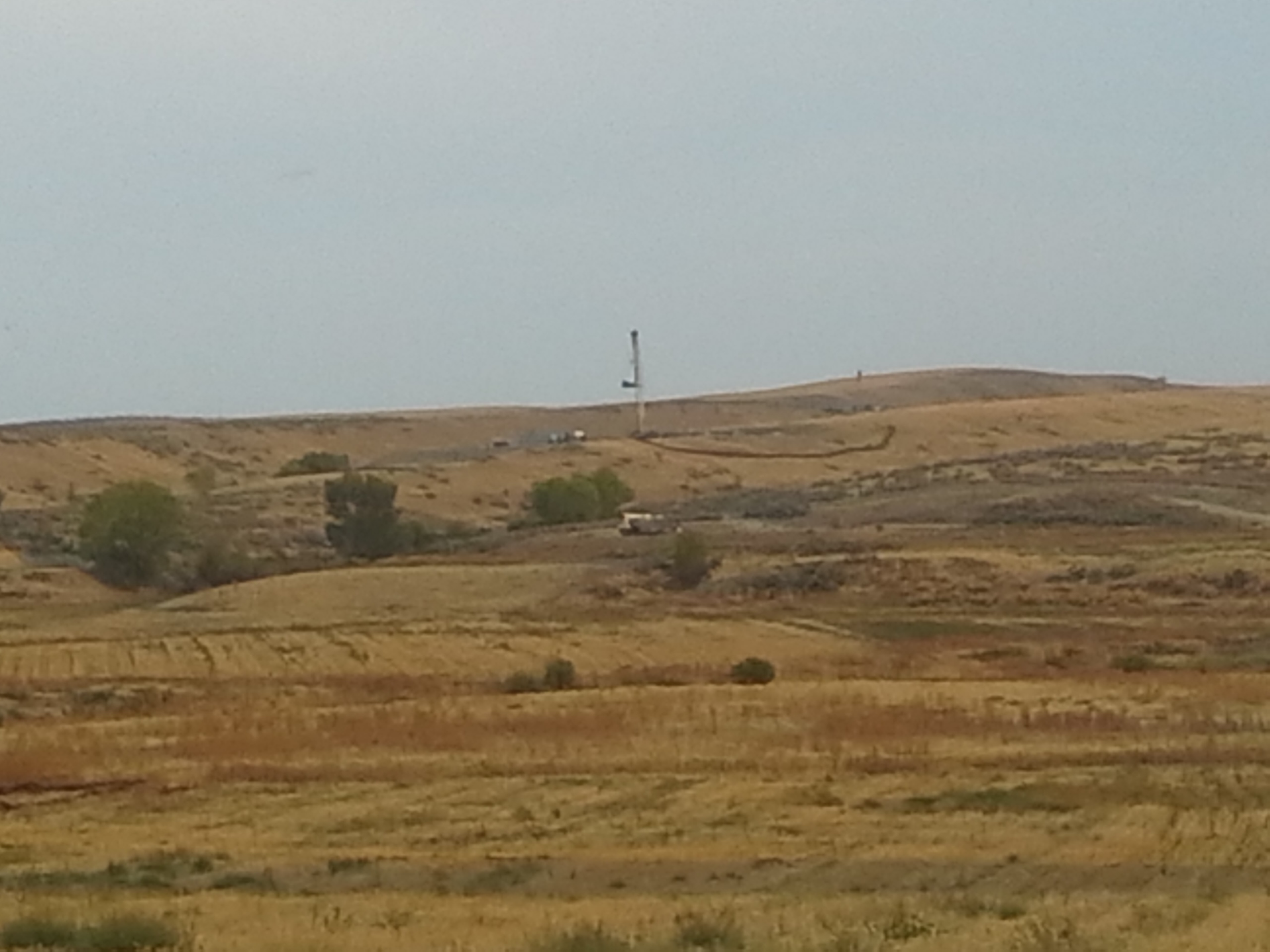
On Wednesday, October 15, 2014, beginning at 9:30 am MDT, the Idaho Board of Land Commissioners will offer oil and gas leases of state lands and sub-surface mineral rights for sale to the highest bidder, at a public auction in the Idaho Department of Fish and Game Trophy Conference Room 101, at 600 South Walnut Street in Boise, Idaho [1]. The Idaho Department of Lands (IDL) periodically conducts these auctions and administers subsequent leases, with oversight and approval of the Land Board.  The 12.5-percent royalty derived from extracted oil and gas raises funds from lands held for the public trust and state wildlife and transportation departments and for specified beneficiary institutions through the state endowment trust.  Of the 11 tracts in Cassia, Gem, and Owyhee Counties, 600 acres in Cassia County and 160 acres in Gem County constitute state lands, while the nine parcels totaling 4,479 acres located in Owyhee County involve split estates of private landowners and state mineral holders [2].

Minimum, competitive bids by drilling companies at the oral auction open at only $0.25 per acre for the 5,279 acres available for leasing [3]. Successful bidders must pay their bid and the first year’s annual rent of $1.00 per acre for leases lasting up to ten years.  If these leases are not drilled or productive, IDL assesses additional drilling penalties of $1.00 per acre per year starting in the sixth year.  The state requires a $1,000 bond for exploration on each lease, which increases to $6,000 prior to drilling, in addition to a drilling permit bond issued by the Idaho Oil and Gas Conservation Commission.  Before entry on state lands for seismic exploration, companies must acquire IDL permits costing $100 per mile across contiguous tracts or a minimum of $100 per section.

At the last of several state lands and minerals auctions in Boise, on April 17, 2014, activists raised concerns about drilling under rivers and fossil fuel effects on climate change, demonstrating outside IDL headquarters and quietly occupying the auction room filled with gas company executives and attorneys who bid more than $1,148,435 to the state of Idaho [4]. The Idaho Department of Lands leased 17,700-plus acres for oil and gas drilling, including 1,415 acres of state public trust lands and minerals under or adjacent to Boise, Payette, and Snake river beds.  AM (Alta Mesa) Idaho of Houston, Texas, and Trendwell West of Rockford, Michigan, paid an average of $76 per acre for the 150  tracts in Ada, Canyon, Gem, Owyhee, Payette, and Washington counties.  The April 17 auction doubled the previously largest amount of Idaho public lands and minerals leased in one period, bringing the total to nearly 98,000 state acres, leased for as low as $2.35 per acre on average, besides the thousands more private acres leased in six southwestern counties [5].  Eighteen drilled but capped wells, awaiting pipelines and production and transportation infrastructure currently proposed or under construction, surround the first producing well in Idaho in February 2014, on the Teunissen Dairy near New Plymouth.  The Idaho Department of Environmental Quality found toluene from drilling mud in a water well several hundred feet away in fall 2012 [6]. Continue reading

Not Yet, Calumet! Megaload & Refinery Protests


Dell Montana Megaload

According to various Montana media accounts, the third, final, and top Calumet Montana Refining hydrocracker section, bound for Great Falls, Montana, and hauled by recent Oregon megaload-dropping Bigge Crane and Rigging, left the Dell, Montana area on Wednesday evening, October 1 [1, 2].  Its arduous trek traversing Interstate 15, U.S. Highway 287, and Montana Highway 200 may require seven or fewer nights, like the second, heavier load.  Ongoing news breakdowns, if not blackouts, suggest that it may have entered Montana over Monida Pass by road, not by rail like the second such transport that crossed two Indian reservations [3, 4].  Uncritically publishing the September 29 Montana Department of Transportation (MDT) press release, the local, weekly Dillon Tribune newspaper finally printed front-page news of the move, but claimed no previous knowledge of these two heaviest-ever, regional megaloads weighing over 1.3 million pounds [5].  Despite MDT statements to the media, veterans of four-plus years of megaload opposition cannot trust MDT’s assertion that “there are no more expected ‘megaloads’ on the calendar, using any of the routes through Montana” [1].

As Wild Idaho Rising Tide (WIRT) and allies prepare for anti-megaload actions, heeding the same reasons we have always resisted fossil fuel evils, Washington and Idaho activists are still deliberating our travel options (that need your donations!) and anticipating that this behemoth could arrive in Great Falls as early as Wednesday night, October 7-8.  Because minimal and broken MDT website links to the presumably similar second megaload transport plan perhaps purposely offer little information, we contacted MDT, asking where on its website concerned citizens could find the Bigge transportation plan for these megaloads [6].  MDT staff replied that, “As of this evening (Friday, October 3), the current, parked location of Bigge Crane and Rigging’s megaload is milepost 108.8 on Interstate 15 [about 17 miles south of Butte].  They are expected to remain parked until Sunday night, at which point they will go through Butte.”  MDT referred additional questions regarding travel routes, planned stops, and past moves to Motor Carrier Services Division Administrator Duane Williams at 406-444-7312 or duwilliams@mt.gov.

WIRT’s best, mapped guess of the progression of routes and layover spots of the third Bigge/Calumet megaload in Montana, based on all currently available agency and media information, follows [7].
* Sunday night, October 5-6: Interstate 15 from Feely through Butte to Jefferson City (points B to C)
* Monday night, October 6-7: Jefferson City through Helena to Lyons Creek (points C to D)
* Tuesday night, October 7-8: Lyons Creek through Wolf Creek to U.S. Highway 287 and Montana Highway 200 to Sun River (points D to E)
* Wednesday night, October 8-9: Highway 200 to Frontage/Vaughn Road to Northwest Bypass to Third Street NW to Calumet Montana Refining (points E to F) Continue reading

Global Frackdown Idaho


Global Frackdown Idaho Flyer

Over the last four years, a majority of Idaho senators, representatives, and agency staff members has succumbed to the mercenary ambitions of the oil and natural gas industry and the state of Idaho. They have passed and misapplied state laws, rules, and regulations, allowing hydraulic fracturing (“fracking”)  that pollutes surface and ground water, sanctioning associated waste injection wells that leak or re-use water wells, permitting seismic testing and gas flaring that degrade geologic stability and air sheds, granting corporate hegemony over local jurisdictions that undermines democratic oversight of oil and gas facilities, approving gas wells and processing plants that spew volatile toxins, traffic, and noise, and consenting to drilling on state lands and near or under rivers, wetlands, and wildlife refuges that sustain water resources, agriculture, and native species [1, 2].  Subsequently, they have effectively compromised our air and water quality, jeopardized our health, property, and livelihoods, dismissed local protective ordinances, threatened agricultural communities, endangered tourism revenue, and risked the state’s lands, waters, and economy.

Despite ongoing outcry from thousands of citizens and diligent input from scientists, attorneys, elected officials, and conservation organizations, our delegates have negligently accommodated oil and gas exploration, production, and transportation in Idaho, especially where the state owns the subsurface mineral rights, at the likely expense of their constituents’ health, safety, finances, and self-governance. In the wake of increasingly erratic weather, horrific Colorado gasland floods, continent-wide oil and gas spills and explosions, and indigenous and settler blockades of fossil fuel equipment and product supply roads and rails, honest, hard-working Idahoans dread the impacts of similar probable scenarios on their families and communities, homes and businesses, and resources and recreation in the Payette River floodplains, where drilling resumed during summer 2013, potentially affecting wild, downstream Snake River canyons [3-6].

In response to state and local policy makers and administrators, in solidarity with harmed communities, and in conjunction with the Global Frackdown worldwide day of action on Saturday, October 11, concerned citizens and climate justice activists from across Idaho are converging to stage more public demonstrations, calling for a ban on looming first fracking in Idaho and around the Earth [7, 8]. As we circulate a petition to state officials and consider a ballot measure, to ban all toxic oil and gas practices statewide, Wild Idaho Rising Tide (WIRT), Idaho Residents against Gas Extraction (IRAGE), Palouse Environmental Sustainability Coalition (PESC), and other groups and individuals are coordinating a Global Frackdown Idaho march and rally in Boise and gathering in Moscow, to publicly oppose fracking. Continue reading

AM Idaho Highway 30 Refinery Expansion CUP Documents


Please comment about proposed expansion of this solitary Payette County natural gas processing plant, still under construction.  Written opposition by late Thursday, October 2, to accommodate later appeals, would further obstruct southwestern Idaho gas production.  WIRT has posted pertinent documents for your response here, a mapped location, and site photos on facebook.

From: Payette County Website [mailto:webmaster@payettecounty.org]

Sent: Wednesday, October 1, 2014 3:00 AM

To: Patti Nitz

Subject: Payette County: Information about Amended CUP for AM Idaho

This is an enquiry email via http://payettecounty.org/ from:

Helen Yost, Wild Idaho Rising Tide <wild.idaho.rising.tide@gmail.com>

Ms. Nitz,

Please direct us to or send the pertinent documents considered at the October 9, 2014 Payette County Planning and Zoning Commission hearing about an amended conditional use permit (CUP) requested by AM Idaho LLC for its natural gas and hydrocarbon liquid treatment facility near 4303 Highway 30 South in New Plymouth, Idaho.*  We would prefer to receive this information electronically and in a timely manner accommodating our comments five business days in advance of this hearing.

Thank you,

Helen Yost

Wild Idaho Rising Tide

P.O. Box 9817, Moscow, Idaho 83843

208-301-8039

* Legal Notice of Public Hearing

http://id.mypublicnotices.com/PublicNotice.asp?Page=PublicNotice&AdId=3628297

On Wed, Oct 1, 2014 at 9:02 AM, Patti Nitz <pnitz@payettecounty.org> wrote:

Good morning, Ms. Yost:

Attached please find the application to amend a conditional use permit submitted by AM Idaho, LLC for its natural gas processing facility on Highway 30 South, New Plymouth.  I have also attached the notice of the upcoming public hearing, the staff report, an aerial map of the proposed location, and a memo containing my notes from the technical review meeting.  I have not yet received the engineer’s comment letter that follows the technical review meeting.

Patti S. Nitz, Administrator

Payette County Planning and Zoning

208-642-6018

pnitz@payettecounty.org

AM Idaho Highway 30 Refinery Expansion Aerial Map

AM Idaho Highway 30 Refinery Expansion CUP Application

AM Idaho Highway 30 Refinery Expansion Hearing Notice

AM Idaho Highway 30 Refinery Expansion Payette County Staff Report

AM Idaho Highway 30 Refinery Expansion Payette County Technical Review Meeting Memo

WIRT Comments on AM Idaho Highway 30 Processing Plant Expansion 10-9-14

Continue reading

Sunday Night Megaload Protest Around Idaho Highway 200


Multiple on-site and network sources confirmed at about 9:30 pm on Friday, August 15, that the Calumet tar sands refinery hydrocracker section hauled by Bigge Crane and Rigging would not move on Friday and Saturday nights, August 15 and 16.  Although the Montana Department of Transportation (MDT) has released the Bigge transportation plan for hauling this million-pound transport on the most convoluted route ever across Idaho and Montana to Great Falls, and several mainstream media sources have circulated information about its Montana route, it is unclear whether MDT has yet issued Bigge a Montana megaload permit [1].  The agency generally does not allow oversize rig travel during the day or on weekend (Friday and Saturday) nights.  As Wild Idaho Rising Tide (WIRT) compiles a comprehensive report about the last week of megaload protesting, monitoring, and formal petitioning in Idaho, as well as a description of upcoming Montana megaload transit plans and associated resistance, please provide an appropriate send-off to the Bigge/Calumet load and convoy that have so thoroughly degraded public resources and democracy in Idaho.

Wild Idaho Rising Tide is deeply grateful for the enthusiastic and experienced commitment and camaraderie of the progressive Idaho panhandle community, shared during respective Thursday and Saturday Sandpoint protests of this inbound refinery component and outbound coal export shipments.  We are depending on the strength and spirit of a great group of protestors converging in Hope and Clark Fork to oppose the passage of the Bigge/Calumet hydrocracker megaload on its last night in Idaho.  Early on Friday morning, Bigge parked its payload, trailers, and trucks at Idaho Highway 200 milepost 44.4, just west of Hope, Idaho, in anticipation of movement on Sunday night or later [2].  The convoy will travel on Business Highway 200 through Hope and East Hope, use jump bridges to traverse Strong and Riser Creeks, and risk sharp turns from Wellington Place to Centennial Boulevard and back onto Highway 200, not to mention the hazards of roadside cliffs and sloughing roadway along nearby Lake Pend Oreille wetlands and shorelines.  Please see Idaho and Montana Bigge transportation plans posted on the WIRT website and bring your friends, family, and protest signs to gather outside the Old Ice House Pizzeria, 140 West Main Street in Hope, at 9 pm on Sunday, August 17, and to monitor and protest the last 18 miles of this Alberta tar sands/Bakken shale oil infrastructure onslaught through Idaho [3-5].

[1] Million-Pound Megaload Will Roll through Bull, Swan Valleys (August 15, 2014 Ravalli Republic)

[2] Bigge-Hauled Calumet Hydrocracker Section at Idaho Highway 200 Milepost 44, Idaho 8-15-14 (August 15, 2014 Wild Idaho Rising Tide)

[3] ITD Highway 95 & 200 Megaload Public Records 7-31-14 (July 31, 2014 Wild Idaho Rising Tide)

[4] Old Ice House Pizzeria, 140 West Main Street in Hope, Idaho (August 17, 2014 Google Maps)

[5] Biggest Megaload Never! (August 10, 2014 Wild Idaho Rising Tide)

Northwest Communities Oppose Coal Exports


5576999

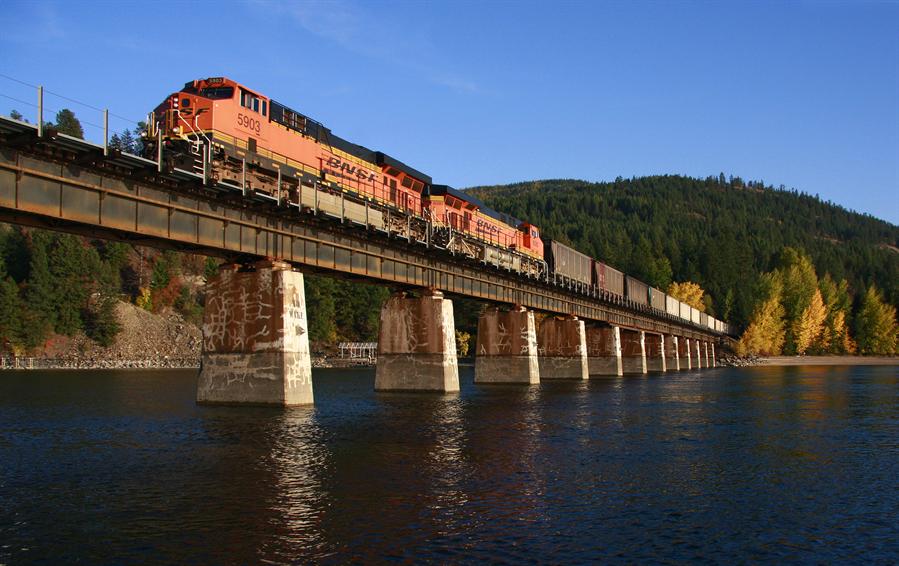
On Saturday, August 16, and during the previous week, grassroots groups are holding a coordinated day of peaceful actions, to protest the passage of coal trains through interior Northwest communities [1, 2].  From Montana and Wyoming to Oregon and Washington, proposals to bring more polluting coal trains through the region impact dozens of communities along rail lines, who are organizing to protect their towns from coal exports.  This summer, 350-Missoula, Blue Skies Campaign, Indian People’s Action, Wild Idaho Rising Tide, and other organizations are together catalyzing this movement against dirty energy in new and bolder ways, evident in this regional day of action.

As inland Northwest citizens largely dismissed by the federal and state regulatory processes that determine the fate of three proposed coal export facilities at Cherry Point and Longview, Washington, and Boardman, Oregon, we stand in solidarity with Northwest tribes and climate activists resisting these West Coast ports and Powder River Basin coal mines that despoil native lands and watersheds and ultimately global climate [3].  While Oregon agencies deliberate their possible issuance of key permits allowing financially risky, Australia-based Ambre Energy to begin construction on the controversial Morrow Pacific coal train terminal dock and warehouses at Boardman, we support friends among the Confederated Tribes of the Umatilla Indian Reservation, who rejected  the companies’ bribes of up to $800,000 per year to partner in and benefit from building this Coyote Island Terminal and shipping 8.8 million tons of coal per year down the Columbia River [4, 5]. Continue reading

Biggest Megaload Never!


10584055_1519796818254800_5233662663868064757_n

Protest Places & Tentative Times

Lewiston: Sunday, August 10, 9 pm: Arrive at the park/boat launch at Frontage Road and Steelhead Way, before the convoy closes Frontage Road, and expect to move to multiple locations as the megaload progresses.  Carpools depart from Third and Washington streets in Moscow at 8 pm (http://goo.gl/maps/BG4dt).

Moscow: Monday, August 11, 10 pm: Meet at Third and Washington streets outside Moscow City Hall.  Although this venue attracts too much police presence, it endures as the defacto megaload protest location.  The gargantuan load mounted the Lewiston grade and parked at Highway 95 milepost 320 at 2 am on Sunday night and will likely cross Moscow before midnight on Monday night (http://goo.gl/maps/4x0BQ).

Plummer: Wednesday, August 13, 10 pm: Converge outside the Warpath, before the Bigge megaload likely crosses Plummer at 11 pm or midnight.  Carpools from the Palouse region depart Third and Washington Streets in Moscow at 9 pm (http://goo.gl/maps/G5IV8).

Coeur d’Alene: Wednesday/Thursday, August 13-14: Come to the corner of West Linden Avenue and Lincoln Way at a time and date (early Thursday morning?) to be announced.  Carpools from the Palouse region depart Third and Washington Streets in Moscow at 9 pm on Wednesday (http://goo.gl/maps/0WWbv).

Sandpoint: Thursday, August 14, 5 pm & 10 pm: Assemble at 5 pm for a community meeting in Sandpoint Library rooms 103 and 104, and at 10 pm outside the Conoco gas station on East Superior Street, before the Calumet megaload crosses the Long Bridge at 11 pm, midnight, or later (http://goo.gl/maps/ryQLa).

Hope: Friday, August 15, 6 pm & Sunday, August 17, 9 pm: Bring your friends, family, and protest signs and gather at 6 pm on Friday for a community meeting in the upstairs room of the Old Ice House Pizzeria, 140 West Main Street in Hope, and at 9 pm on Sunday outside the Old Ice House Pizzeria, to monitor and protest the last 18 miles of this Alberta tar sands/Bakken shale oil infrastructure onslaught through Idaho (http://goo.gl/maps/EMz00).

Swan Lake: Sunday, August 24, 9:30 pm: Gather by 9:30 pm at the south end of the lakeside Swan Lake Day Use Area parking lot on the west side of Montana Highway 83, about one mile northwest of the town of Swan Lake (http://goo.gl/maps/zt3nf) [3].  Carpools depart from the east side of the Albertson’s parking lot, 1003 East Broadway Street in Missoula, after 7:30 pm (http://goo.gl/maps/XARbQ).  Expect to monitor the convoy and move to multiple protest locations, such as Condon and Seeley Lake, as the megaload progresses.

Clearwater Junction: Monday, August 25, 9:30 pm: Meet at 9:30 pm at the Clearwater Rest Area at the Clearwater Junction of Montana Highway 200 milepost 32 and Montana Highway 83 (http://goo.gl/maps/TKy7N) [4].  Carpools depart from the east side of the Albertson’s parking lot, 1003 East Broadway Street in Missoula, after 8:30 pm (http://goo.gl/maps/XARbQ).  Anticipate additional megaload monitoring along Highway 200 and protests in Lincoln and other places along the route.

Lincoln & Great Falls: Tuesday, August 26, 9 pm: Arrive by 9 pm at the Aspen Grove Campground about six miles east of Lincoln on a short access road off the south side of Montana Highway 200 (http://goo.gl/maps/8SqDf) [5].  Carpools depart from the east side of the Albertson’s parking lot, 1003 East Broadway Street in Missoula, after 7:30 pm (http://goo.gl/maps/XARbQ).  Monitors will follow the load and protest its arrival at the Great Falls Calumet refinery during the to-be-announced early morning hours of Wednesday, August 27 (http://goo.gl/maps/42HfG).

After eight anxious months and the usual last-minute fiasco to deter legal and physical resistance, the Idaho Transportation Department (ITD) issued a permit for Bigge Crane and Rigging Company early on Friday afternoon, August 8 [1].  The San Leandro, California-based company plans to haul an up to 1,086,000-pound piece of Great Falls, Montana, refinery equipment across northern Idaho over four to five nights, after departing the Port of Wilma near Clarkston, Washington, at 10 pm on Sunday, August 10.  The bottom, lightest, one-foot wider section of a hydrocracker, which would assist in tripling tar sands production at the Montana Refining Company owned by Calumet Specialty Products Partners, measures 311 feet long, 21 feet wide, and 16 feet, 8 inches high and weighs 926,000 pounds with interconnected trailers and trucks, when additional pull and push trucks are not powering the transport [2].  Accompanied by Idaho State Police, flaggers, and pilot vehicles every night between 10 pm and 5:30 am, the heaviest and longest shipment to (n)ever cross the region can move at speeds between 5 and 35 miles per hour.  It would enter Idaho from the eastern Washington port on Idaho Highway 128, and move north on U.S. Highway 95 up the Lewiston grade, avoiding the bridge over U.S. Highway 195 by briefly sidetracking under the bridge into Washington (with a permit?) and back into Idaho against off-ramp traffic.  After journeying through Moscow, Plummer, and Coeur d’Alene and crossing the two-mile Long Bridge to Sandpoint, the megaload would travel east to Montana on Idaho Highway 200, the federally designated Pend Oreille Scenic Byway with possible weight restrictions and load limits for the lake shore road partially built on fill material [3].  By Idaho law throughout the trip, the convoy must limit the traffic delays of two-lane blockage to 15 minutes, by notifying the transport driver of approaching and trailing vehicles and pulling off the roadway to let them pass.

In less than a Friday hour after ITD’s announcement, Wild Idaho Rising Tide (WIRT) responded to three ITD offices, the Federal Highway Administration (FHWA) in Boise, and the Idaho Attorney General, alerting them to a formal WIRT petition filed by the 5 pm MDT close of the business day.  The petition requests an immediate stay and reconsideration of ITD’s permit issuance to Bigge only days before it hauls its oversize shipment across northern Idaho [4-6].  By describing the many potential hazards to public safety, convenience, and road and bridge infrastructure that this megaload would impose, the petition outlines ITD’s subsequent violations of the U.S. Fourteenth Amendment and Idaho rules governing open public meetings, overlegal permits, and ITD operating objectives, as explained by Moscow community radio comprehensive coverage and a WIRT interview about the Calumet refinery megaload saga [7].  Wild Idaho Rising Tide did not receive explicitly requested acknowledgement of WIRT petition receipt from ITD, FHWA, and the attorney general on Friday, although the biggest ever megaload could roll before normal ITD business hours on Monday.  But a local reporter noted that, “ITD spokesman Adam Rush said his agency was prepared to receive a petition seeking to halt the shipment and that the matter would be considered over the weekend, before the shipment could legally leave the Port of Wilma…  If the WIRT petition isn’t granted, the megaload shipment could pass through Moscow late Sunday or early Monday” [8].  Whether any state officials bother to notify the petitioning group of their decision or just continue to dismiss it as collateral damage on the roadside to ruin remains uncertain.

Monitor & Protest! Continue reading

Bigge Stages the Last Calumet Megaload


20140724_191831

Bigge Stages the Last Calumet Megaload 7-24-14 (Wild Idaho Rising Tide photos)

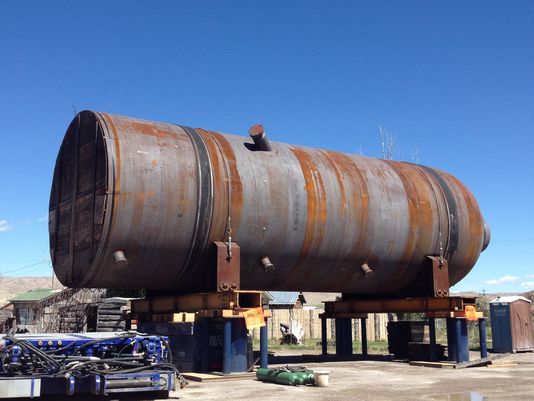
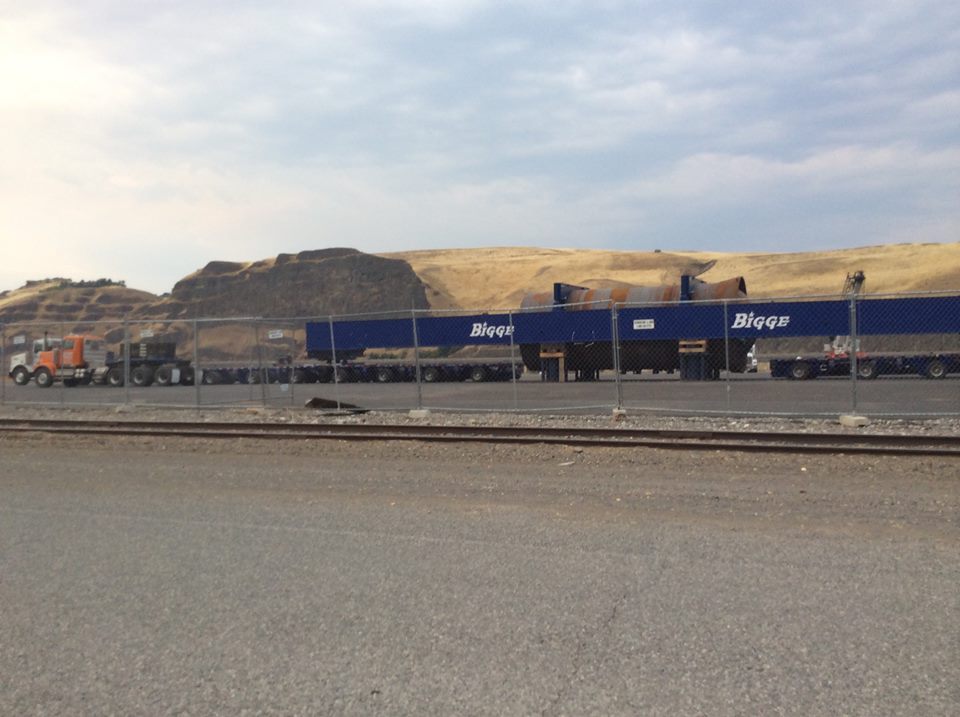
On Thursday, July 24, two Wild Idaho Rising Tide (WIRT) activists scouted the Port of Wilma, across the Snake River from Clarkston, Washington, to document with photos and ascertain any changes at the fenced compound where Bigge Crane and Rigging stores the last of three rusty, cylindrical, hydrocracker sections stranded since mid-December 2013.  Participants in the Nez Perce Environmental Summit on Saturday, July 19, discovered the two other, larger, megaload parts vanished, with crews still in the port lot leased by Omega Morgan in late 2013, for its two massive evaporator cargoes [1].  Last observed on short, 12-axle trailers at the port on Tuesday, July 15, the two heavier, missing loads, 573,000 and 661,000 pounds each, likely departed by barge downriver or by train on the Watco Companies Great Northwest Railroad to the Tri-Cities, Washington [2].  According to late-May newspaper articles that suggested megaload rail travel, haulers could have transported the shipments on Schnabel train cars as oncoming traffic to potentially explosive, West Coast-bound, unit “bomb trains” of fracked Bakken shale oil.  The behemoths could currently be moving across eastern Washington and northern Idaho on either Union Pacific or Burlington Northern Santa Fe rail lines to Bonners Ferry, Idaho, then eastward on the BNSF railroad to a spur line heading south from Shelby to the Montana Refining Company in Great Falls.  The hydrocracker column formed by stacking the three purportedly irreducible components upright constitutes equipment essential to tripling Calumet Specialty Products Partners’ refinery production of Alberta tar sands, Bow River crude, and Bakken shale oil.

Activists noticed on July 19 that heavy hauler Bigge had left a white and red crane, a heavy-duty, white semi-truck, a small, orange truck, several flatbed trailers, and some white trailer pieces resembling the steel suspension systems seen around other, huge, fossil fuel contraptions in the region since February 2011.  The San Leandro, California-based company also abandoned the 504,000-pound, lightest, bottom part of the hydrocracker.  Its largest diameter of the three modules may have deterred its passage by train through tunnels, close, two-way tracks, or other rail line impediments, while its weight and length, when combined with interlocked trailers and trucks, could forebode the heaviest and longest megaload to ever traverse rural northern Idaho highway routes.  On Thursday evening, July 24, WIRT comrades saw additional Bigge gear that alerted them to imminent megaload movement, perhaps within a week.  A second, white semi-truck occupied the southwestern corner of the lot, while the orange truck, previously parked next to the hydrocracker piece, sat behind it, attached to the white trailer.  Absent during prior scouting forays, long, dark-blue, trailer sections loomed in front of the module, and a colossal, dark-blue, metal bar on a specialized semi-trailer, like the top of megaload lifts seen at the Ports of Pasco and Umatilla, crowded the eastern pavement outside the fence, along with a uniformed security guard in an older, white and red pickup truck. Continue reading

Support the Land Defenders Arrested on Monday at the Utah Tar Sands!


On Monday, July 21, about 80 climate justice land defenders peacefully expressed their First Amendment right to free speech, by staging a massive direct action at the site of U.S. Oil Sands’ tar sands strip mine at PR Springs in the Book Cliffs, Utah.  The protest that blocked mining facilities construction culminated a week-long direct action training camp held within two miles of the mine.  Participants of Climate Justice Summer Camp traveled from numerous organizations, states, and sovereign tribal nations to learn direct action skills and build networks.  These inspiring heroes left the comfort of their homes, the company of their families, and the security of their jobs to fight for the future of this beautiful, historical area.

Early in the morning, activists and supporters of Canyon Country Rising Tide, Peaceful Uprising, and Utah Tar Sands Resistance locked themselves to equipment, and a fenced storage cage around it, used to clear-cut and grade an area designated for the tar sands mining company’s processing plant.  Other protesters formed a physical blockade with their bodies, to halt construction work and to protect their locked-down comrades.  They hung and displayed banners off the cage that read: “You Are Trespassing on Ute Land” and “Respect Existence or Expect Resistance.” Continue reading