Hearing Officer Recommends OK for Megaloads


More than 200 megaloads of Korean-made oil equipment bound for Canada should be given the go-ahead to roll across northern Idaho’s scenic U.S. Highway 12, an Idaho state hearing officer ruled Monday.

Retired state Judge Duff McKee, in a 63-page ruling, discounted every protest against the megaloads from a group of residents and business owners along the twisting, two-lane highway, from safety to business interruptions to environmental harm.  His ruling is a recommendation to the Idaho Transportation Department; there’s still an opportunity for motions for reconsideration, a process that could take weeks more.

“I conclude there was no error in procedure on the part of ITD in the issuance of the permit in this case, or any other basis to interfere with the executive determinations of the department in issuing the permits in this case,” McKee wrote in his ruling.

Imperial Oil/ExxonMobil wants to ship more than 200 giant loads of oil field equipment across the Idaho highway, en route from the Port of Lewiston to the Alberta oil sands.  The loads are so large that they’ll block both lanes of the two-lane road, creating a rolling roadblock.

Read more: Hearing Officer Recommends OK for Megaloads

(By Betsy Russell, The Spokesman-Review)

Activists Protest Oil Sands, Oversized Loads


About a dozen protesters weren’t discouraged Saturday by the news that the Idaho Transportation Department will soon allow at least two oversized loads of oil refinery equipment to travel through Moscow on U.S. Highway 95.

Members of Wild Idaho Rising Tide (WIRT) organized the demonstration that began mid-morning where Southview Avenue meets the highway south of downtown Moscow.  Protesters marched north on the highway through the city while carrying a 208-foot-long rope outline of one of the loads, which in real life is 23 feet wide, 208 feet long, 13.6 feet tall, and weighs 410,300 pounds.

The Idaho Transportation Department issued two permits Friday for Imperial Oil/ExxonMobil to transport the loads from the Port of Lewiston into Montana via U.S. Highway 95 and Interstate 90 beginning June 27.  The equipment is destined for the company’s oil sands project in Alberta, Canada. Continue reading

Oil on Lubicon Land: A Photo Essay


Melina Laboucan-Massimo, a member of the Lubicon Cree First Nation and a climate and energy campaigner with Greenpeace, describes the impacts of oil and gas developments and the recent oil spill in the traditional territory of the Lubicon Cree in northern Alberta.

// public hearing


Release from the Moscow Sustainable Environment Commission:

At the request of Mayor Chaney, and in accordance with our mission as a city commission (“to solicit advice and information about sound environmental management practices for promoting the public health and safety of the citizens of Moscow”), the City of Moscow’s Sustainable Environment Commission is holding an additional opportunity for public input on the potential impact of the megaloads passage through Moscow on our environment–people, infrastructure, businesses, and community life.

The meeting will be conducted as a Public Forum for the SEC to hear from a broader public prior to the SEC making any recommendations to the City Council on this issue. In an effort to hear from as many people as possible, we plan to limit individual statements to 3 minutes. We realize this is a short period of time, but we are choosing to err on the side of hearing from as many citizens as possible during our 2-hour time period. The hearing will take place on June 15, in the City Council Chambers, from 7-9 p.m.

Wednesday, June 15 · 7:00pm – 9:00pm

City of Moscow Council Chambers

206 E Third St

Moscow, Idaho

// upcoming action


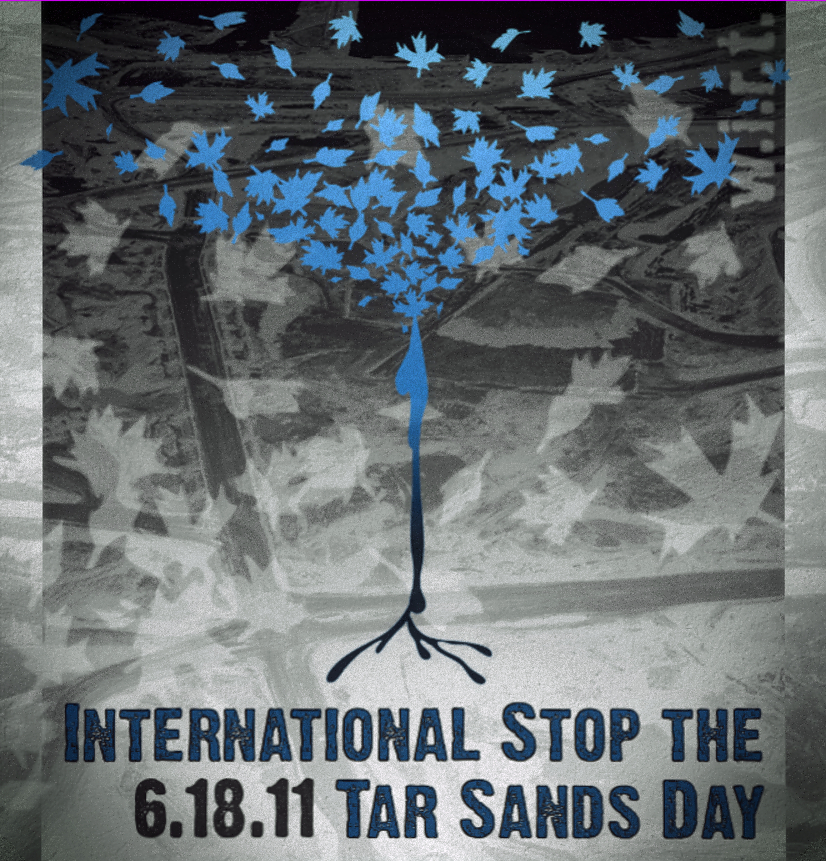
On June 18th people all over the globe will be taking to the streets as part of an International Day of Action Against the Tar Sands and I want you to join them.

For more info on upcoming local actions contact wild.idaho.rising.tide@gmail.com

BACKGROUND:

The Tar Sands are destroying forests, trampling indigenous rights, poisoning our atmosphere and river systems and threatening community health. On June 18th we will fight back globally. Demonstrations and protests are being organized around the world in the largest day of action against the Tar Sands ever.

Whether it’s forest destruction of areas that ultimately could equal the size of Scotland, toxic lakes that can be seen from space, the trampling of Indigenous rights or the poisoning of Canadian and US communities living near Tar Sands operations, turning Tar Sands into transportation fuel hurts our environment and communities every step of the way.

We need you to help draw a line in the sand and show companies and governments around the world that our future doesn’t contain this toxic resource. Take action with us on June 18!

Continue reading

Winona LaDuke Speaking about the Alberta Tar Sands


Winona LaDuke, noted Native American activist and author, speaking recently at the Native American Center at Portland State University.  Winona spoke for about half an hour about the Alberta tar sands and also about the large oil extraction equipment being shipped from South Korea through Portland and along narrow highways though Idaho and Montana.  (www.honorearth.org/stop-tar-sands)

// action 5.11.11


Photos from the citizens’ march against the heavy-haul in Moscow, Idaho.

This slideshow requires JavaScript.

Thanks to everyone who helped to make this possible. The turnout was inspiring to say the least. Keep up the fight everyone!

// extraction redux


University of Idaho students and regional activists with Wild Idaho Rising Tide marched across the UI campus in Moscow at midday on April 20th to display their opposition to the ExxonMobil transports planned for Idaho roads and bound for Alberta tar sands development. As part of the international Day of Action Against Extraction, north central Idahoans joined thousands of climate justice activists marking the anniversary of the BP oil disaster in the Gulf of Mexico with public demonstrations and direct actions.

In solidarity with communities and ecosystems devastated by corporate extraction of fossil fuels and public natural resources, the dozen protesters carried signs saying, “Stop the Megaloads” and “Big Oil Has the Right-of-Way.” Their banners were strung on ropes between them that illustrated the 208-foot length and 24-foot width of the colossal oil company megaloads that could travel Highways 12 and 95.

Student members of the UI Oxfam and Environmental clubs, Corrie Ellis and Danie Merriman, said, “We feel we are representing university and Moscow students, and we are not O.K. with big business running over our town and us not having a voice in this matter. We are ready to be heard.”

Lee Spencer, a fisherman against tar sands exploitation, noted that, “My family and I have fished and lived on the Lochsa River for generations. It is a sacred place. It is not a corridor to facilitate the destruction of Alberta and the entire biosphere.”

The rally participants also voiced their displeasure with multi-national, dirty energy industries that sacrifice clean air, water, and lands and human health for their tax-free profits. Lewis-Clark State College Business Division lecturer Leslie Rist emphasized that, “It’s not nice to rape Mother Nature. Big Oil isn’t good business.”

The newly formed group is planning another march and rally on May 11th, when the Idaho Transportation Department and Imperial Oil, a subsidiary of ExxonMobil, will hold an interactive public meeting in Moscow. Many citizens and city officials have expressed concerns about the dozens of oversized shipments the oil company has proposed to move on Highway 95 through Moscow.

// megaload mishap


Megaload knocks out power at Pierce, Weippe

April 12, 2011, 11:36 am

About 1,300 homes and businesses in the Pierce and Weippe areas were without power for almost five hours this morning after an Imperial Oil test module hit a line supporting a transmission wire.

The outage started at about 1:45 a.m. following the incident on U.S. Highway 12, two miles east of Orofino, said Debbie Simock, a spokeswoman for Avista.

The megaload hit a supporting line triggering a pole holding it up to break and then the supporting line hit a transmission line that shorted, said Simock and a spokesman for the Idaho Transportation Department.

Traffic was delayed one hour instead of the 15 minutes that ITD is allowing, said Adam Rush, a spokesman for the transportation department.

The over-sized shipment is now parked at milepost 61, 13 miles short of Kooskia where it was supposed to arrive by 5:30 this morning, Rush said.

“No one was hurt,” said Pius Rolheiser, a spokesman for Imperial Oil.

No decision has been made about whether the test module will continue this evening on the next leg of its trip to Montana on U.S. 12, Rush said.

Rush’s employer is waiting for a report from Mammoet, Imperial Oil’s hired hauler, about what happened before it makes any decisions, Rush said.

– from http://www.lmtribune.com/breaking-news/1737/

Continue reading

// day of action


Groups to mark Gulf Oil Spill anniversary with direct action against fossil fuel extraction.

On April 20th dozens of environmental, climate, and social justice groups will target government and corporate operations with aggressive protests and civil disobedience in an International Day of Direct Action Against Extraction being organized by Rising Tide North America. The protests will commemorate the 1 year anniversary of BP’s Gulf Oil Disaster by demanding an end to the environmental destruction and climate destabilization created by fossil fuel and other extractive industries.

“The Gulf Oil Disaster was the worst manifestation of the disasters that are created by extractive industries on a daily basis” said Matt Wilkerson of Rising Tide North America. “Communities around the world are terrorized by corporate and state ventures to extract fossil fuels. On top of poisoning our water and polluting our air, extractive industries are at the root of our climate crisis. If we have any hope of averting the worst affects of climate change we must leave fossil fuels in the ground.”

Continue reading