April 13-14: Bill McKibben at WSU, May 13-15: Anacortes Break Free Action!


Anacortes Mass Action BreakFreePNW

April 13-14: Bill McKibben at WSU

Climate movement leader, educator, and author Bill McKibben is speaking twice for Humanities Week at Washington State University (WSU) in Pullman [1]. In the wake of well-attended screenings and panel discussions of the global climate activism documentary This Changes Everything in Moscow and Sandpoint in late March, Wild Idaho Rising Tide (WIRT) and regional allies anticipate that McKibben can further mobilize inland Northwest residents to participate in the 350.org-initiated Break Free from Fossil Fuels mass action in Anacortes, Washington, in mid-May [2]. WIRT is calling on you and all volunteers to assist with distributing the attached quarter-sheet flyers outside both WSU events, to recruit more involvement in the already hundreds-strong Break Free Pacific Northwest demonstration of fossil fuel resistance: Please contact WIRT if you can help.

April 13: Humanities Week keynote address: ‘The Human Element in Nature: From Harm to Hope’ at 5:30 pm on Wednesday in the CUB senior ballroom

April 14: Foley Institute Coffee and Politics talk: ‘Report from the Front Lines of Climate Change’ at noon on Thursday in Bryan Hall 308

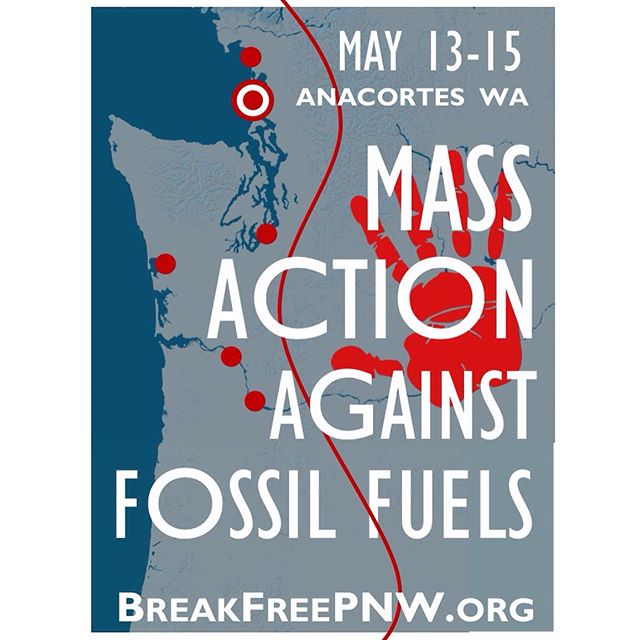
May 13-15: Anacortes Break Free Action

“We are in a kind of climate emergency now,” struggling to stay below 1.5°C of warming, to avoid radical climate destabilization [3]. No current policies keep us anywhere near this goal: We are barreling towards double that temperature, leaving us with a broken world. This has to change, and we have to lead: We have to Break Free from Fossil Fuels! [4] This global climate movement initiative aims to shut down the world’s most dangerous fossil fuel projects and support the most ambitious climate solutions.

In the Northwest, we are breaking free by taking on the region’s biggest carbon bomb: the Shell and Tesoro refineries at March Point in northern Washington. Combined, these facilities refine 47 percent of all the gasoline and diesel consumed in the region, and produce the largest, unaddressed point source of carbon pollution in the Northwest. They are an integral part of the system that we must change – within years, not decades.

Join us for regional mobilization and a mass action outside these refineries on May 13, 14, and 15, to demand that we Break Free from Big Oil and speed up a just transition to 100 percent renewable energy. By land and by sea, we will stage creative and inspirational sit-ins, blockades, and kayaktivism. For people who prefer to not engage in civil disobedience, support roles and general opportunities for participation are essential to this action. WIRT and allied carpoolers, caravaners, and protesters risking arrest or not are traveling from Missoula, Moscow/Pullman, Sandpoint, and Spokane to Anacortes for this Break Free Pacific Northwest mass action. Continue reading
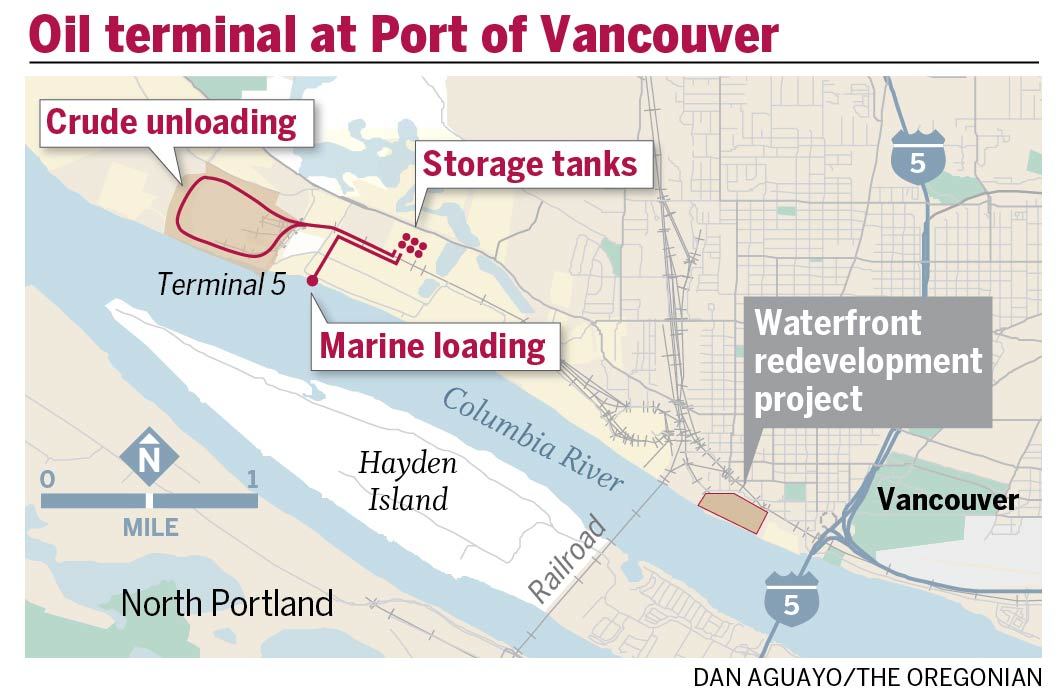
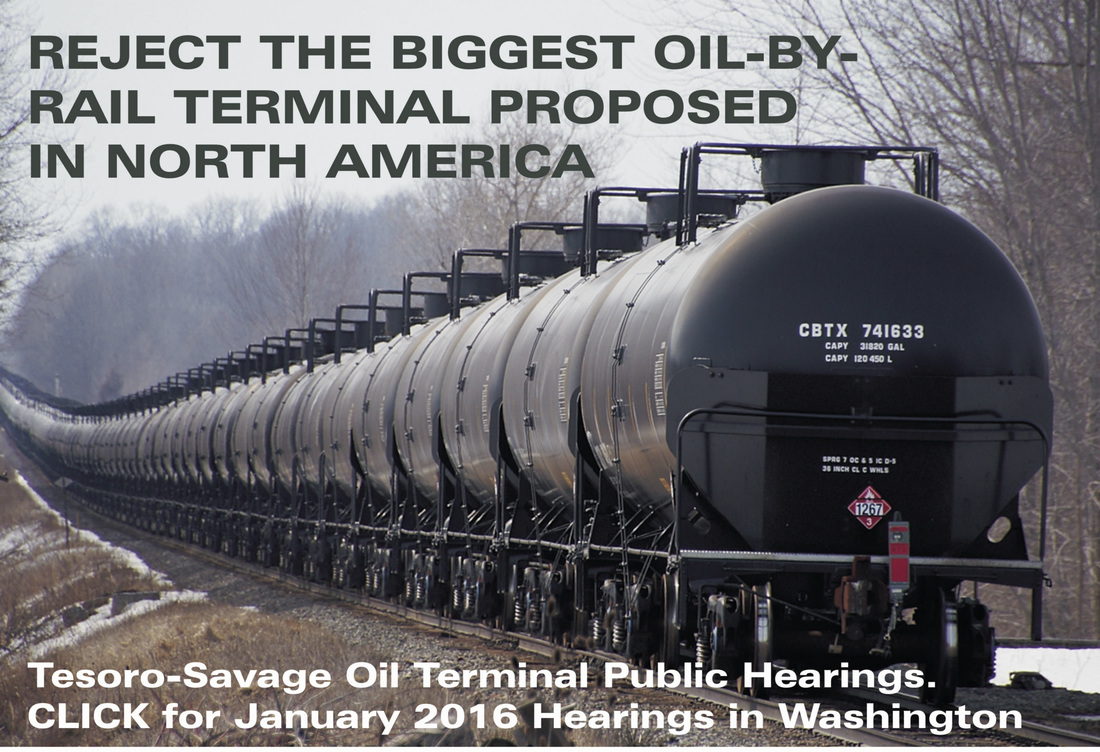
End the Tesoro Savage Oil Terminal Lease!


Tesoro Savage Terminal Map 2

On Tuesday, April 12, 2016, Port of Vancouver Commissioners are conducting another public hearing [1].  The lease for the largest crude oil-by-rail transfer, storage, and shipping terminal in North America – Vancouver Energy proposed by Tesoro Corporation and Savage Companies for Vancouver, Washington – expires on August 1.  But Vancouver Energy proponents are requesting, Burlington Northern Santa Fe (BNSF) Railway is supporting (and attending the hearing), and the Port Commissioners are considering a lease amendment extending the government approval contingency period of the lease by two years and providing an additional 30 months to resolve any approval appeals, decreasing higher monthly rent after August 1, foregoing operation of a second Tesoro Savage oil facility at the port, and allowing port use of Vancouver Energy premises during the extended contingency period [2].

Initially approving the Vancouver Energy lease in 2013, the Commissioners assumed that the Washington Energy Facility Site Evaluation Council (EFSEC) would complete its project review within 12 months per state law. In its third year of this arduous process, complicated and prolonged by widespread public resistance, Vancouver Energy has not obtained the government approvals necessary to build the terminal, as required by its Port of Vancouver lease.  The terms of the original lease, which the Commissioners wisely negotiated and Vancouver Energy accepted, include the option for both parties to terminate the lease on or before August 1 “without further cost or obligation.”  The Port Commissioners must decide by August whether they will use this critical opportunity to end the Tesoro Savage lease and thus lead the Northwest and the nation towards a clean, independent, and secure energy future.  Otherwise, they lose this option.

Last Wednesday, April 6, Port of Vancouver staff significantly recommended against extending the Vancouver Energy lease; they will present their objections at the April 12 Port Commission meeting.  Reconvening its April 12 regular meeting at 1 pm on Friday, April 15, at the Port’s administrative office, the Board of Commissioners will consider and likely take action on the lease amendment, without further on-site public comments.

Meanwhile, the Vancouver Port Commissioners need to know and understand that the region supports their positive, strong action to terminate the lease for the dangerous, dead-end Tesoro Savage project. Such encouragement must come from local and up-track community residents, tribal members, labor representatives, health professionals, firefighting and emergency personnel, business people, elected officials, faith leaders, and climate activists.  Vancouver Energy oil terminal opponents of every perspective have packed each hearing to date and must again assert their concerns before Friday.

Please comment in-person or online about the proposed Port of Vancouver lease amendment requested by Tesoro and Savage for their Vancouver Energy oil-by-rail terminal!  Ask the Port Commissioners to end the lease by August 1, as terminal proponents will not have acquired all of the necessary approvals by then to continue their joint venture.  Explain how crude oil trains increasingly expose you and your family, friends, community, and environment to unnecessary risks and climate change that the Commissioners can help us all to avert. Continue reading

WIRT Comments on Tesoro Savage Vancouver Energy Project Draft Environmental Impact Statement


January 22, 2016

Sonia Bumpus, EFS Specialist, & EFSEC Members

Energy Facility Site Evaluation Council (EFSEC)

State of Washington

1300 S. Evergreen Park Drive SW

P.O. Box 43172

Olympia, Washington 98504-3172

sbumpus@utc.wa.gov

Sent via email and attachment

WIRT Comments on Tesoro Savage Vancouver Energy Project Draft Environmental Impact Statement

Members of the Energy Facility Site Evaluation Council,

On behalf of over 3200 members, friends, and allies of Wild Idaho Rising Tide (WIRT), including potentially impacted, concerned north Idaho residents near the proposed and existing rail routes affected by this proposal, I respectfully offer and request inclusion in the public record of these comments regarding the Tesoro Savage Vancouver Energy Project draft environmental impact statement (DEIS), during the public agency and citizen review period from November 24, 2015, until January 22, 2016 [1]. WIRT and associates collectively object to state permitting of the Tesoro Savage oil train terminal planned for the Port of Vancouver, Washington, which would impart myriad, significant risks and only marginal rewards for communities along the rail tracks and bridges, rivers, and lakes of Tesoro’s and Savage’s profitable thoroughfare to crude oil export.  In support of this official letter of resistance to Washington state Energy Facility Site Evaluation Council (EFSEC) approval of this application and resulting, destructive, implementation activities, we thoroughly concur with, contribute toward, and incorporate the concerns, oral testimony, and comments of all project opponents.

The Tesoro and Savage corporations intend to build the biggest crude-oil-by-rail terminal in the U.S. at the Port of Vancouver, potentially transferring an estimated 360,000 barrels per day of explosive Bakken shale oil and volatile Alberta diluted bitumen (tar sands) to tank farms across the Columbia River from Portland, Oregon, and to huge, ocean-going oil tankers shipping it to West Coast refineries and the world market [2]. Inevitable, disastrous, consequent oil spills into river, lake, or sea waters along rail and ocean routes, especially releases of thick tar sands oil that sinks to the bottom of waterways, would devastate local and regional waters and environments, fisheries, tribal lifeways, communities, and economies.

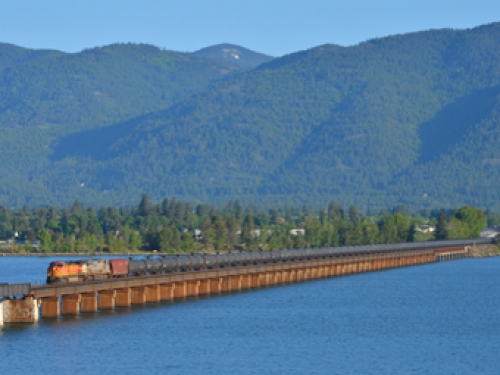
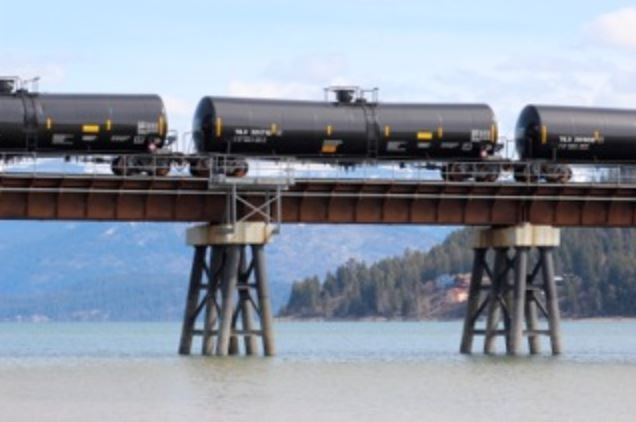
While moving enormous volumes of oil that ultimately impact our shared global climate, the Tesoro Savage facility would also increase the risk of fiery oil train accidents in countless communities along Northwest rail lines, from the Hi-Line around U.S. Highway 2 in Montana, to U.S. Highway 95 corridor towns from Bonners Ferry to Rathdrum in northern Idaho, to the dangerously elevated bridge and track funnels through the Sandpoint, Idaho area and downtown Spokane, Washington, to the Columbia River Gorge between eastern Oregon and Washington, to Vancouver [3, 4]. Every day, the huge oil terminal would bring four or more 100-car, mile-long trains toward the West Coast, hauling flammable cargo through climate-change-drying forests, increasingly dense cities, and ever more precious water bodies.  Public officials and emergency responders across the Northwest have raised concerns about the severe threats of oil train derailments, explosions, and pollution, as such incidents continually proliferate [5-7].

Many WIRT and allied group members who carpooled from Moscow and Sandpoint, Idaho, and Pullman, Washington, participated in the regional community rally of terminal opponents and orally testified at the public hearing on the project’s DEIS, hosted by EFSEC on Thursday evening, January 14, 2016, in Spokane Valley, Washington [8-10]. These activists spoke against the Tesoro Savage proposal, the deficiencies of its DEIS findings, greater hazards imposed by this massive project of significant oil spills, air pollution, loaded train derailments, explosions, fires, and accidents causing numerous injuries and deaths, increased rail and waterway traffic of oil tankers, harm to federally protected salmonids and aquatic species, detrimental effects on tribal treaties, cultures, and resources, susceptibility of the facility to earthquakes, more and longer vehicle delays at railroad crossings, and overall exacerbation of climate change [11].  These myriad, significant, environmental, social, and human health harms cannot be fully mitigated by the project proponents or local, state, and federal agencies.  Moreover, the project DEIS does not even consider the predictable potential impacts of this oil terminal beyond Washington state. Continue reading

Inland NW Oil Train Terminal Rally & Hearing


Tesoro Savage Hearing Train

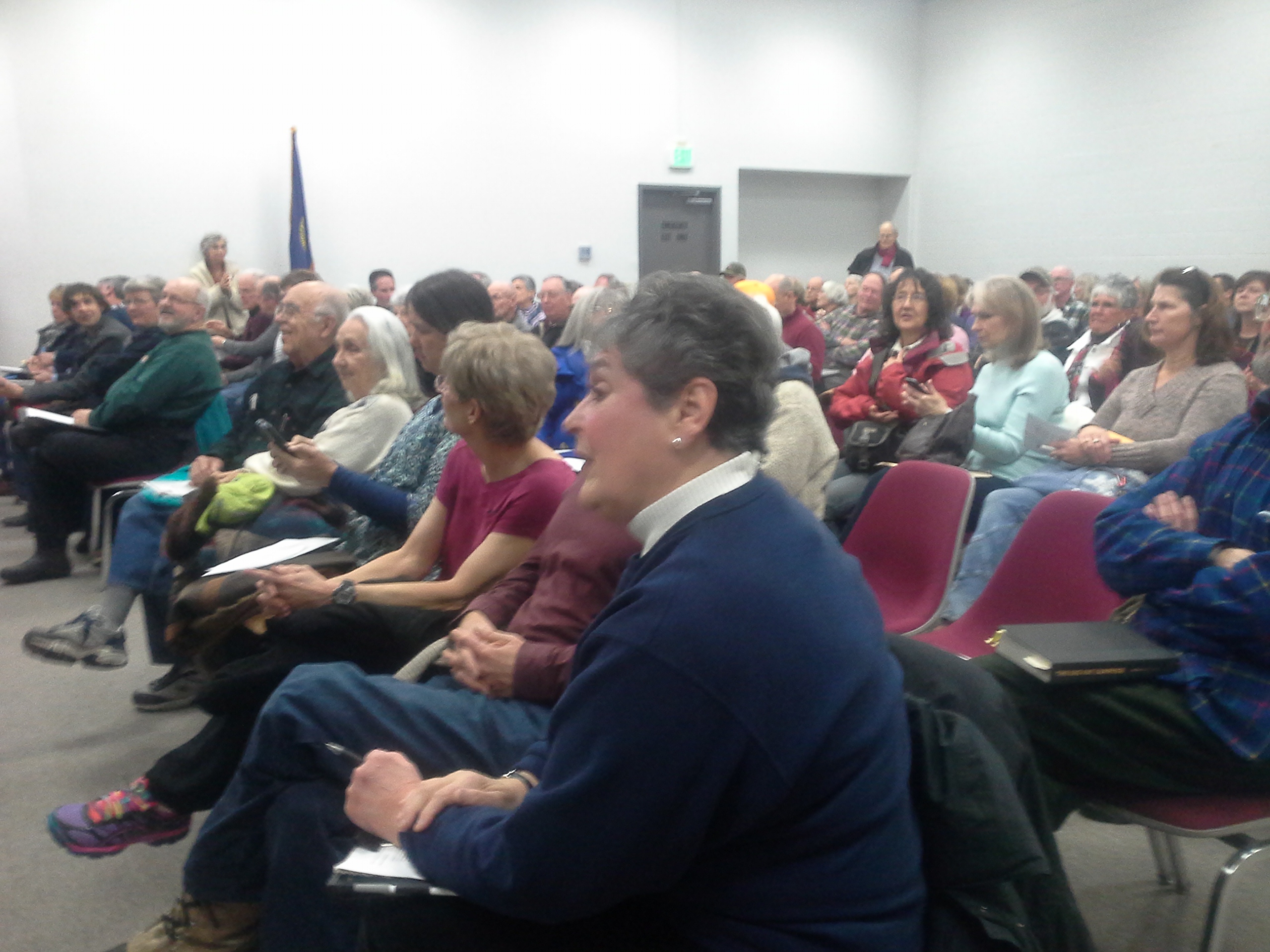
On Thursday, January 14, 2016, please join Wild Idaho Rising Tide (WIRT) and allied groups carpooling from Moscow and Sandpoint, Idaho, and Pullman, Washington, to participate in the 4:30 pm regional community rally against the Tesoro-Savage Vancouver Energy Project, an oil train terminal proposed for the Port of Vancouver, Washington. At the same location – Centerplace Regional Event Center at 2426 North Discovery Place in Spokane Valley, Washington – the Washington state Energy Facility Site Evaluation Council (EFSEC) is hosting a public hearing on the project’s draft environmental impact statement (DEIS), from 5 to 11 pm or until the last testifier, hopefully late at night after many opposing speakers [1, 2].

Big Oil plans to build the largest crude-by-rail terminal in North America, potentially transferring an estimated 360,000 barrels per day of explosive Bakken shale oil and volatile Alberta diluted bitumen (tar sands) to tank farms across the Columbia River from Portland, Oregon, and to huge, ocean-going oil tankers shipping it to West Coast refineries and the world market [3]. Inevitable, resulting oil spills into river, lake, or sea waters along rail and ocean routes, especially releases of thick tar sands oil that sinks to the bottom of waterways, would disastrously affect local and regional environments, communities, and economies.

While moving enormous volumes of oil that ultimately impact our shared global climate, the Tesoro-Savage facility would also increase the risk of fiery oil train accidents in countless communities along Northwest rail lines, from the Hi-Line around U.S. Highway 2 in Montana, to U.S. Highway 95 corridor towns from Bonners Ferry to Rathdrum in northern Idaho, to the dangerously elevated bridge and track funnels through the Sandpoint, Idaho area and downtown Spokane, Washington, and down the Columbia River Gorge between eastern Oregon and Washington to Vancouver [4, 5]. The huge oil export terminal would bring four more 100-car trains hauling flammable cargo through climate-change-drying forests, increasingly dense cities, and ever more precious water bodies every day.  Public officials and emergency responders across the Northwest have raised concerns about the severe threats of train derailments, explosions, and pollution, as such incidents continually proliferate [6-8].

Northwesterners have successfully delayed, re-routed, and/or stopped similar fossil fuel infrastructure plans over the last five years, most notably tar sands mining and refining megaloads, coal export terminals, and just this week, a Grays Harbor oil terminal [9]. Faced with a flood of proposed coal, oil, and liquefied natural gas terminals in the Pacific Northwest, hundreds of concerned citizens like you have attended hearings to tell decision-makers no.  Altogether, people power has delayed nine fossil fuel terminals and stopped nine others in Oregon and Washington.

In Spokane Valley on January 14, your help is essential to protecting the safety, health, and environment of the Idaho panhandle and inland Northwest, by halting this oil terminal and its additional trains crossing the region [10]. Although jumping through government/industry-imposed hearing hoops held up to placate the public is not radical climate activism – wherein citizens, not their oppressors, define the terms of engagement – we encourage you to speak out and show the advising Washington EFSEC and decision-maker Governor Jay Inslee that the dirty and dangerous Tesoro-Savage proposal is all risk and no reward for our communities.  Hundreds of terminal opponents are already making history at these three important public meetings [11].  Native nations, civic groups, environmental organizations, firefighters, health and emergency professionals, and other individuals will similarly attend the Spokane Valley hearing. Continue reading

Panhandle Paddle!


Panhandle Paddle Flyer

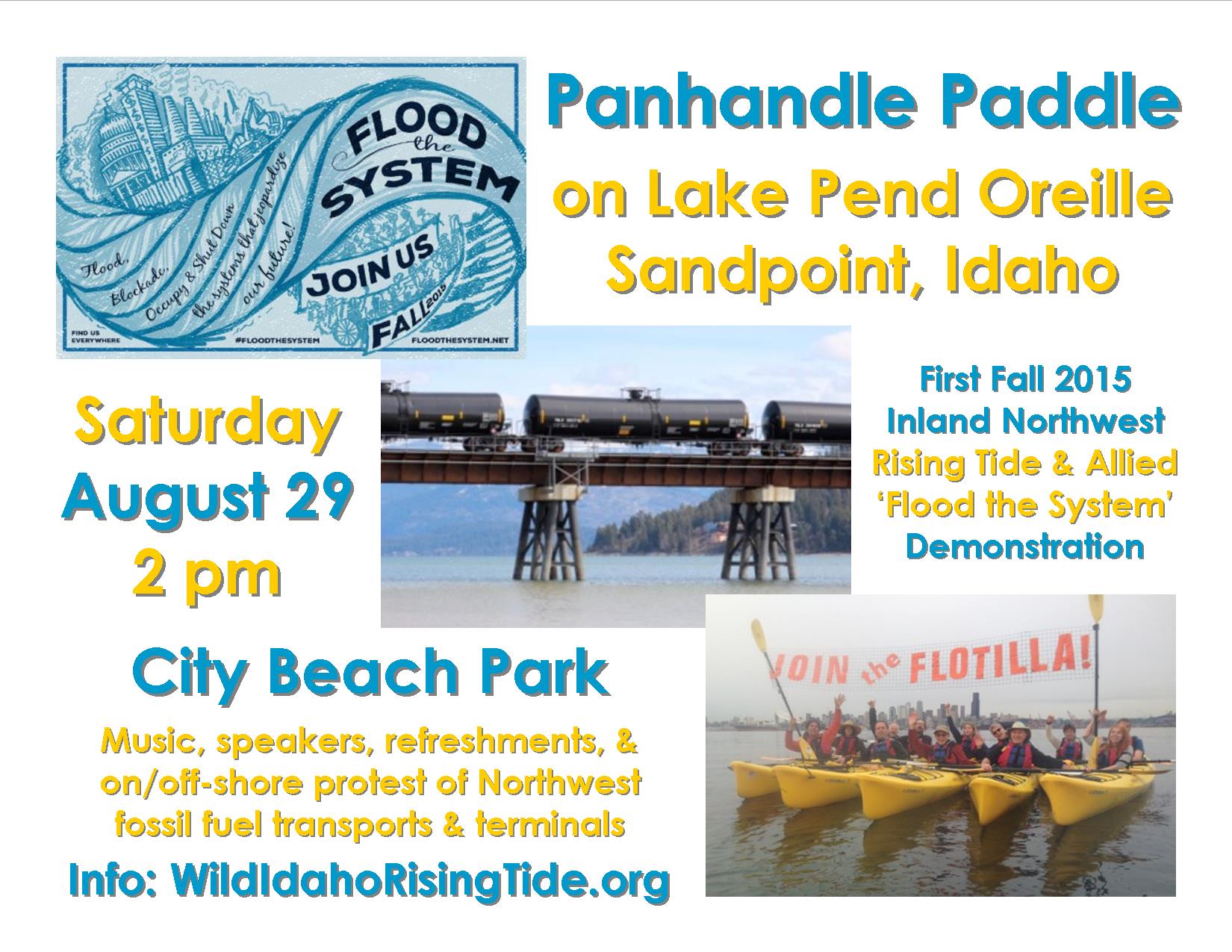
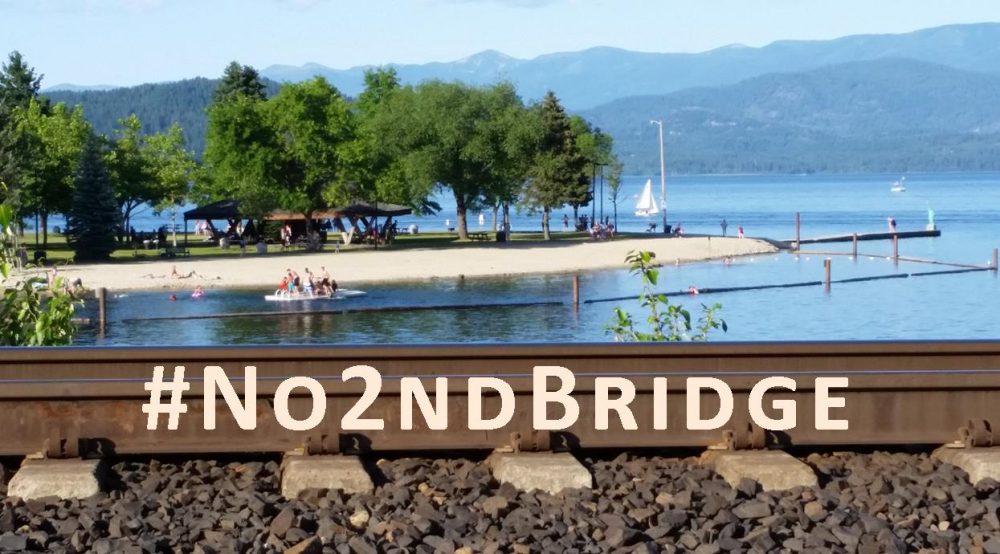
Organizing the first in a series of coordinated, region-wide, fall 2015 Flood the System actions and ongoing mobilization of frontline, inland Northwest communities impacted by fossil fuel incursions and unjust economic, social, and political conditions, Wild Idaho Rising Tide (WIRT) and allied activists in Sandpoint, Moscow, Spokane, and beyond are excited to announce and host the Panhandle Paddle on Saturday, August 29 [1]! After further WIRT outreach and education between 9 am and 1 pm at the Farmers’ Market at Sandpoint, WIRT members and friends are converging at 2 pm at City Beach Park in Sandpoint, Idaho, for music, speakers, refreshments, and on- and off-shore protests of Northwest fossil fuel transports and terminals and rail bridge expansion on Lake Pend Oreille. In the wake of four Flood the System slide shows and discussions in Idaho and Washington and parallel Montana initiatives, we are eager to “flood, blockade, occupy, and shut down the systems that jeopardize our future” [1-3].

Join in some summer fun on the water and beach to show Big Oil, King Coal, their railroad industry haulers, and government facilitators that north Idahoans will not stand for their reckless endangerment of our lives, communities, water, air, and climate, with their explosive Alberta tar sands and Bakken crude oil trains and their heavy, dusty Powder River Basin coal cars. Northwesterners have plenty to celebrate about our shared resistance, as dozens of proposals for new and expanded fossil fuel infrastructure falter and fall [4]. Please participate in these Panhandle Paddle activities: Continue reading

Sandpoint Stops Oil Trains Week of Action 2015 Report


20150711_001823

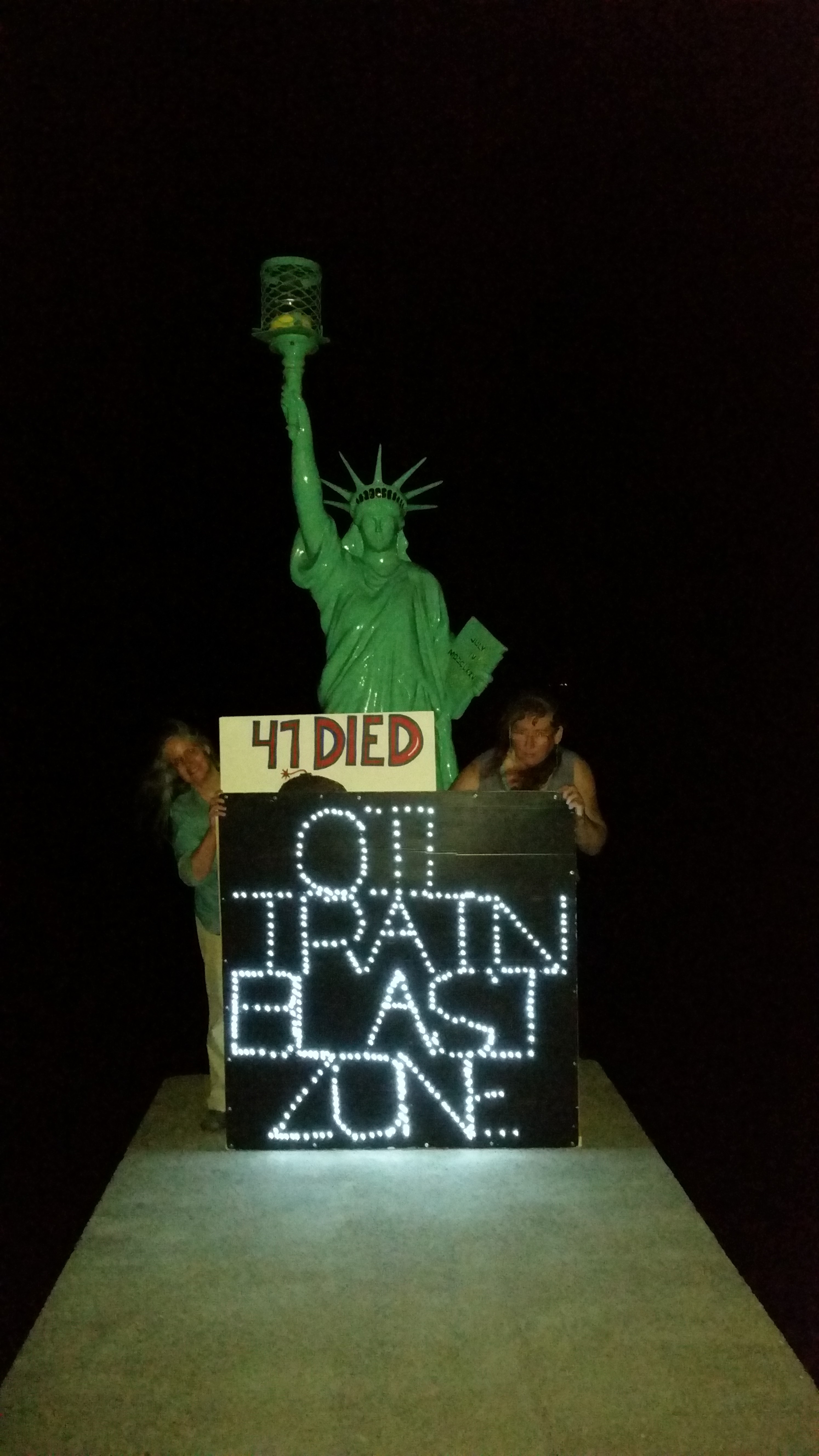
On Monday evening, July 6, through Sunday afternoon, July 12, activists of Wild Idaho Rising Tide (WIRT), Spokane Rising Tide (SPORT), and the Occupy movement participated in several demonstrations of the Sandpoint Stops Oil Trains Week of Action 2015, to halt oil train traffic while commemorating the second anniversary of the July 6, 2013, Lac Mégantic, Quebec oil train catastrophe that took 47 lives [1, 2]. Together with climate, environmental, and social justice activists across North America, WIRT and allies organized and staged over 100 powerful and effective, local demonstrations during the Stop Oil Trains Week of Action [3, 4]. These events in the United States and Canada stood in solidarity, defense, and protection of the residents of Lac Mégantic, who lost 47 people killed by an exploding oil train, and other frontline, rail corridor communities and our shared global climate, all caught in the crosshairs of the oil and rail industries’ pipelines on wheels.

Although dozens of horrifying, fiery, extreme energy train wreck disasters have occurred over the last two years since the grim Quebec accident, northern Idaho and eastern Washington citizens continue to endure the unsafe, risky, and expanding rail transportation of potentially explosive Alberta tar sands dilbit, moved by the Union Pacific Railroad, and fracked Bakken shale oil, hauled by the Burlington Northern Santa Fe Railway (BNSF), both to Washington and West Coast refineries. BNSF has previously reported that 16 to 19 mile-long oil trains traverse the interior Northwest every week. Additionally on the 70-mile-long, railroad chokepoint between the Sandpoint and Spokane downtown areas, referred to as “the funnel,” BNSF carries dusty, diesel-towed coal from the Powder River Basin along the Montana/Wyoming border to coastal terminals for export. Recently revised federal regulations no longer require BNSF to report the number of oil trains that pass through the region, and have never forced disclosure of Union Pacific tar sands by rail volumes.

With their hazardous loads and reckless resource and policy exploitation, Big Oil and Rail discount and transgress the millions of lives, the human and environmental health and safety repercussions, and the associated carbon and other toxic pollution within the mile-wide, track-side, oil train blast zones, along their paths to profit around the Pacific Rim [5]. In appropriate response, thousands of concerned citizens gathered for 63 events in July 2014, including multiple protest and outreach actions in Sandpoint and Spokane [6]. 2015 participants joined in actions to publicly call attention to the growing threat of “bomb trains,” to display the growing power of the worldwide climate movement, and to demand an immediate ban on all crude oil trains. Continue reading

Sandpoint Stops Oil Trains Week of Action 2015


Stop Oil Trains

Monday, July 6, marks the second anniversary of the tragic Lac Mégantic, Quebec, oil train catastrophe that killed 47 people in 2013.  Despite dozens of almost as horrifying, fiery disasters over the last two years, the oil industry continues to dramatically expand Alberta tar sands and Bakken crude oil train transport throughout Canada and the United States.  There is no safe way to transport such explosive oil and, with carbon and associated toxic pollution rising, oil trains wreck public and environmental health and safety and the global climate of communities across the continent.

The tragic Lac Mégantic accident grimly reminds us all that Big Oil will stop at nothing to extract, transport, and burn every drop of oil in the ground.  Its primary northern Idaho/eastern Washington haulers, Burlington Northern Santa Fe Railway (BNSF) carrying fracked Bakken shale oil and Union Pacific Railroad moving Alberta tar sands dilbit through the Sandpoint, Idaho, and Spokane, Washington, areas, discount the communities they transgress with hazardous loads.  Recent, industry-friendly, federal regulation revisions will not check their recklessness.  The risks, costs, and millions of lives within the mile-wide, bomb train blast zones along their paths to profit around the Pacific Rim represent only collateral damage to the oil and railroad industries.

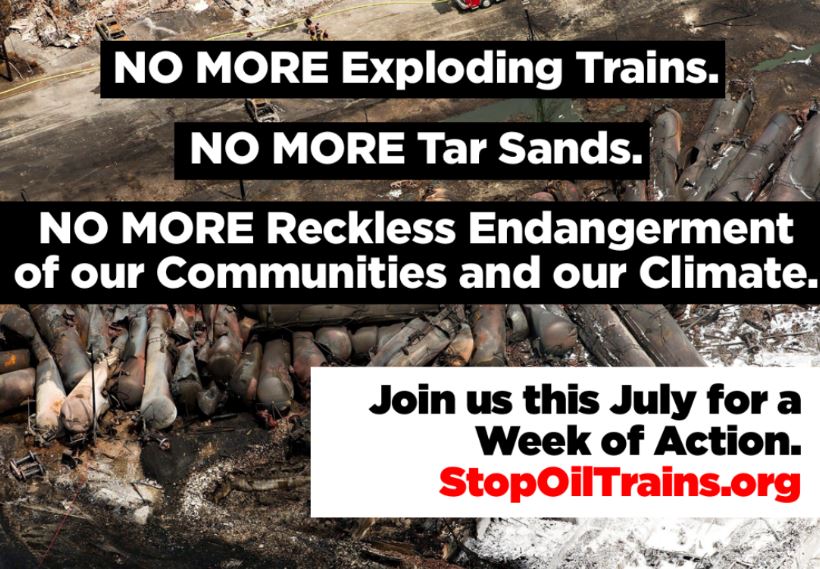
In July 2014, thousands of concerned citizens gathered at 63 events for the first Stop Oil Trains Week of Action, including multiple protest and outreach actions in Sandpoint and Spokane [1].  As Wild Idaho Rising Tide (WIRT) and allies continue to actively oppose Alberta tar sands and Bakken shale oil exploitation and train and pipeline transportation, we refuse to let Big Oil play Russian roulette with our families, friends, homes, businesses, and climate!  On July 6 to 12, 2015, people across North America are defending their communities and climate, to halt extreme energy in its tracks and end the oil and rail industries’ pipeline on wheels [2].  We will call attention to the growing threat of oil trains, as we demonstrate the growing power of our movement, organizing more than 100 events across the U.S. and Canada, which demand an immediate ban on oil trains.

Please join WIRT and allies at local demonstrations during the Stop Oil Trains Week of Action, and/or host or attend an event in your vicinity between July 6 and 12.  Together with climate, environmental, and social justice activists across North America, we are organizing various tactics and resources to stage powerful and effective actions and documenting them with photos, videos, audio, and social media, to defend and protect frontline, rail corridor communities and our shared climate.  Stand with residents of Lac Mégantic and other communities in the crosshairs of Big Oil, to stop oil trains this July, by participating in one or all of these five actions. Continue reading

Stop the New Keystone XL: Northwest Tar Sands Trains!


a7fb8b6bd6b993846ce02bb84a04f7ce_XL

Please help FBI-targeted Wild Idaho Rising Tide activists stage direct action training workshops and actions resisting the new Keystone XL: Alberta tar sands moving by train across the Northwest since late November 2014, from Idaho and Montana rail gateways!  Spread the word!

The Northwest tar sands-by-rail story: http://on.fb.me/16NrAaV

FBI contact of Northwest climate activists: http://on.fb.me/1KvJ6ja

Your chance to give: http://bit.ly/1C9KDVR

WIRT Report on Sandpoint Oil and Coal Train Traffic Public Forum


20150114_173042

Various north Idaho city, county, and state government elected and agency officials and two environmental organization representatives banned the public from several closed meetings during recent months, while they discussed the environmental and public health and safety threats and opportunities for resolution of increased coal and oil train traffic across the Panhandle [1-3].  In the wake of critical news stories denouncing this fiasco from Sandpoint to Boise, Idaho, and from Spokane, Washington, to Washington D.C., excluded, rightfully appalled citizens expressed regrets that participating government entities and environmental groups denied them access to these essential conversations about such crisis topics, even while public awareness has grown in response to fiery oil train derailments across North America during the 18 months since the tragic Lac Megantic disaster that incinerated 47 lives in July 2013.

Perhaps in embarrassment, the City of Sandpoint, Idaho, sponsored and hosted a community forum on north Idaho coal and oil train issues at 5:30 pm on Wednesday, January 14, 2015, in Sandpoint City Council Chambers at Sandpoint City Hall, 1123 Lake Street [4].  Sandpoint Mayor Carrie Logan called for this public meeting in mid-December, to provide an opportunity for citizens to hear current information about expanding coal and oil rail traffic and to discuss the risks, challenges, and possible solutions of community safety and wellbeing currently compromised by air, water, and noise pollution, crossing delays, economic impacts, and potential train derailments.

The city invited the public and local, state, and federal representatives, along with spokespersons of Burlington Northern Santa Fe (BNSF), Montana Rail Link (MRL), and Union Pacific (UP) railroads.  Event moderator Chris Bessler, owner and publisher of Sandpoint Magazine, offered an issue overview and introduced the eight citizen, city and county government, and railroad company panelists.  In order of appearance, Mayor Carrie Logan, citizen advocate Gary Payton, Jared Yost of the Sandpoint Mapping and GIS Department, Bob Howard of Bonner County Emergency Services, Gus Melonas and Ross Lane of BNSF, and Jim Lewis and Casey Calkin of MRL each gave approximately ten-minute presentations.  Anticipating a lively evening with good citizen turnout, the panel accepted written questions, comments, and concerns collected from the audience and asked by the moderator.  During the last 15 minutes of the forum, city and county residents approached the panel with their verbal queries and assertions. Continue reading

Wednesday Sandpoint Oil/Coal Train Forum & Other Events


Lake Pend Oreille Oil Train

Climate concerned comrades,

This Wild Idaho Rising Tide (WIRT) event alert and upcoming newsletter cover mostly Idaho- and Montana-centric developments in the oil and coal train and terminal issues since late October 2014, in hopes of eventually sharing more news about hundreds-strong turnouts at Spokane and Olympia hearings on the Washington Marine and Rail Oil Transportation Study in October, along with stories about several blockades of train tracks and a state agency by our great Rising Tide and allied comrades in the Pacific Northwest, since WIRT’s mid-July Sandpoint “bomb train” protest and regional actions with Spokane Rising Tide.

Postponed Keystone XL Pledge of Resistance Trainings

After scrutinizing bus schedules, car rentals, and travel logistics over the weekend, WIRT activists have discussed and decided to postpone announcing and staging the Keystone XL Pledge of Resistance training workshops in five regional cities until February 2015.  Thanks for your patience with this situation.  We just do not have the $250 to $300 travel funds or the survival-drained, physical energy to make this rigorous tour happen.  Allowing a week for response, we have not received a reply from the larger, national organizers of the trainings, who garnered almost 100,000 pledges and presumably would supply some of the training materials and share much needed inland Northwest contacts.  While we would appreciate attracting with these workshops some of the middle ground of the climate movement from Big Green bandwagons toward more assertive, local direct actions, we must remain focused on more pressing regional fossil fuels resistance during January, which only a few grassroots groups are supporting.

Although we will miss commemorating the informal fourth anniversary of WIRT (January 17) with a similar Moscow training in our former meeting space, The Attic, we will likely reschedule Sandpoint/Spokane, Boise/Moscow, and Missoula trainings on three successive February weekends, depending on venue availability.  By then, various colleges and universities will have rejoined the academic year, and activists may already be in these areas for protests or hearings, as we together raise the hundreds of dollars required in advance for trainer transportation.  Attendees may especially benefit from the legal expertise of much appreciated attorneys leading “know your rights” portions of these workshops.  Thanks to all of the participants in the Third Annual Stand Up! Fight Back! Against Fossil Fuels in the Northwest! meetings, who have graciously provided input and worked on arrangements for these trainings [1].

Sandpoint Oil/Coal Train Public Forum

The City of Sandpoint, Idaho, is finally sponsoring a community forum on north Idaho coal and oil train issues at 5:30 pm on Wednesday, January 14, 2015, in Sandpoint City Council Chambers at 1123 Lake Street [2].  Sandpoint Mayor Carrie Logan called for this public meeting in mid-December, to provide an opportunity to hear current information about expanding coal and oil rail traffic and to discuss the risks, challenges, and possible solutions of citizen and community safety and wellbeing currently compromised by air, water, and noise pollution, crossing delays, economic impacts, and potential train derailments.  The city has invited the public and local, state, and federal representatives, along with spokespersons of Burlington Northern Santa Fe (BNSF), Montana Rail Link (MRL), and Union Pacific (UP) railroads.  As tentatively scheduled, Chris Bessler, owner and publisher of Sandpoint Magazine, will offer an issue overview and introductions and moderate presentations by Casey Calkin and Jim Lewis of MRL, Bob Howard of Bonner County Emergency Services, Ross Lane and Gus Melonas of BNSF, Mayor Carrie Logan, citizen advocate Gary Payton, and Jared Yost of the Sandpoint Mapping and GIS Department.  Anticipating a lively evening with good citizen turnout, the government/railroad panel will accept written questions, comments, and concerns collected from the audience and asked by the moderator.  Contact the Mayor’s office at 263‐3310 or cityclerk@ci.sandpoint.id.us, for further information about this event. Continue reading