 The U.S. Department of Agriculture Forest Service (USFS) and compromised, north Idaho Big Greens involved in the Panhandle Forest “Collaborative” have agreed to massive deforestation of steep mountains on the remote, wilder, east side of Lake Pend Oreille, promoted as “restoration” projects to reduce wildfires and insect and disease outbreaks [1, 2]. Over the next few years, the Sandpoint Ranger District of the Idaho Panhandle National Forests (IPNF) and timber companies plan to excessively build roads and log over 175,000 acres of Lake Pend Oreille slopes, which would degrade water and air quality, wildlife habitat, protected areas, and recreational opportunities. A complex of three contiguous logging projects, the 57,000-acre Buckskin Saddle, 43,000-acre Chloride Gold, and 43,500-acre Honey Badger, extends 45 miles from the Clark Fork River on the north, throughout eastern lake forests, and south to the Hayden Lake area. Government proposals and decisions on these unnecessary forays into carbon-sequestering forests overlap temporally, while the middle Chloride Gold project also overlaps spatially with the area of the Kaniksu Winter Recreation environmental assessment (EA). These USFS overlaps are called “stacking National Environmental Policy Act (NEPA) documents,” an illegal rush and overburden of public scrutiny.
Located to the south of federal agency-finalized Buckskin Saddle project destruction, currently stalled by Johnson Creek bridge replacement near the Clark Fork River delta between September 2022 and May 2023, and potential litigation by grassroots groups, the Chloride Gold (CG) project proposes to conduct “vegetation management,” “hazardous fuels reduction,” and other activities to “manage invasive plants, roads, trails, recreation, wildlife habitat, and improve fish passage under roads … [and] overall landscape resiliency to disturbances” [2-6]. Pre-scoping ideas suggested that the USFS planned to push approximately 23.8 miles of new, “temporary” road construction and over 12 square miles of forest “regeneration” cuts in the area, which would remove the vast majority of trees in over 17,000 acres (26.6 square miles), through logging, road building, and controlled burning, even in inventoried roadless areas (IRAs). According to the December 1, 2022, Chloride Gold scoping notice signed by Sandpoint District ranger Jessie Berner, over 22,500 acres would undergo “vegetation treatments” including large clearcuts and prescribed burns. The scoping letter requests public review and comments by Monday, January 16, 2023, for USFS consideration in drafting only an environmental assessment (EA), not the full environmental impact statement (EIS) required and necessary for the CG onslaught.
On September 27, 2022, in preparation for a public presentation and field trip refuting this logging project, provided by regional, climate activist collective Wild Idaho Rising Tide (WIRT) in spring or summer 2023, Northern Rockies wildlands and wildlife activist and GIS researcher Paul Sieracki and two WIRT board members visited the Chloride Gold logging project area [7]. With precise maps in hand while exploring CG forests, these citizen monitors found a highly impacted landscape, crossed by a spaghetti network of roads and all-terrain vehicle (ATV) and motorcycle trails, devastated by huge logged areas, and immersed in road dust and subsequent lake haze. They documented and publicly offered their observations with photographs and descriptions, noting several situations in which further CG ravages could severely disturb flora, fauna, and roadless areas [7]. For the Wednesday, January 11, 2023, Climate Justice Forum, weekly radio program produced by WIRT and recorded and posted on the WIRT website, Paul graciously expounded on his knowledge of the probable damages of the lakeside Chloride Gold scheme [8]. WIRT shares a summary of these insights in the following sections intended to further inform and assist public input resisting this CG cause of regional climate chaos. Continue reading
 Wild Idaho Rising Tide (WIRT) and climate activists throughout the West are organizing solidarity protests of oil trains and infrastructure, for a day of action against the Uinta Basin Railway (UBR), supporting campaigns against the Utah oil-by-rail scheme and in north Idaho, denouncing completion of BNSF Railway’s second, almost mile-long, rail bridge across the state’s largest, deepest lake: mountainous Lake Pend Oreille. Utah and Colorado comrades are calling for community-led actions on Saturday, December 10, 2022, to show that concerned citizens object to the devastating UBR project, and to pressure federal lawmakers, state representatives, and local governments to prevent building of the Uinta Basin Railway. They ask everyone to explore the #StopUintaBasinRailway action toolkit with information about the UBR and action coordination, sign a letter to Agriculture Department Secretary Tom Vilsack, demanding that he revoke the U.S. Forest Service permit for the railway, participate in actions happening in a dozen locations, register to join a remote phone bank on Tuesday, December 13, at 10 am Pacific time, and tell UBR opponents that you are interested in assisting this campaign [1-2].
 GTN Xpress & Idaho & Northwest Stakeholders
 Regional organizations and grassroots activists of 350 Spokane, Idaho Chapter Sierra Club, Palouse Extinction Rebellion, Rogue Climate, Veterans for Peace Spokane Chapter 35, and Wild Idaho Rising Tide (WIRT) request your participation and support of public protests of three corporations pushing the dangerous Gas Transmission Northwest (GTN) Xpress pipeline expansion project. We are collectively co-hosting these actions in solidarity with sovereign Wet’suwet’en land defenders and water protectors opposing Coastal GasLink pipeline construction through their unceded, indigenous territories in British Columbia, Canada. Allied groups are planning peaceful, safe, and effective citizen pickets on nearby public walkways outside fossil fuel company offices during early November, to attract a broad range of involvement and responses from the public, issue coalition groups, and media. Several partner organizations are graciously offering travel funds and providing Stop GTN Xpress/Coastal GasLink logo designs, T-shirts, signs, banners, and other equipment. Volunteer activists are eager to engage you in resistance to both Northwest gas pipelines owned by TC Energy, notorious for its Keystone XL tar sands pipeline. Please share this event announcement and flyer and other campaign outreach materials via text, social media, email, and website, invite and bring your friends, family, and protest signs, create props and coordinate carpools and various logistics, and join us at one or all of these lively demonstrations!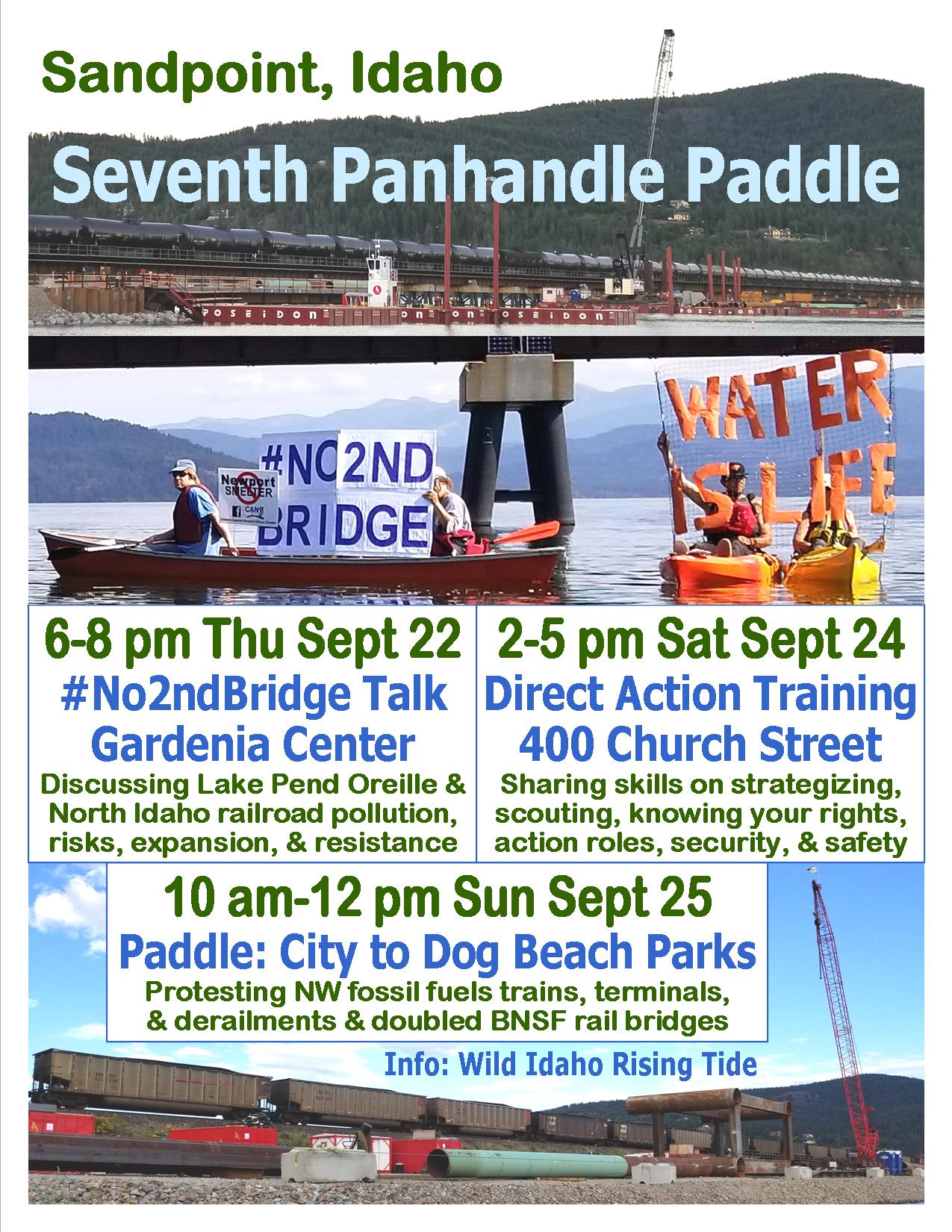
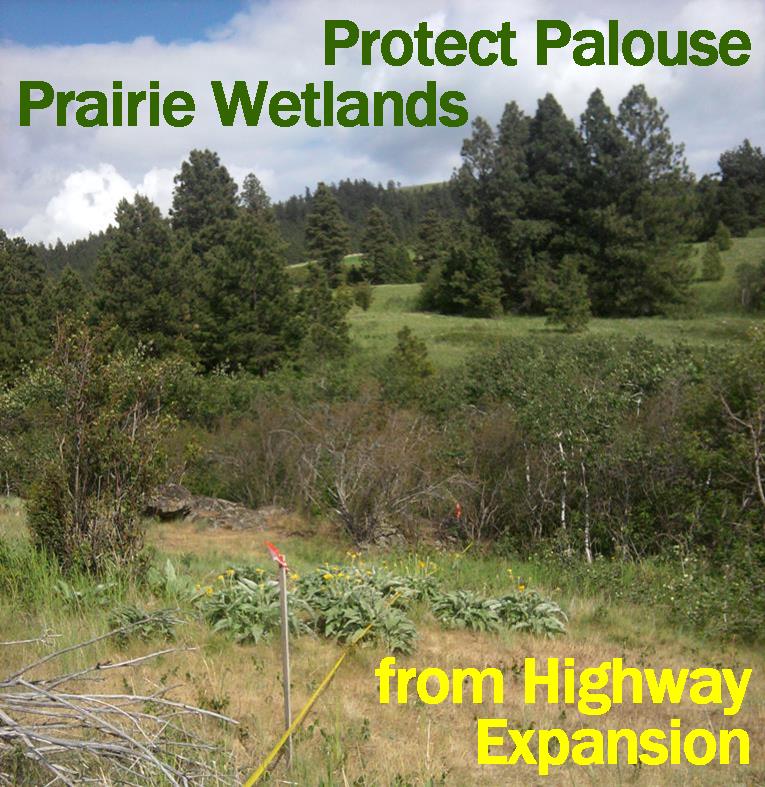 Protect Palouse Prairie Wetlands from Highway Expansion
 On Tuesday, August 2, through Saturday, August 7, Kalispel and regional tribal members and the River Warrior Society are holding the annual Remember the Water canoe journey [1]. The paddle usually voyages between Qpqpe (Sandpoint, Idaho) and the Qlispe (Kalispel) Tribal Powwow Grounds, during the days before and beginning the yearly Kalispel Powwow and around the time of the Festival at Sandpoint music concerts. Families and friends are again paddling over 35 miles in traditional, dugout, wooden and sturgeon nose canoes, through their home lands and waters in the tributaries, lake, and river of the Pend Oreille watershed. While oil and gas pipeline expansions and fossil fuels pipeline-on-rails infrastructure and transportation impose and risk further harms to indigenous people and places across Turtle Island (North America), Native neighbors continue to revive, uphold, and practice their ancient cultures and sustainable ways, through admirable endeavors like this canoe journey and culminating powwow.
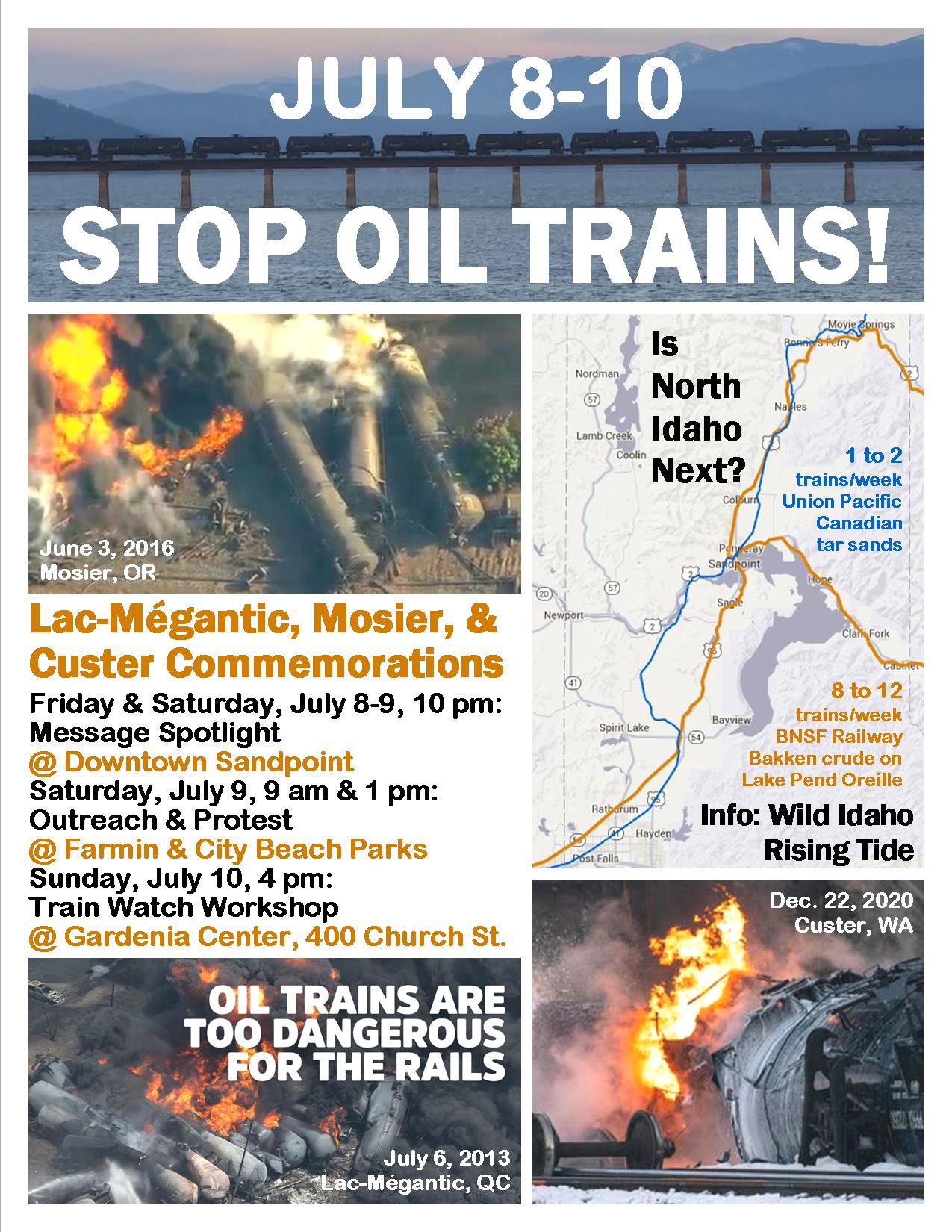 July 8-10 annual actions remember the Lac-Mégantic, Mosier, & Custer disasters
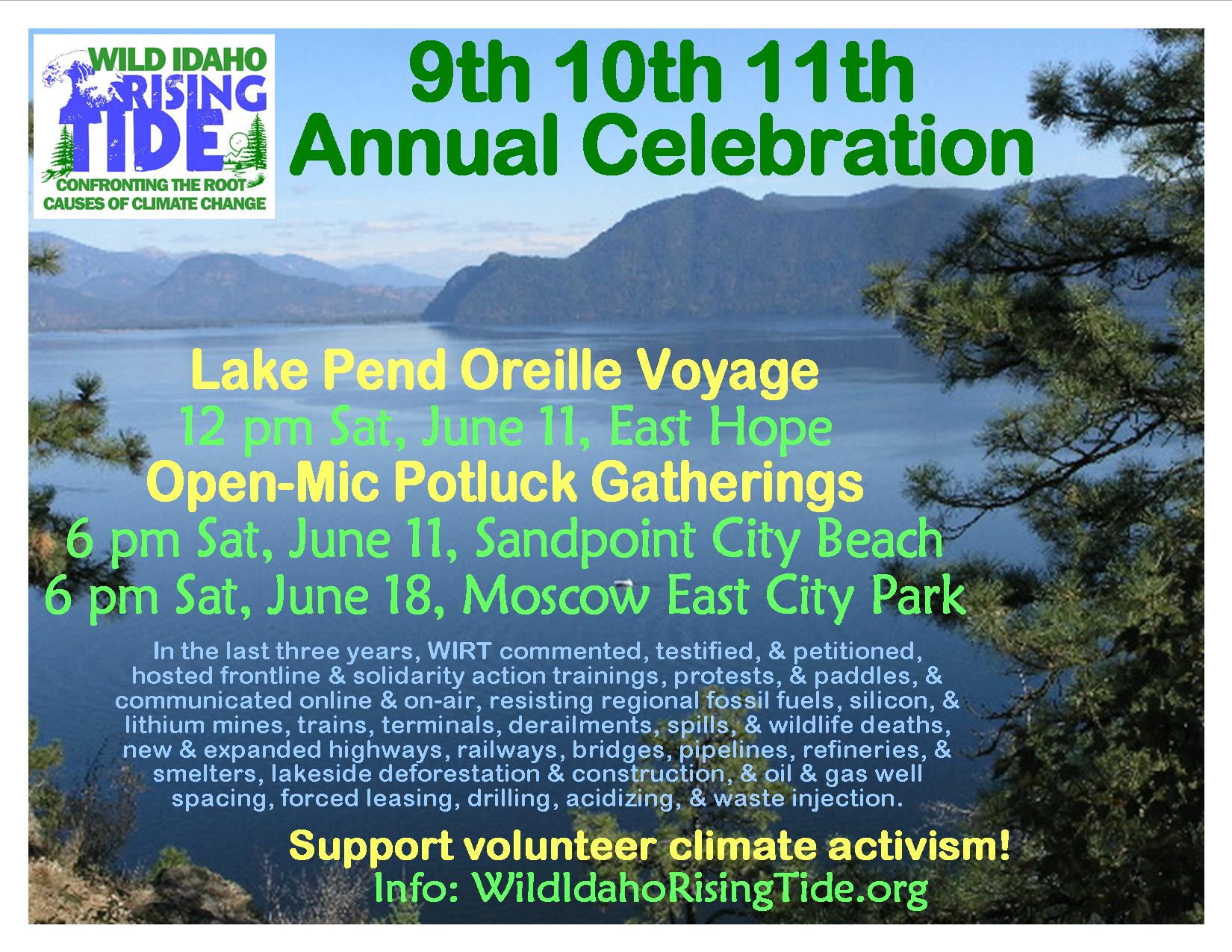 Wild Idaho Rising Tide (WIRT) is celebrating three March 31 anniversaries during recent, pandemic years, as a regional, activist collective confronting the root causes and perpetrators of climate change, through direct actions and locally organized solutions, in solidarity with frontline communities and grassroots networks of fossil fuels resistance [1-5]. We invite and welcome everyone of all ages to share this decade-plus milestone at two Ninth, Tenth, and Eleventh Annual Celebrations of Wild Idaho Rising Tide, held as outdoor, COVID-19-safe gatherings in Sandpoint and Moscow, Idaho. Please join dirty energy resisters for an afternoon voyage on Lake Pend Oreille and two evening celebrations, all full of well-deserved, reinvigorating, shared camaraderie, spirited conversations, good food and drink, and talented performances.
