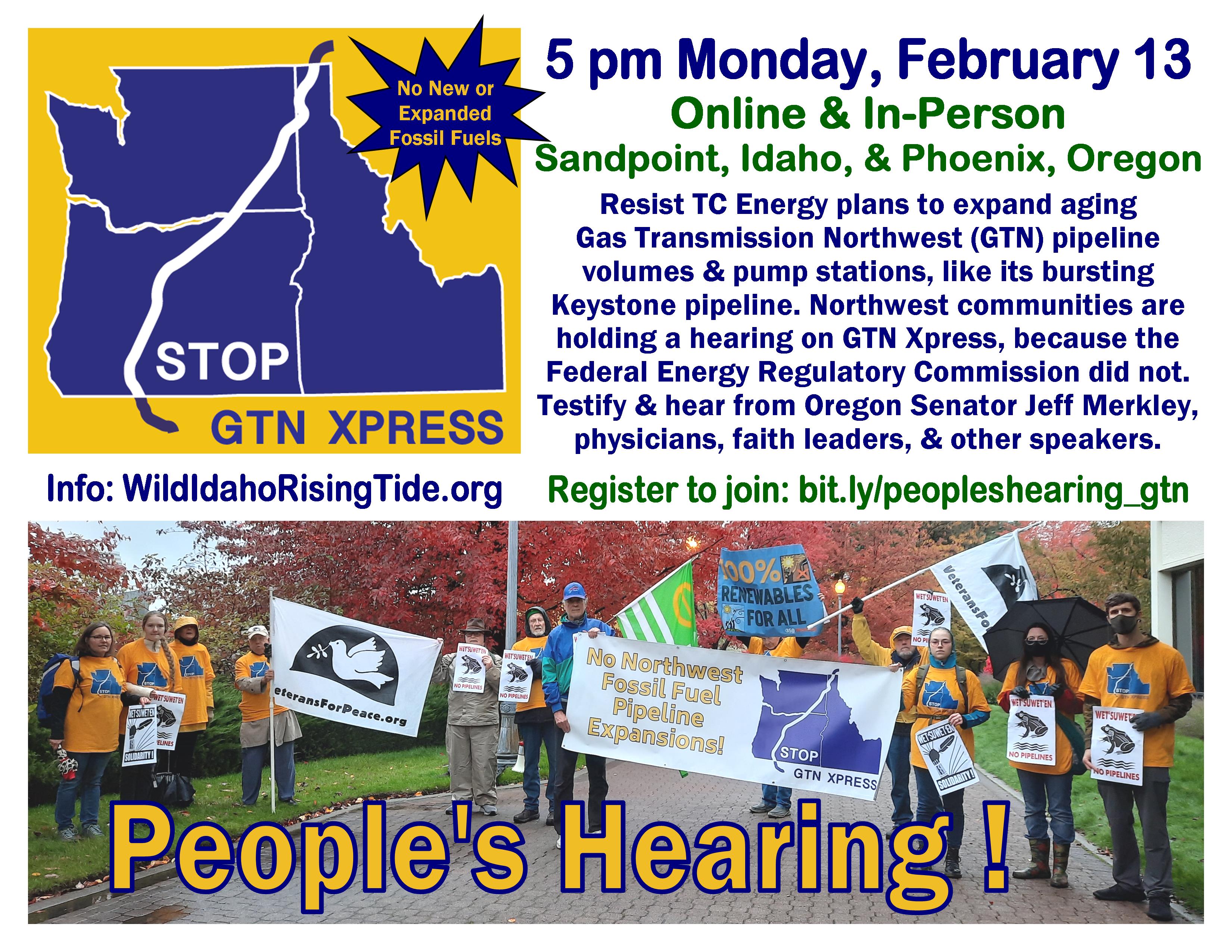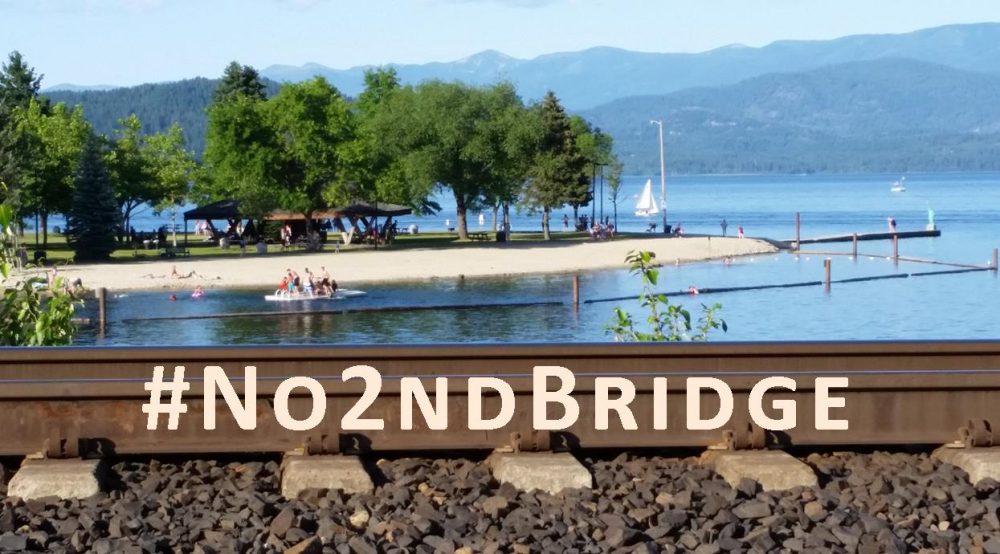
 Wild Idaho Rising Tide (WIRT) is celebrating its March 31 anniversary and thirteenth year as a regional, climate activists collective confronting the root causes and perpetrators of air pollution, water degradation, and resulting climate change, through direct actions and locally organized solutions, in solidarity with frontline communities and grassroots networks of fossil fuels resistance [1-5]. We welcome everyone of all ages to enjoy this milestone at two 13th Annual Celebrations of WIRT, held as benefit performances and potluck gatherings in Sandpoint and Moscow, Idaho, with provided pizza, requested snacks and beverages, a background slide show of WIRT and allied activism, and updates on six Northwest campaigns. WIRT invites and extends our hearty thanks to the remarkable core activists, board members, friends, and allies who have coordinated and shared the successes of ongoing citizen challenges of the corporate and government sources of climate chaos.
Please join WIRT activists on two early spring evenings, for convergences full of lively music, spirited conversations, invigorating camaraderie, wholesome food and drink, and creative works offered by north Idaho and regional residents. At each of these free, public events, we eagerly anticipate community members sharing their admired talents and participating as volunteers and/or sponsors. These yearly festivities not only strive to raise awareness and funds supporting relentless, earnest, WIRT climate activism, but also seek to further attract and involve cross-cultural and youth diversity in the climate justice movement in Idaho and the Northwest.
Thursday, March 28, 7 pm: Community Open Mic & Desiree Aguirre
Gardenia Center, 400 Church Street, Sandpoint
WIRT encourages poets, writers, musicians, creative peers, and allied groups to participate in an open microphone and potluck meal, at one of the last community events at the Gardenia Center, a beloved gathering place currently for sale and as endangered by development as the Earth [6]. A local poet will host reading and sharing of odes and tributes to the decades of community service bestowed by and through the Gardenia. Multi-instrumentalist, roots musician Desiree Aguirre will sing stories and play banjo and maybe guitar for 30 to 45 minutes, and organizers will “pass the hat” for donations covering event publicity and travel.
Friday, March 29, 7 pm: Campaign Updates & the Eclectrix
The Attic, 314 East Second Street (rear, second story), Moscow
During this year’s celebrations in both Sandpoint and Moscow, WIRT and allied group representatives plan to lead discussions about resistance campaigns and upcoming events, including Northwest tar sands mining and refining megaloads and Alberta tailing pond breaches, southwest Idaho oil and gas extraction and waste injection wells and plant emissions, Paradise Ridge highway construction through wetlands and rare native habitat, Idaho Panhandle fossil fuels and hazardous freight trains and railroad infrastructure and wrecks, Lake Pend Oreille-adjacent timber sales, and Gas Transmission Northwest (GTN) Xpress pipeline expansion. The high-energy Eclectrix duo of Jessica Amy Cowitz and Fiddlin’ Big Al Chidester will also play a variety of folk, blues, and country music as well as original compositions on guitar, mandolin, fiddle, and banjo. Continue reading
 Megaload Information
 On October 19, the Federal Energy Regulatory Commission (FERC) approved the Gas Transmission Northwest (GTN) Xpress expansion of an unsafe, potentially explosive, six-decade-plus, methane (“natural” gas) pipeline across Idaho, Washington, and Oregon to California [1-7]. The Calgary, Alberta-based, Canadian owner of the rejected Keystone XL and rupture-prone Keystone tar sands pipelines in the Great Plains and the fiery Columbia Gas Transmission line in the northeast U.S., TC Energy (formerly TransCanada) proposes to increase the pump pressures of three compressor stations in Athol, Idaho, Starbuck, Washington, and Kent, Oregon, and push an additional 150 million cubic feet per day of unneeded, fracked gas volumes through the almost 1,400-mile-long GTN line from Eastport, Idaho, to Malin, Oregon, suspiciously the origin point of the defeated Pacific Connector gas pipeline to the also vanquished Jordan Cove liquefied natural gas (LNG) export terminal planned for Coos Bay, Oregon [8, 9].
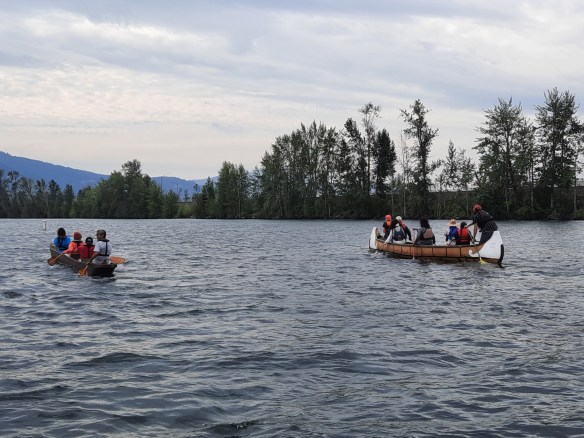 On Monday, July 31, through Friday, August 4, Kalispel and regional tribal members and the River Warrior Society are holding the annual Remember the Water Kalispel Powwow canoe journey [1, 2]. The paddle usually voyages from Lake Pend Oreille and Qpqpe (Sandpoint), Idaho, to the Qlispe (Kalispel) Village in Cusick, Washington, during the week before the yearly Kalispel Powwow and around the time of the Festival at Sandpoint music concerts. In this cultural journey, families and friends are again paddling in traditional, dugout, wooden and sturgeon nose canoes, like their ancestors did for travel, fishing, and fun, over 50 miles through their home lands and waters among the tributaries, lake, and river of the Pend Oreille watershed.
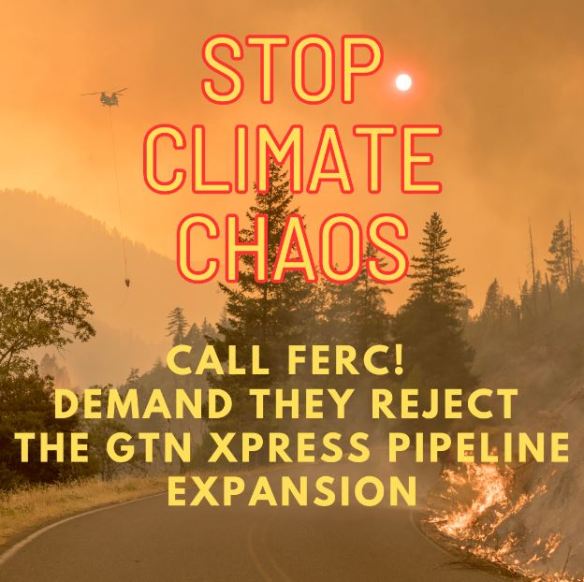 WHAT THE FERC?!
 July 7-9 annual actions remember the Lac-Mégantic, Mosier, & Custer disasters
 On Wednesday evening, April 12, in Spokane, Washington, faith, spiritual, health, and environmental advocates will lead a community gathering, teach-in, and procession in opposition to the proposed Gas Transmission Northwest (GTN) Xpress fracked gas pipeline expansion [1]. The 62-year-old GTN pipeline runs under the Spokane River and through Liberty Lake, Spokane Valley, and other parts of Spokane County [2, 3]. Canadian company TC Energy, owner of the leaking Keystone and rejected Keystone XL tar sands pipelines, and its subsidiary GTN threaten to pump up to 150 million cubic feet of additional methane gas per day through the GTN pipeline that crosses north Idaho, eastern Washington, and central Oregon.
 Wild Idaho Rising Tide (WIRT) is celebrating its March 31 anniversary and twelfth year as a regional, climate activists collective confronting the root causes and perpetrators of air pollution, water degradation, and resulting climate change, through direct actions and locally organized solutions, in solidarity with frontline communities and grassroots networks of fossil fuels resistance [1-5]. We welcome everyone of all ages to enjoy this decade-plus milestone at two Twelfth Annual Celebrations of WIRT, held as benefit concerts and potluck gatherings in Sandpoint and Moscow, Idaho, with provided pizza, requested snacks and beverages, and a background slide show of WIRT and allied activism. WIRT invites and extends our hearty thanks to the remarkable core activists, board members, friends, and allies who have coordinated and shared the successes of ongoing citizen challenges of the corporate and government sources of climate chaos.