More photos posted by March 6.
Category Archives: Actions
Idle No More World Day of Action Idaho Solidarity 1-27-13
Idle No More World Day of Action Idaho Solidarity
Urgent Alert and Update:
[The contracted hauler Mammoet is transporting two ConocoPhillips wastewater evaporators manufactured in Newburg, Oregon, to northern Alberta tar sands operations via Highway 12 in Idaho starting Wednesday night, January 30. Each megaload weighing 255,600 pounds and measuring 20 feet tall, 16 feet wide, and 141 feet long will depart the Port of Wilma, across the river from Clarkston, Washington, on separate nights and travel as far as possible toward the Montana border between 10 pm and 5:30 am, depending on road and weather conditions. The Idaho Transportation has not announced when the second load will similarly ravage Nez Perce lands, the Middle Fork Clearwater/Lochsa wild and scenic river corridor, area highways, and traveler safety. Two pilot vehicles and flagging teams will accompany both shipments and limit traffic delays to less than 15 minutes.
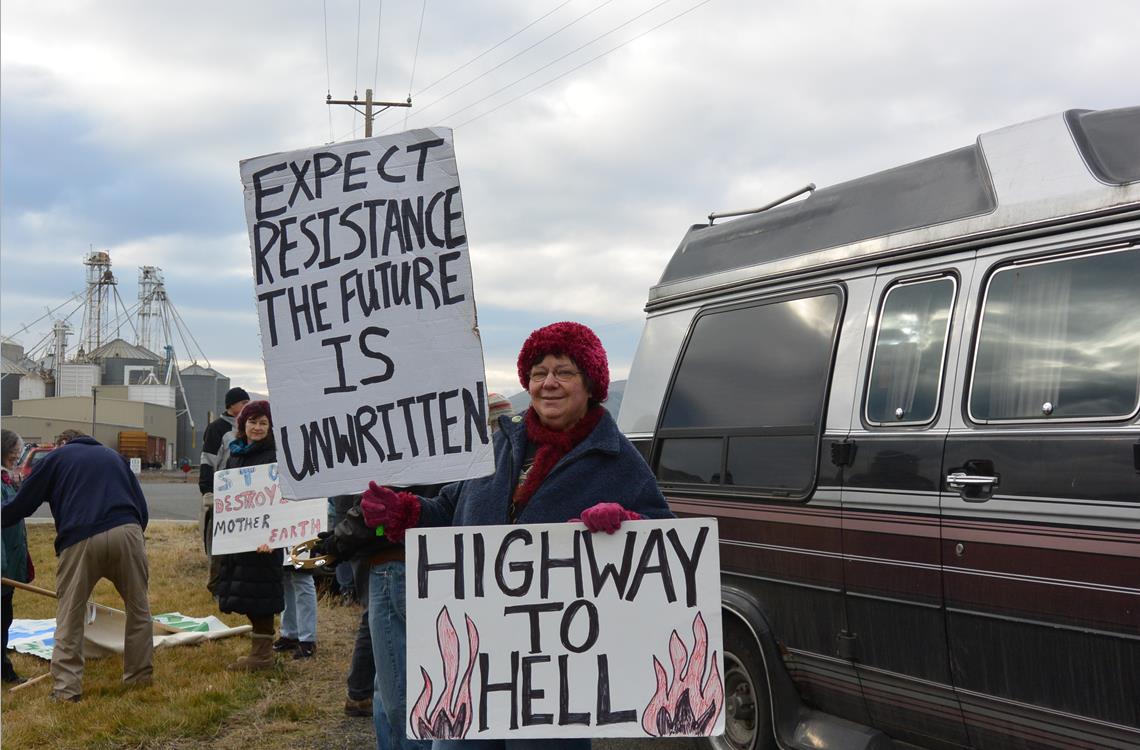
On Wednesday and successive evenings, January 30 and beyond, Wild Idaho Rising Tide (WIRT) monitoring and protesting carpools provisioned with video and still cameras, audio recorders, and notebooks will converge at 9 pm at the corner of Second and Washington Streets in Moscow, to demonstrate our megaload opposition at 10 pm along Idaho Highway 128 near Lewiston. Citizen monitors will then follow each shipment to their stop-over point, likely near Kooskia, where they will park during the day. Because Mammoet’s transportation plan prohibits these transports from delaying other highway vehicles for more than 15 minutes before pulling over to let traffic pass, we intend to also scrutinize their every move on their second nights traveling toward milepost 139 east of Lowell, and on their third nights in Idaho, struggling over the Bitterroot crest and the Idaho/Montana state line, toward the Lolo scale in Montana. All of our plans are subject to the constantly changing dynamics of weather and terrain. For more information and to RSVP as a megaload monitor and protester, contact Wild Idaho Rising Tide at wild.idaho.rising.tide@gmail.com, through facebook, at the WIRT Activist House between noon and 8 pm daily, and/or at 208-301-8039.] Continue reading
Highway 95 Forum 1-19-13
Opening of the U.S. Highway 95 Reroute Discussion
Part 1 of the U.S. Highway 95 Reroute Discussion
Part 2 of the U.S. Highway 95 Reroute Discussion
(Also see Tim Hatten’s presentation slides: posted soon)
Part 3 of the U.S. Highway 95 Reroute Discussion
Highway 95 Forum and Field Trip 1-19-13
In early January 2013, the Idaho Transportation Department (ITD) released its U.S. 95 Thorncreek Road to Moscow draft environmental impact statement (DEIS) and technical reports on three alternatives for proposed realignment of the dangerously accident-prone 6.5-mile stretch of Highway 95 just south of Moscow. Its preferred E-2 alternative mirrors 10A of the 2002 ITD environmental assessment that the Paradise Ridge Defense Coalition and its allies successfully challenged, secured a federal injunction, and forced ITD to complete the current DEIS review process. The purportedly shorter and safer E-2 eastern route would climb 400 to 500 feet up the western, exposed shoulder of scenic Paradise Ridge, while compromising weather-related highway traveler safety, area aesthetics and noise levels, wetland preservation, and protection of rare remnants of native Palouse Prairie habitat and wildlife. It would also inflict the greatest detrimental effects on pine stands, ungulate conservation and collisions, endangered species, and ecosystem restoration, as it imposes more stream tributary crossings, impervious surfaces, pollution runoff, and weed infestations. The U.S. Environmental Protection Agency and Fish and Wildlife Service as well as the Idaho Department of Fish and Game have strongly recommended against this eastern Highway 95 corridor, likely advanced by ITD to accommodate international industrial traffic like tar sands megaloads.
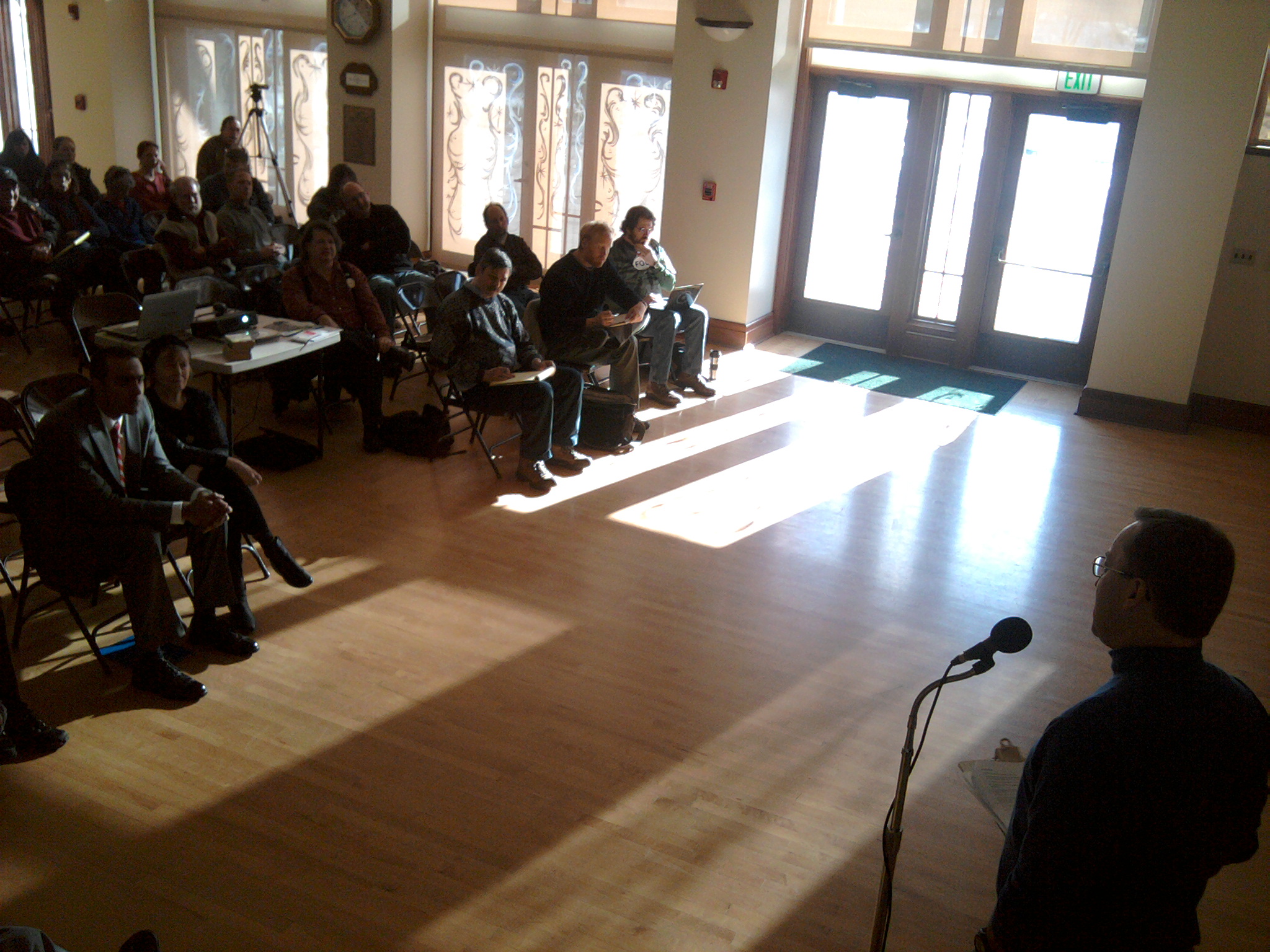
The Paradise Ridge Defense Coalition, Palouse Environmental Sustainability Coalition, and concerned Moscow area citizens and groups welcomed public involvement and discussion at the Highway 95 Forum and Field Trip, a knowledge-sharing session in the 1912 Center Great Room in Moscow, followed by E-2 realignment site visits on Saturday, January 19, 2013. Between noon and 2 pm, community members Al Poplawsky, Cass Davis, Tim Hatten, and Brett Haverstick summarized the DEIS, presented arguments in opposition to the eastern alternative, and opened the informational meeting to questions and insights. From 2 until 5 pm, event organizers and participants carpooled and staged a field trip to locations along and near the proposed eastern Highway 95 route described in the DEIS. Several Paradise Ridge residents hosted pertinent site explorations and talks off Eid and Paradise Ridge roads in the sunny, early evening light. For further information about the Highway 95 Forum and Field Trip, see the event descriptions on facebook and on the Wild Idaho Rising Tide (WIRT) website. Ongoing issue updates, articles, and interviews appear in the Highway 95 Re-Route section of the WIRT website.
Highway 95 Forum and Field Trip
On November 26, the Idaho Transportation Department (ITD) approved a draft environmental impact statement (DEIS) and technical reports on three alternatives for proposed realignment of U.S. Highway 95 between Thorn Creek Road and Moscow. It published the DEIS in early January 2013 and scheduled a public information/comment hearing between 2 and 8:30 pm on Wednesday, January 23, at the Best Western University Inn, 1516 Pullman Road in Moscow, and a public comment period ending on February 23. Of the three DEIS alternatives of 11 options considered by ITD – an eastern route climbing the western shoulder of scenic Paradise Ridge (E2), a central corridor realigning the middle section of the present 6.5-mile stretch of road (C3), and a western, longer route veering close to Washington (W4) – the ITD-preferred eastern alternative shifts the highway up 400 to 500 feet in elevation and 2,000 feet east, between the Primeland Cooperative grain elevators south of Moscow and the top of Reisenauer Hill.
This E2 route in the recently released DEIS mirrors alternative 10A in a previous environmental assessment (EA) of Highway 95 re-construction plans. That 2002 version provoked regional citizen concerns for climate-related highway traveler safety, urban sprawl, area aesthetics, wetland preservation, and protection of rare remnants of native Palouse Prairie habitat and wildlife. The Paradise Ridge Defense Coalition (PRDC) emerged and, along with the Palouse Group of the Sierra Club and the Idaho Conservation League, successfully challenged the EA, secured a 2003 injunction from U.S. District Judge B. Lynn Winmill, and forced ITD to complete the current DEIS review process mandated for all federal highway redesign projects that widen or re-route roadbeds.
A reactivated group of prior and new PRDC members have identified many potential environmental, economic, and social consequences of the purportedly shorter, faster, and safer eastern realignment of Highway 95. Besides the same ongoing objections, they note that the DEIS E2 alternative would impose the greatest detrimental effects on pine stands, ungulate (deer, moose) conservation and collisions, endangered species, and ecosystem restoration. It would also create more stream tributary crossings, impervious surfaces, and pollution runoff and challenge flood control. The U.S. Environmental Protection Agency and Fish and Wildlife Service as well as the Idaho Department of Fish and Game have strongly recommended against this eastern Highway 95 corridor, likely advanced by ITD to accommodate international industrial traffic like tar sands megaloads. Continue reading
Coal Export Resistance Solidarity Actions

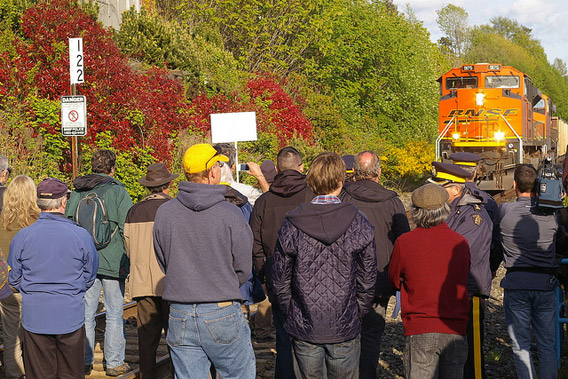
In early May 2012, police arrested 13 concerned British Colombia residents along with scientists, when they blocked four Wyoming coal export trains (350.org photo).
As the environmental impact statement (EIS) scoping period for the proposed Gateway Pacific Terminal at Cherry Point, Washington, draws to a close on January 21, and public comments on the Coyote Island Terminal in Boardman, Oregon, are long past due, federal, state, and county decision makers never provided public hearings in Idaho and Montana or a mine-to-port regional programmatic environmental analysis. Nonetheless, residents of the comparatively rural inland Northwest, especially near Powder River Basin coal strip mines and train routes through Montana population centers and along the railroad funnel between Sandpoint, Idaho, and Spokane, Washington, will bear most of the adverse risks and consequences of domestic coal export to Asia, while Ambre Energy, Arch Coal, Peabody Energy, SSA Marine, and other giant coal companies reap billions of dollars in profit on up to 160 million tons of coal per year, at taxpayers’ expense.
Pillaged public investments would support the required infrastructure and mitigate the predictable damages of this corporate onslaught. Each of the 40 to 60 additional coal trains per day, 1.5 miles long with their 125 cars, would spew toxic coal dust, diesel fumes, occasionally derailed loads, and incessant noise, disrupt local transportation, businesses, emergency responses, and economies, and degrade air and water quality, human and wildlife health, property values, and regional identity. Five proposed West Coast and Columbia River terminals with huge, open-air coal heaps, river barges through endangered species critical habitat, and over 950 immense, ocean-going, coal ships per year, crowding oil tankers through the tangled Salish Sea to Asian markets for combustion, would further compromise aquatic ecosystems and inhabitants and significantly exacerbate pollution and global climate change.
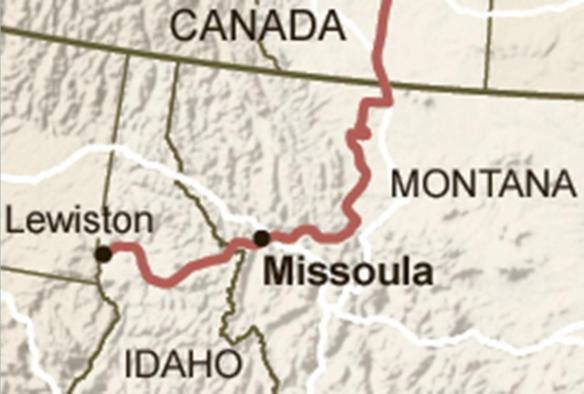
Between January 11 and 20, 2013, Blue Skies Campaign, Occupy Spokane, and Wild Idaho Rising Tide are staging four or more coal export solidarity actions at train track/roadside intersections in Moscow and Sandpoint, Idaho, Missoula and other cities across Montana, and Spokane, Washington. But we need your help to powerfully demonstrate our collective regional resistance to coal export schemes perpetrated by industry and government. Tell the U.S. Army Corps of Engineers and Surface Transportation Board, state and county regulatory agencies, and the Burlington Northern Santa Fe Railroad, not to mention the world’s largest private coal companies, that Northwesterners will not tolerate their dismissal of community concerns and environmental wellbeing so apparent in their purported public participation processes and mercenary ventures. Continue reading
Megaload End of the (Industrial) World

URGENT ALERT: We just received notice (at 6:30 pm!) from the Idaho Transportation Department that Mullen Trucking is moving a megaload on Highway 12 tonight (Thursday, January 3). Please see the following, previous description and meet at 9 pm at the corner of Second and Washington Streets in Moscow to monitor and protest this likely Alberta-bound shipment! Call 208-301-8039 for carpool arrangements to Lewiston…
Displaying its usual disregard for traveler safety over a holiday weekend and dangerous winter weather conditions, the Idaho Transportation Department has issued yet another permit for an oversized shipment on U.S. Highway 12 on Thursday night, January 3. A 163-foot-long truck will transport a generator skid from the Port of Lewiston across Idaho to the Montana border and likely to Alberta between 10 pm on Thursday and 5:30 am on Friday. The almost 17-foot tall, 243,000-pound shipment will crowd tight road curves and narrow two lanes with its 15 foot width, and will delay traffic on U.S. Highway 95 as it travels in the wrong direction near the Spalding bridge. Continue reading
Dana Lyons Concert & Workshop in Pullman 11-28-12
On Wednesday, November 28, performer and environmental educator Dana Lyons brought his Great Coal Train Tour to Pullman, Washington, and offered a free afternoon community organizing workshop and a live evening concert at Washington State University (WSU). Singer and guitarist Dana Lyons hails from Bellingham, Washington – ground-zero of Northwest resistance to coal exports, near the largest proposed coal port facility in North America. Best known for his comedy hit song Cows with Guns, Dana has recorded eight albums during his lifetime artistic career and worked around the Earth to raise awareness, activism, and funds for environmental and social justice issues. During his 40-plus-show tour, Dana has visited dozens of communities throughout four Northwestern states, from Billings to Bellingham and from Portland to Coos Bay, along the route of proposed coal export trains that could carry 160 million tons of coal per year from Montana and Wyoming to the Columbia River and West Coast and via supertanker to China. He has networked with local residents and organizers across the region, who are working to stop potential coal mines, trains, and ports for health, safety, traffic, economic, and environmental reasons. Hosted by the WSU Environmental Task Force and Environmental Science Club student groups, Dana’s fun, inspiring, and family-oriented Pullman concert intermingled with place-based storytelling catalyzed community interest and engagement in this significant regional issue among the 30 audience members. For more information about Northwest coal exports, see CoalTrainFacts.org, PowerPastCoal.org, Coal-Free-Bellingham.org, and WildIdahoRisingTide.org. Visit Dana’s website to explore his music, videos, merchandise, and tour schedule at CowsWithGuns.com and listen to his coal train song, Sometimes.


Wild and Scenic Byway, Not Tar Sands Highway

If volatile, climate changed weather does not mercifully impede passage to Alberta tar sands operations, two more Sunshine Oilsands wastewater evaporators could traverse U.S. Highway 12 between 10 pm and 5:30 am next Monday and Tuesday night, December 3 and 4. The Idaho Transportation Department in Boise issued permits on Friday afternoon, November 30, allowing Omega Morgan to haul both over-legal equipment shipments weighing 80,000 pounds and measuring up to 53 feet long, 20 feet wide, and 21 feet tall. Moving at close to normal speeds, each eastbound megaload could cross Idaho separately in one night, from the Port of Wilma in Clarkston, Washington, along Idaho Route 128 and Highway 12, to Lolo Pass on the Montana border. Three flagging teams and pilot vehicles and two trucks with portable signs (but no ambulance) will travel with each module and escort traffic around the convoy at pre-identified pull-offs, as required by the Omega Morgan transportation plan that limits traffic delays to less than 15 minutes. Continue reading
![Bantrel Conoco Evaporator [Enlarged]](https://wildidahorisingtide.org/wp-content/uploads/2013/03/bantrel-conoco-evaporator-enlarged.jpg?w=584&h=265)