
Stop the New Keystone XL: Northwest Tar Sands Trains!


a7fb8b6bd6b993846ce02bb84a04f7ce_XL

Please help FBI-targeted Wild Idaho Rising Tide activists stage direct action training workshops and actions resisting the new Keystone XL: Alberta tar sands moving by train across the Northwest since late November 2014, from Idaho and Montana rail gateways!  Spread the word!

The Northwest tar sands-by-rail story: http://on.fb.me/16NrAaV

FBI contact of Northwest climate activists: http://on.fb.me/1KvJ6ja

Your chance to give: http://bit.ly/1C9KDVR

Wednesday Sandpoint Oil/Coal Train Forum & Other Events


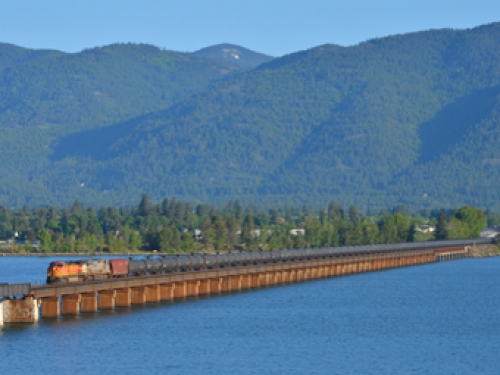
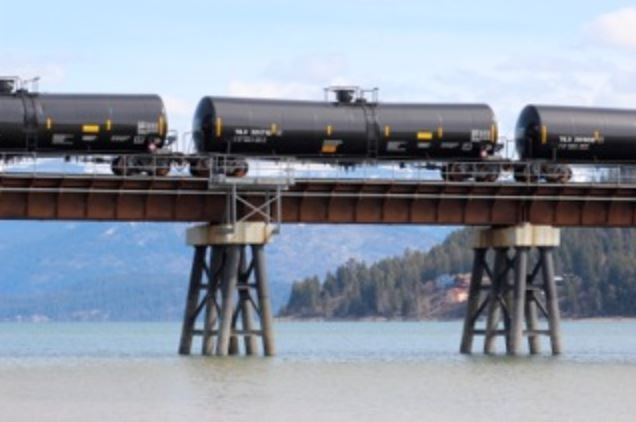
Lake Pend Oreille Oil Train

Climate concerned comrades,

This Wild Idaho Rising Tide (WIRT) event alert and upcoming newsletter cover mostly Idaho- and Montana-centric developments in the oil and coal train and terminal issues since late October 2014, in hopes of eventually sharing more news about hundreds-strong turnouts at Spokane and Olympia hearings on the Washington Marine and Rail Oil Transportation Study in October, along with stories about several blockades of train tracks and a state agency by our great Rising Tide and allied comrades in the Pacific Northwest, since WIRT’s mid-July Sandpoint “bomb train” protest and regional actions with Spokane Rising Tide.

Postponed Keystone XL Pledge of Resistance Trainings

After scrutinizing bus schedules, car rentals, and travel logistics over the weekend, WIRT activists have discussed and decided to postpone announcing and staging the Keystone XL Pledge of Resistance training workshops in five regional cities until February 2015.  Thanks for your patience with this situation.  We just do not have the $250 to $300 travel funds or the survival-drained, physical energy to make this rigorous tour happen.  Allowing a week for response, we have not received a reply from the larger, national organizers of the trainings, who garnered almost 100,000 pledges and presumably would supply some of the training materials and share much needed inland Northwest contacts.  While we would appreciate attracting with these workshops some of the middle ground of the climate movement from Big Green bandwagons toward more assertive, local direct actions, we must remain focused on more pressing regional fossil fuels resistance during January, which only a few grassroots groups are supporting.

Although we will miss commemorating the informal fourth anniversary of WIRT (January 17) with a similar Moscow training in our former meeting space, The Attic, we will likely reschedule Sandpoint/Spokane, Boise/Moscow, and Missoula trainings on three successive February weekends, depending on venue availability.  By then, various colleges and universities will have rejoined the academic year, and activists may already be in these areas for protests or hearings, as we together raise the hundreds of dollars required in advance for trainer transportation.  Attendees may especially benefit from the legal expertise of much appreciated attorneys leading “know your rights” portions of these workshops.  Thanks to all of the participants in the Third Annual Stand Up! Fight Back! Against Fossil Fuels in the Northwest! meetings, who have graciously provided input and worked on arrangements for these trainings [1].

Sandpoint Oil/Coal Train Public Forum

The City of Sandpoint, Idaho, is finally sponsoring a community forum on north Idaho coal and oil train issues at 5:30 pm on Wednesday, January 14, 2015, in Sandpoint City Council Chambers at 1123 Lake Street [2].  Sandpoint Mayor Carrie Logan called for this public meeting in mid-December, to provide an opportunity to hear current information about expanding coal and oil rail traffic and to discuss the risks, challenges, and possible solutions of citizen and community safety and wellbeing currently compromised by air, water, and noise pollution, crossing delays, economic impacts, and potential train derailments.  The city has invited the public and local, state, and federal representatives, along with spokespersons of Burlington Northern Santa Fe (BNSF), Montana Rail Link (MRL), and Union Pacific (UP) railroads.  As tentatively scheduled, Chris Bessler, owner and publisher of Sandpoint Magazine, will offer an issue overview and introductions and moderate presentations by Casey Calkin and Jim Lewis of MRL, Bob Howard of Bonner County Emergency Services, Ross Lane and Gus Melonas of BNSF, Mayor Carrie Logan, citizen advocate Gary Payton, and Jared Yost of the Sandpoint Mapping and GIS Department.  Anticipating a lively evening with good citizen turnout, the government/railroad panel will accept written questions, comments, and concerns collected from the audience and asked by the moderator.  Contact the Mayor’s office at 263‐3310 or cityclerk@ci.sandpoint.id.us, for further information about this event. Continue reading

Spokane FBI Article/Protest Photo Shoot at 10 am Thursday 1/8/15


WIRT activists and allied comrades,

The co-author of the Portland Rising Tide/Wild Idaho Rising Tide (WIRT) chapter Resistance to Alberta Tar Sands Transports in Idaho and Beyond in his anthology about land-based struggles, Grabbing Back, the remarkable writer and friend Alexander Reid Ross consistently shares with the world collective stories of often obscure but always earnest Northwest confrontations with climate change perpetrators and their local, state, and federal facilitators, like the Federal Bureau of Investigation (FBI).  A colleague referred him to Defending Dissent Foundation, which published his latest, extensive essay on their Newswire site, revealing ongoing covert and recently overt FBI harassment, local arrest, and attempted repression of anti-fossil fuel activists in the Northwest [1].  During the last three days, his article has appeared in seven esteemed, online journals, including Climate Connections hosted by the Global Justice Ecology Project, who noted that his excellent story about the FBI contact of core WIRT activists Herb Goodwin in Bellingham, Helen Yost in Moscow, and Deep Green Resistance members in Washington and the Payette County public meeting arrest of Idaho Residents Against Gas Extraction (IRAGE)’s Alma Hasse in early October “works through individual stories that show the effects of harassment on people’s lives, and also provides the larger context of the movement as it continues to evolve” [2-7].

Rising Tide North America (RTNA) and Tar Sands Blockade have widely circulated these pieces, via facebook meme posts and Tweets, about the FBI finally contacting WIRT activists after surveilling us for three and one-half years (maybe because we have been unusually quiet over the last three months, making their snoop fixes difficult).  Our RTNA comrades assert that:

Billy Bragg once said, “If you’ve got a blacklist, I want to be on it.”  Well, we’re definitely on somebody’s list.  In 2014, the federal harassment of Rising Tide activists in the Northwest continued, this time in Idaho and Bellingham, Washington.  The feds harassed activists fighting fossil fuel infrastructure in the Northwest with “knock and talks” and surveillance.  But, of course, the @$$holes who crashed the economy on Wall Street in 2008, and their monstrous clients in the fossil fuel industry who poison and pollute communities on a daily basis with oil, gas, and coal, carry on with business-as-usual.  It’s not a flaw in the system that allows this to happen: it was designed that way.

WIRT offers our sincere praise to all the folks who interviewed and wrote this article like Alex, Alma Hasse, and Herb Goodwin, but especially everyone who has participated in this awe-inspiring movement striving for a better, fossil fuels-free world, like Cascadia Forestdefenders, IRAGE, Spokane Rising Tide, Portland Rising Tide, Rising Tide Seattle, Rising Tide Vancouver-Coast Salish Territories, Rising Tide Bellingham, other Rising Tide groups, Seattle Raging Grannies, and all of our outrageous, indigenous, and climate comrades around the continent. Continue reading

FBI WIRT Inquiries


December 10 & 19, 2014

Federal Bureau of Investigation (FBI) special agent Travis Thiede placed missed phone calls from Coeur d’Alene cell phone number 208-661-0316 to Wild Idaho Rising Tide (WIRT)/Helen Yost three times on December 10, 2014, at 8:10 am, 11:21 am, and 1:07 pm [1-3].  Mr. Thiede called WIRT during the Third Annual Stand Up! Fight Back! Against Fossil Fuels in the Northwest! meetings, likely drawn, with his agency, to these gatherings in Sandpoint, Idaho, on December 8, in Spokane, Washington, on December 9, and in Moscow, Idaho, on December 10 [4].  Helen did not notice these three missed calls until about 3 pm on December 23, 2014.

A little before 10 am on Friday morning, December 19, 2014, WIRT/Helen received another missed, incoming phone call from the same Coeur d’Alene cell phone.  After this fourth call at 9:47 am, Mr. Thiede messaged the WIRT phone, and Helen replied via the following text messages:

TT (12/19, 9:51 am): “Helen, I am trying to get a hold of you to speak with you.  An issue has come up, and I need to speak with you.  Please give me a call.  I am an FBI agent.  SA Travis Thiede.  208-661-0316”

HY (12/19, 9:59 am): “NO!”

TT (12/19, 10:03 am): “OK, I understand, just wanted to have a conversation with you.  Thanks.”

HY (12/20 next day, 9:17 am): “I do not wish to speak with you or any of your associates about anything.”

The December 23, 2014 Morning Mix and Evening Report radio news programs of KRFP Radio Free Moscow ran an interview about the situation with core WIRT activist Helen, by station manager Leigh Robartes [5].  The news story discussed FBI conversation requests and offered updates on the Paradise Ridge Defense Coalition (PRDC) petition and demonstration advocating safety measures for U.S. Highway 95 before re-routing south of Moscow, Idaho.  During the December 23 midnight interview, Helen read directly from the text messages on the cell phone, still unaware of previously attempted FBI contact.  The interview implied that the special agent had called concerning December 17 WIRT comments on the PRDC highway safety petition submitted to various agencies and/or about December 19 WIRT remarks about our motivations for this campaign [6, 7].  A PRDC/WIRT co-activist noticed at least two unmarked cars observing the December 19 PRDC safety demonstration, which occurred only 3 1/2 hours after the FBI text messages [8].

October 9, 2014

Despite WIRT awareness of likely surveillance since September 2011, these encounters represent the second/third recent instances of direct contact.  Late in the morning of October 9, 2014, the FBI came to the door of a distant, core WIRT activist in Bellingham, Washington, wanting to ask questions about the activities of another group, Deep Green Resistance (DGR) [9].  Our great comrade correctly declined giving answers, which resulted in the agents leaving.  That evening (at about the same time as Payette, Idaho police arrested Alma Hasse of Idaho Residents Against Gas Extraction at a county meeting), he graciously provided this description of his FBI interactions: Continue reading

Highway 95 Safety Petition and Demonstration


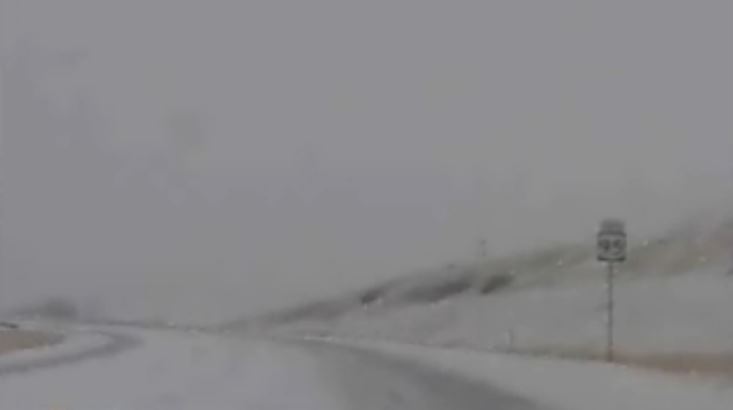
Winter Highway 95 2

PRDC Safety Petition

To enhance safety on a dangerous stretch of U.S. Highway 95 south of Moscow, Idaho, Paradise Ridge Defense Coalition (PRDC) has initiated a petition that urges the Idaho Transportation Department (ITD) to immediately implement site-specific measures to mitigate unsafe highway conditions.  The scene of numerous traffic accidents and fatalities, the Reisenauer Hill area of Highway 95 poses serious threats to travelers during inclement and winter weather.  For a third time in a dozen years, American taxpayers are requesting that ITD lower and seek enforcement of the speed limit around Reisenauer Hill, erect reduced speed limit warning signs with weather-activated, flashing lights at both approaches to the hill, and install rumble strips in the center and fog lines, and in the traffic lanes before the warning signs, on this section of Highway 95.  Establishing these interim safety measures until and during construction of the new highway could help save lives and property.  PRDC encourages all citizens to read the full text of the petition on the PRDC and MoveOn websites, and sign it soon.  Please also circulate the petition to your colleagues and group members for signatures by 11 pm on Wednesday, December 17.

Petition to the Idaho Transportation Department Requesting Immediate, Site-Specific Actions to Mitigate Dangerous Conditions on Reisenauer Hill (November 28, 2014 Paradise Ridge Defense Coalition)

Highway Safety Demonstration

On Thursday, December 18, PRDC will deliver this petition to the Idaho Transportation Department in Lewiston, and send it via overnight mail to ITD Director Brian Ness and the Federal Highway Administration, both in Boise.  Between 1:30 and 4:00 pm on December 19, regional residents and PRDC members will conduct a Highway 95 roadside demonstration south of Palouse River Drive in Moscow.  Participants will highlight Highway 95 safety: citizen and PRDC concerns about it, appropriate interim measures to improve it, and recommended re-routing options that could restore it.  While ITD proclaims “safety” as its highway realignment project objective, its decades-long neglect of public well-being on current U.S. Highway 95 indicates otherwise. Continue reading

Third Annual Stand Up! Fight Back! Against Fossil Fuels in the Northwest!


Stand Up Fight Back 2014 Flyer

Moscow, Sandpoint, and Spokane activists of Spokane Rising Tide and Wild Idaho Rising Tide (WIRT) enthusiastically invite regional community members eager to design and stage public education events and protests to the third annual Stand Up! Fight Back! Against Fossil Fuels in the Northwest! information sharing, brainstorming, and strategizing sessions [1, 2].  Opponents of coal, fracked natural gas and oil, and tar sands extraction and transportation projects are converging from northern Idaho and eastern Washington for these urgent planning gatherings.  Like Missoula comrades of Indian Peoples Action, Blues Skies Campaign, and several other groups, who have been meeting since November 19, participants could talk about campaign strategies, creative tactics, and practical arrangements for upcoming training workshops, panel discussions, and direct actions [3].  The Missoula potluck convergence shared “thoughtful dialogue about stopping TransCanada’s Keystone XL pipeline and all other forms of extraction,…forming an allegiance among local eco-warriors.”

As we continue to formulate similar ideas, we would appreciate your input at these early December discussions in Sandpoint, Spokane, and Moscow.  Besides together thinking and talking about oil and coal train resistance methods and overdue protests, suggestions for two other possible events have arisen among associates and allies.  Communications have begun about one-day Keystone XL Pledge of Resistance non-violent, direct action trainings in Boise, Spokane, and Missoula, likely on the Martin Luther King Jr. holiday weekend, January 17 to 19.  Area climate activists would like to contact, invite, and prepare the hundreds of regional folks who signed this pledge, and an indigenous anti-Keystone XL activist and an attorney well-versed in “know your rights” training may share their relevant knowledge at these workshops.  Teaching the first steps of the safe, staged kinds of demonstrations that an otherwise reticent public idolizes could lead to later, greater leaps of faith on tracks, roads, and pipelines and ultimately to stronger, regional, anti-fossil fuels activism.  We also anticipate engaging in frontline, on-the-ground resistance along the Montana path of the Keystone XL tar sands pipeline, if (when!) the U.S. Congress escalates this onslaught in January 2015.

Another possibility entails a public education event like a panel discussion in the Sandpoint/Spokane area, to inform, recruit, and activate local rail line residents for further issue and action involvement.  Because Rising Tide and allied direct action groups practice methods that make the mainstream organizations and topic experts of a potential panel squirm just contemplating and typically, endlessly rejecting them, hosting such a proposed event could prove logistically complex and difficult [4].  For instance, government officials may decline to participate, averting public perceptions of association with radicals, and we will never invite industry to such conversations.  But our regional groups must expand the interest, imagination, and passion of the fossil fuels opposition, with hopes that  bringing more people together to consider train accidents and responses will eventually lead to more numerous and widespread actions spurred by a greater sense of personal knowledge, responsibility, and empowerment.

Gathering Dates & Locations

* Monday, December 8, 7 to 9:15 pm at Second Avenue Pizza, 215 South Second Avenue in Sandpoint, Idaho

* Tuesday, December 9, 6 to 7:45 pm at the Downtown Spokane Public Library, 906 West Main Avenue (corner of Lincoln Street and Main Avenue) in Spokane, Washington

* Wednesday, December 10, 7 to 9 pm at The Attic, up the back stairs of 314 East Second Street in Moscow, Idaho Continue reading

October 28 & 30 Rallies & Hearings on Washington Marine & Rail Oil Transportation Study


Spokane: Tuesday, October 28, 5 to 10 pm

The doors to the public hearing room at the Hilton Double Tree Hotel, 322 North Spokane Falls Court, open at 5 pm. Gather at the Riverfront Park Rotary Fountain at 5 pm for a rally with music, youth climate ambassadors, and other dynamic speakers, then march three blocks to the hearing, where public comment begins at 6 pm and a hospitality suite will provide snacks.

Olympia: Thursday, October 30, 5 to 10 pm

The hearing room doors at the Red Lion Inn, 2300 Evergreen Park Drive SW, open at 5 pm. Meet outside for a coastal jam session at 4 pm and for a rally and music at 5 pm, before a Department of Ecology presentation at 6 pm and public input starting at 6:30 pm.

On October 1, 2014, the Washington state Department of Ecology released for public review the 2014 Marine and Rail Oil Transportation Study Preliminary Findings and Recommendations Report, which assesses the serious health, safety, and environmental risks and impacts of the onslaught of Northwest oil shipments by rail and vessel [1]. When the 2014 Washington Legislature failed to pass a bill assuaging growing concerns about more volatile and unpredictable crude oil traffic, lawmakers directed and funded the state agency to conduct the study in April 2014.  Governor Jay Inslee issued a directive in June 2014, outlining key components of the study designed to identify regional oil transportation risks, regulatory gaps addressing these risks, and possible state actions to reduce risks.  For this research, the administration-appointed Department of Ecology consulted the Federal Railroad Administration, the Washington Department of Transportation, the Utilities and Transportation Commission, and the Military Department’s Emergency Management Division [2].  If the state adopts an aggressive regulation plan in its final report due to the Legislature in March 2015, which will guide state agency, executive, and legislative actions, industry could mount legal challenges.

Although this draft report intricately describes the vulnerabilities of Washington sacrifice-zone communities and resources to the explosive, toxic dangers of existing oil train traffic and proposed port facilities, and thus supports citizens’ and firefighters’ demands for an immediate moratorium on rail-shipped crude, it flagrantly dismisses these hazards potentially affecting tribal treaty rights, public infrastructure, and the regional economy as secondary to the focus of the study [3]. The report partially conducted by the only paid railroad consultant, Mainline Management – comprised of retired, career Burlington Northern Santa Fe (BNSF) corporate executives with former BNSF, Port of Vancouver, and Washington Public Ports Association clients – incorrectly seeks to normalize the new risks of unconventional extreme energy extraction and transportation as simply additional threats augmenting decades of similar rail and ship activities that can be mitigated.

Even worse, this study defers to federal authorities regulating interstate commerce, relinquishing state leverage of railroad and ship traffic to national agencies such as the industry-dominated, inspection capacity-challenged Federal Railroad Administration and the U.S. Coast Guard. It insufficiently suggests actions to protect public waters and their changing dynamics from the risks of tar sands oil shipments and increased tanker passage.  While state and federal agencies declare the environmental non-significance of Northwest coal and oil terminals and the report promotes further investigation but sidesteps safety precautions to avert catastrophes, regional fossil fuel freight and facilities proliferate, and bulk commodity and passenger rail service suffer.  Attempting to deter widespread resistance to policies ensuring climate chaos, the study authors overlook significant, statewide opposition to proposed oil terminals, misused public ports, expanding oil refineries, risky oil trains and ships, and bureaucratic collaboration in transformation of the Northwest rail system into a permanent, global carbon pollution export corridor.  Did they consider the best interests of Washingtonians over those of private industry in this report that recommends implementation of several procedures costing more than $13 million? Continue reading

Statewide Gas Lease Auction Protests 10-15-14


20141015_094627

Statewide Gas Lease Auction Protests 10-15-14 (October 15, 2014 Wild Idaho Rising Tide photos)

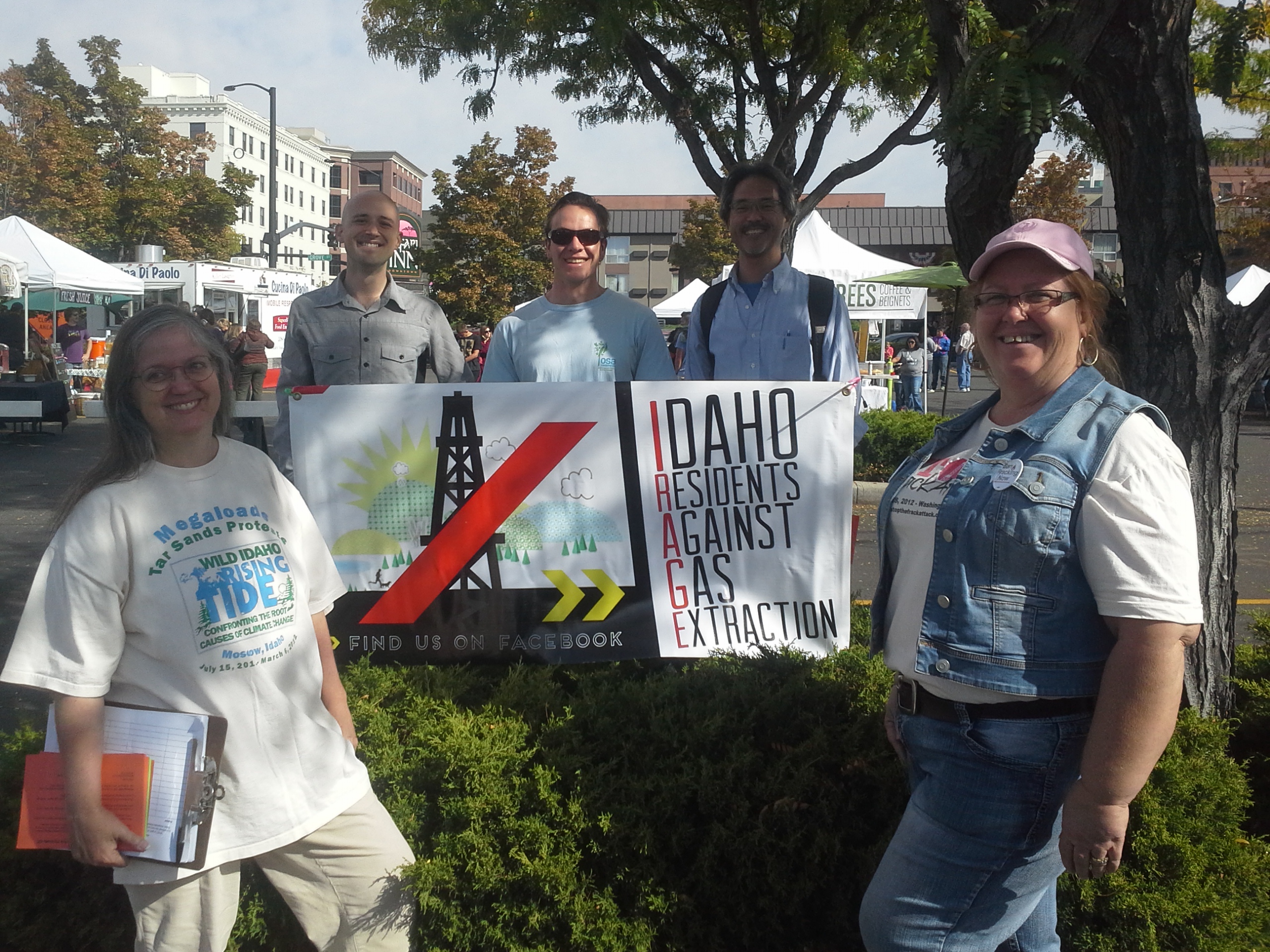
On Wednesday, October 15, 2014, beginning at 8:30 am MDT, Idaho Residents Against Gas Extraction (IRAGE), Wild Idaho Rising Tide (WIRT), and allies converged and protested for a second time another auction of oil and gas leases of state lands and sub-surface mineral rights conducted by the Idaho Department of Lands (IDL) for the Idaho Board of Land Commissioners [1]. Held in the Idaho Department of Fish and Game Trophy Conference Room in Boise, Idaho, the public meeting offered 11 tracts totaling 5,250 acres in Cassia, Gem, and Owyhee Counties, including 600 acres in Cassia County and 160 acres in Gem County of state lands and 4,479 acres in Owyhee County of split estates with private landowners and state mineral holders.

Although citizens at the auction observed four bidders, only the drilling companies Alta Mesa Idaho of Houston, Texas, and Trendwell West of Rockford, Michigan, paid an average of $46 per acre on purportedly competitive, oral bids for subsequent ten-year leases [2, 3]. Increasing the current tally to nearly 98,000 leased state acres (besides thousands of leased private acres in six southwestern counties), IDL raised $263,000 from the auction of state public trust and endowment trust lands and minerals for oil and gas exploitation, “benefitting” the general fund, state wildlife and transportation departments, and specific educational and beneficiary institutions.  The state will receive a 12.5 percent royalty on any resulting oil and gas extracted from producing wells impacting lands, resources, and waterways at bargain prices.

At the successful, three-woman Statewide Gas Lease Auction Protest in Boise, which delayed the auction for a half-hour, the Idaho Department of Lands leased 160 acres of state lands in Gem County for only one dollar per acre. The first ever Cassia County acres went for only $10 per acre, but the other nine parcels in Owyhee County elicited $40 to $55 per acre, with one at $105 [4].  These discrepancies infer (at least to WIRT) that oil and gas industry representatives are leery to invest in Gem County drilling, due to the County Commissioners’ recent decision to establish a committee guiding and (hopefully soon) implementing independent, legally defensible, baseline, water quality sampling and testing of water bodies and wells prior to potentially harmful oil and gas activities.  Congratulations, Gem County activists! Continue reading

Global Frackdown Idaho 10-11-14


20141011_120451

In conjunction with the Global Frackdown worldwide day of action on Saturday, October 11, Idaho Residents Against Gas Extraction, Palouse Environmental Sustainability Coalition, Wild Idaho Rising Tide, and other groups and individuals arranged and supported Global Frackdown Idaho for a third year in Boise and for the first time in Moscow.  To publicly oppose fracking, concerned citizens and climate justice activists from across Idaho converged and staged demonstrations, calling for a ban on looming first fracking in Idaho and around the Earth.  In response to state and local policy makers and administrators and in solidarity with harmed communities and wrongfully jailed and hunger-striking Idaho fractivist Alma Hasse, protesters gathered with family, friends, neighbors, signs, and banners at the Boise and Moscow farmers markets.  Event coordinators provided verbal descriptions and printed information about the current state of oil and gas development and resistance in Idaho, as they circulated and signed a petition to state officials and considered a ballot measure, to ban fracking, waste injection wells, and all toxic oil and gas practices statewide.  At both events, participants expressed their outrage over government complicity with industrial harms to shared air, water, climate, and community, as they demanded that Idaho officials secure a future powered by clean, renewable energy, not by dirty, polluting fossil fuels that poison people and the planet. Continue reading

Statewide Gas Lease Auction Protests


20140923_190403

On Wednesday, October 15, 2014, beginning at 9:30 am MDT, the Idaho Board of Land Commissioners will offer oil and gas leases of state lands and sub-surface mineral rights for sale to the highest bidder, at a public auction in the Idaho Department of Fish and Game Trophy Conference Room 101, at 600 South Walnut Street in Boise, Idaho [1]. The Idaho Department of Lands (IDL) periodically conducts these auctions and administers subsequent leases, with oversight and approval of the Land Board.  The 12.5-percent royalty derived from extracted oil and gas raises funds from lands held for the public trust and state wildlife and transportation departments and for specified beneficiary institutions through the state endowment trust.  Of the 11 tracts in Cassia, Gem, and Owyhee Counties, 600 acres in Cassia County and 160 acres in Gem County constitute state lands, while the nine parcels totaling 4,479 acres located in Owyhee County involve split estates of private landowners and state mineral holders [2].

Minimum, competitive bids by drilling companies at the oral auction open at only $0.25 per acre for the 5,279 acres available for leasing [3]. Successful bidders must pay their bid and the first year’s annual rent of $1.00 per acre for leases lasting up to ten years.  If these leases are not drilled or productive, IDL assesses additional drilling penalties of $1.00 per acre per year starting in the sixth year.  The state requires a $1,000 bond for exploration on each lease, which increases to $6,000 prior to drilling, in addition to a drilling permit bond issued by the Idaho Oil and Gas Conservation Commission.  Before entry on state lands for seismic exploration, companies must acquire IDL permits costing $100 per mile across contiguous tracts or a minimum of $100 per section.

At the last of several state lands and minerals auctions in Boise, on April 17, 2014, activists raised concerns about drilling under rivers and fossil fuel effects on climate change, demonstrating outside IDL headquarters and quietly occupying the auction room filled with gas company executives and attorneys who bid more than $1,148,435 to the state of Idaho [4]. The Idaho Department of Lands leased 17,700-plus acres for oil and gas drilling, including 1,415 acres of state public trust lands and minerals under or adjacent to Boise, Payette, and Snake river beds.  AM (Alta Mesa) Idaho of Houston, Texas, and Trendwell West of Rockford, Michigan, paid an average of $76 per acre for the 150  tracts in Ada, Canyon, Gem, Owyhee, Payette, and Washington counties.  The April 17 auction doubled the previously largest amount of Idaho public lands and minerals leased in one period, bringing the total to nearly 98,000 state acres, leased for as low as $2.35 per acre on average, besides the thousands more private acres leased in six southwestern counties [5].  Eighteen drilled but capped wells, awaiting pipelines and production and transportation infrastructure currently proposed or under construction, surround the first producing well in Idaho in February 2014, on the Teunissen Dairy near New Plymouth.  The Idaho Department of Environmental Quality found toluene from drilling mud in a water well several hundred feet away in fall 2012 [6]. Continue reading