2023 Remember the Water Kalispel Powwow Paddle

Featured


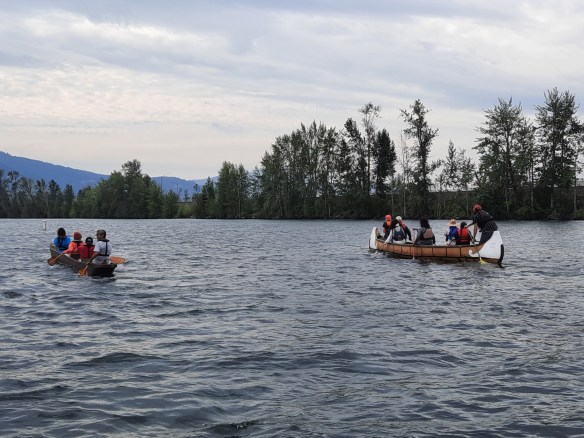
20220804_100322On Monday, July 31, through Friday, August 4, Kalispel and regional tribal members and the River Warrior Society are holding the annual Remember the Water Kalispel Powwow canoe journey [1, 2].  The paddle usually voyages from Lake Pend Oreille and Qpqpe (Sandpoint), Idaho, to the Qlispe (Kalispel) Village in Cusick, Washington, during the week before the yearly Kalispel Powwow and around the time of the Festival at Sandpoint music concerts.  In this cultural journey, families and friends are again paddling in traditional, dugout, wooden and sturgeon nose canoes, like their ancestors did for travel, fishing, and fun, over 50 miles through their home lands and waters among the tributaries, lake, and river of the Pend Oreille watershed.

While oil and gas pipeline expansions and fossil fuels pipeline-on-rails infrastructure and transportation impose and risk further harms to indigenous people and places locally and across Turtle Island (North America), Native neighbors continue to revive, uphold, and practice their ancient cultures and sustainable ways, through admirable endeavors like this canoe journey and culminating powwow.  Paddle organizers invite and encourage tribal allies and everyone to join in this joyful resurgence at various route locations, as they accommodate as many participants and observers as they can.

The canoe journey tentatively begins on Monday, July 31, with setting up camp at Sam Owen Campground off Hope Peninsula Road near Hope, Idaho, before paddling to the Bear Paw petroglyphs and back.  On Tuesday, August 1, participants plan to put in, paddle, and take out on the Pack River, and later stay at Sam Owen or the Best Western Edgewater Resort in Sandpoint.  Like during previous years, and as depicted in linked photos and articles about prior journeys, Wild Idaho Rising Tide (WIRT) activists and area groups intend to welcome the paddlers at Sandpoint, during their arrival and/or departure on Tuesday evening and Wednesday morning, August 1 and 2 [2]. Continue reading

Urgent July 26 & 27 GTN Xpress Pipeline Actions

Featured


Portland GTN Xpress Protest

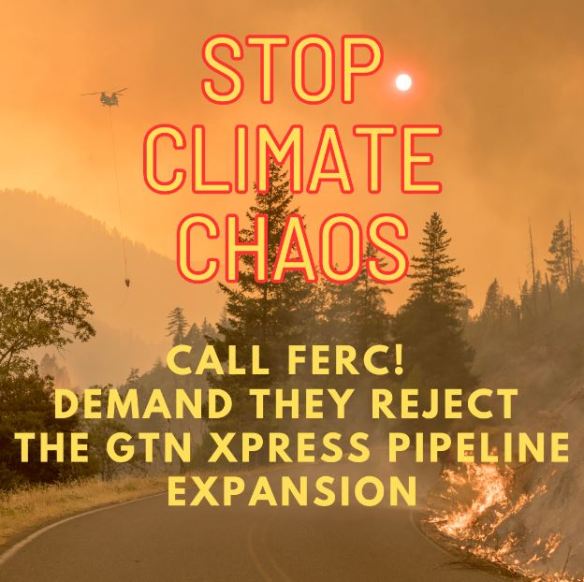
BXE GTN Xpress Phone Email BlastWHAT THE FERC?!

On Thursday, July 20, a Northwest coalition of groups working to stop the Gas Transmission Northwest (GTN) Xpress pipeline expansion learned that the Federal Energy Regulatory Commission (FERC) listed GTN Xpress on its certificate agenda for its monthly meeting on Thursday, July 27.  In an apparent, massive, rubberstamp attempt to rush approvals before FERC’s August non-meeting break, the federal agency will likely permit a slew of fossil fuels projects including the GTN Xpress application of TC Energy, owner of the rupturing Keystone and rejected Keystone XL tar sands pipelines.  Along with thousands of Northwest citizens and dozens of organizations, the Columbia River Inter-Tribal Fish Commission and West Coast governors, state attorneys general and legislators, and U.S. senators have opposed and organized against GTN Xpress for almost two years.

GTN Xpress is essentially a fossil fuels invasion of southern Idaho, thankfully challenged by neighboring states and Sandpoint and Spokane fossil fuels sacrifice zones that would receive only 13 percent or none of additional GTN gas.  More than half of the 150 million cubic feet per day of extra, unnecessary, fracked gas that TC Energy plans to push with three upgraded compressors through the 60-year-plus GTN pipeline would threaten the health and safety of north Idaho and eastern Washington pipeline corridor residents, for delivery to southern Idaho.  GTN and Intermountain Gas of Boise, who requested gas customer price hikes last winter, intend to essentially take over and reverse westward Williams Northwest pipeline flows, to bolster their profits at the 30-year expense of utility ratepayers increasingly favoring alternative energy.

WIRT is exploring the GTN Xpress record for information about probably missing Williams agreements and to produce second WIRT comments before July 27, welcoming other, also issue-underrepresented, Idaho and inland Northwest groups and residents to send your remarks to FERC.  Despite postponed railroad double-track construction impeding public transportation and requiring citizen monitoring at the Sandpoint Amtrak station, we will next coordinate regional protests in Athol (site of one of three compressor expansions), Sandpoint, Spokane, Moscow, and Boise, denouncing GTN’s proposal and FERC’s predictable decision, while supporting FERC re-hearing petitions filed by coalition partners and hopefully Northwest states, before the August 26 challenge deadline.  We appreciate your interest in GTN Xpress resistance and your input toward comments and demonstrations that demand FERC justice from the ongoing dangers and compounded risks of GTN Xpress expansion, leaks, and resulting climate disasters.

ANOTHER TC ENERGY PIPELINE RUPTURE

On July 25, the TC Energy-owned Columbia Gas Transmission pipeline catastrophically failed, causing a large explosion and fire and temporarily closing Interstate 81 in rural Shenandoah County, Virginia, approximately 80 miles west of Washington, D.C. [1, 2].  Thankfully, the incident neither injured nor killed anyone, and its causes and impacts remain unknown.  But like the December 2022 rupture and 600,000-gallon spill from TC Energy’s Keystone tar sands pipeline into a Kansas stream only weeks after FERC release of the GTN Xpress final environmental impact statement (EIS), the Virginia disaster demonstrates the terrible safety record of TC Energy and timely illustrates the major risks posed by TC Energy’s GTN Xpress, less than 48 hours before FERC could approve this expansion scheme [3].  The proposal would increase flammable, climate-wrecking, methane gas flows through a six-decade-old pipeline among fire-prone rural lands and urban residential areas in Idaho, Washington, and Oregon.  As multiple wildfires burn and blanket the Northwest with smoke, a pipeline accident like the one that just occurred in Shenandoah County could devastate nearby communities. Continue reading

Stop Oil Trains 2023

Featured


Stop Oil Trains 2023 FlyerJuly 7-9 annual actions remember the Lac-Mégantic, Mosier, & Custer disasters

Wild Idaho Rising Tide (WIRT) and allied activists invite everyone to participate in tenth annual, Stop Oil Trains direct actions and a training workshop in north Idaho on Friday, July 7, through Sunday, July 9.  Five events commemorate the 47 lives lost and downtowns devastated by oil train derailments, spills, explosions, and fires in the lakeside village of Lac-Mégantic, Quebec, on July 6, 2013, the Columbia River Gorge town of Mosier, Oregon, on June 3, 2016, and the northwestern hamlet of Custer, Washington, on December 22, 2020.  These demonstrations also support pipeline-on-rails resistance across the Northwest and in trackside and pipeline corridor communities and environments threatened and polluted by dangerous oil and gas infrastructure and transportation.

Spotlight Message Projection

Friday & Saturday, July 7 & 8, 10 pm, Downtown Sandpoint

As the sun sets, WIRT and allied organizers will provide brief, light projection displays of social and climate justice messages on buildings in downtown Sandpoint, Idaho.  Meet after 10 pm on Friday and Saturday, July 7 and 8, wherever you see this light show, for discussions among activists and curious passersby, about Northwest oil train and terminal and gas pipeline expansion issues.

Resistance Outreach

Saturday, July 8, 9 am to 1 pm, near Farmin Park, Sandpoint

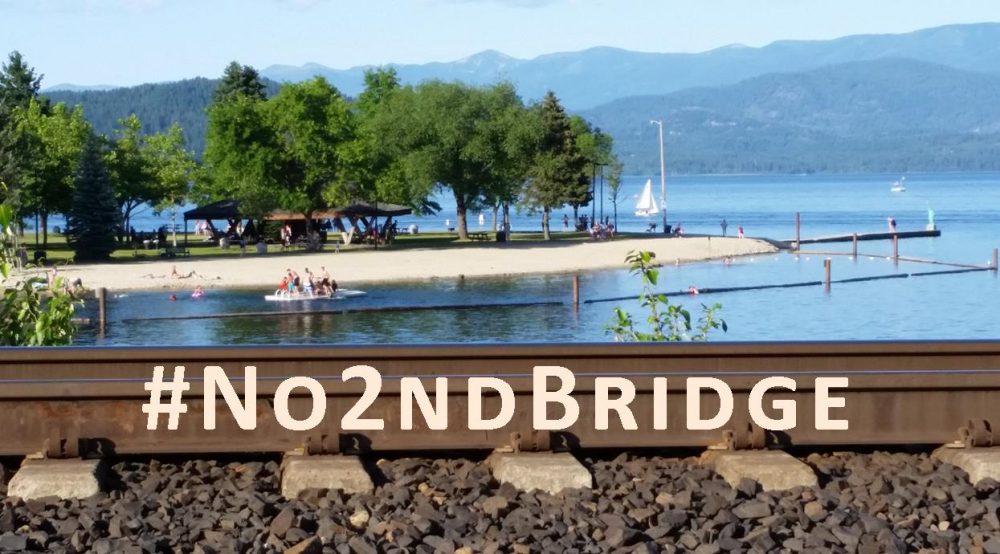
Gather with volunteer activists between 9 am and 1 pm on Saturday, July 8, at the WIRT outreach table at the corner of Fourth and Oak Streets near Farmin Park, during the Farmers Market at Sandpoint, Idaho.  We plan to talk with residents and visitors of the one-mile-wide, north Idaho “bomb train blast zone,” offer updates on Northwest oil and coal trains and infrastructure and Burlington Northern Santa Fe (BNSF) Railway’s doubled tracks and three new communication towers and second railroad bridges, and provide #No2ndBridge and other petitions, letters, flyers, and brochures [1-5].

Oil Trains Protest

Saturday, July 8, 2 pm, Farmin to City Beach Parks, Sandpoint

At 2 pm on Saturday, July 8, bring your family, friends, neighbors, co-workers, protest signs, and creative spirit, to show community opposition to dangerous crude oil conduits to refineries and export facilities: Oil trains and railroad infrastructure, like the present and proposed, BNSF rail bridges in and near Sandpoint.  Starting from the Farmin Park clock, we will walk with banners and signs objecting to the Northwest pipeline-on-rails and its expansion, through downtown Sandpoint to City Beach Park.  At these public march origin and destination places, we will share reflections and stories about the isolated vulnerability of rural, rail corridor communities to oil and hazardous materials derailment catastrophes and industry invasions of local environments and economies.

Train Watch Workshop

Sunday, July 9, 5 pm, Gardenia Center, Sandpoint

For the annual training sessions on regional oil and tar sands trainspotting, David Perk of PNW Oil Train Watch will present methods for trackside observing, documenting, and reporting Northwest fossil fuels train traffic with photos, videos, and social media.  He will discuss rail routes from the plains to the coast, train descriptors, refinery and receiving facilities, rail system operations, stopovers, and transit times, and train watch motivations and resources.  Please RSVP to WIRT at wild.idaho.rising.tide2@gmail.com, for required registration to join this teleconferenced conversation with David generously sharing images, skills, and insights, beginning at 5 pm on Sunday, July 9, via Zoom and at the Gardenia Center, 400 Church Street in Sandpoint, Idaho.  WIRT needs more train monitors along the tracks of the north Idaho, fossil fuels frontline, to document all westbound, unit trains of cars hauling Powder River Basin coal, Bakken crude oil, and Canadian tar sands.

Issue Background Continue reading

Spokane Community GTN Xpress Teach-In

Featured


Spokane Community GTN Xpress Teach-In BannerOn Wednesday evening, April 12, in Spokane, Washington, faith, spiritual, health, and environmental advocates will lead a community gathering, teach-in, and procession in opposition to the proposed Gas Transmission Northwest (GTN) Xpress fracked gas pipeline expansion [1].  The 62-year-old GTN pipeline runs under the Spokane River and through Liberty Lake, Spokane Valley, and other parts of Spokane County [2, 3].  Canadian company TC Energy, owner of the leaking Keystone and rejected Keystone XL tar sands pipelines, and its subsidiary GTN threaten to pump up to 150 million cubic feet of additional methane gas per day through the GTN pipeline that crosses north Idaho, eastern Washington, and central Oregon.

While communities throughout the Northwest shift away from coal, oil, and “natural” gas, fossil fuel companies like TC Energy have adopted a new tactic: bolstering the capacity of aging pipelines.  A broad, regional, Stop GTN Xpress coalition, the Columbia River Inter-Tribal Fish Commission, U.S. Senators Jeff Merkley and Ron Wyden of Oregon, Washington Governor Jay Inslee, three West Coast state attorneys general, and other concerned Northwesterners are resisting this gas pipeline and compressor station expansion.

The Federal Energy Regulatory Commission (FERC) could vote for or against granting project approval as early as April 20.  The GTN Xpress pipeline expansion further risks exposing local, Spokane area, and north Idaho communities to both the dangers and damages of ruptured pipeline explosions, fires, and pollution and the increased carbon and greenhouse gas emissions that are causing more severe storms, droughts, wildfires, and floods [4-6].

The gathering and teach-in at 6:30 pm Pacific time on April 12, at Salem Lutheran Church, 1428 West Broadway Avenue in Spokane, will feature comments from members of Earth Ministry/Washington Interfaith Power and Light (WAIPL), Washington Physicians for Social Responsibility (WPSR), and Wild Idaho Rising Tide (WIRT), among other organizations [7-9].  They will offer opportunities to learn about GTN Xpress and its potential impacts on public and environmental health and safety.  After an interactive presentation with speakers, event organizers invite participants to join a procession with signs and banners, walking together several blocks to the banks of the Spokane River, where faith leaders will share a brief group prayer and photograph the demonstration.

To access further information and attend, please contact coordinating groups and visit their websites and RSVP through the event description link [10]. Continue reading

Twelfth Annual Celebration of Wild Idaho Rising Tide

Featured


Twelfth WIRT Celebration FlyerWild Idaho Rising Tide (WIRT) is celebrating its March 31 anniversary and twelfth year as a regional, climate activists collective confronting the root causes and perpetrators of air pollution, water degradation, and resulting climate change, through direct actions and locally organized solutions, in solidarity with frontline communities and grassroots networks of fossil fuels resistance [1-5].  We welcome everyone of all ages to enjoy this decade-plus milestone at two Twelfth Annual Celebrations of WIRT, held as benefit concerts and potluck gatherings in Sandpoint and Moscow, Idaho, with provided pizza, requested snacks and beverages, and a background slide show of WIRT and allied activism.  WIRT invites and extends our hearty thanks to the remarkable core activists, board members, friends, and allies who have coordinated and shared the successes of ongoing citizen challenges of the corporate and government sources of climate chaos.
Please join WIRT activists on two early spring evenings, for convergences full of musical performances, spirited conversations, invigorating camaraderie, wholesome food and drink, and other creative works offered by north Idaho and regional residents.  At each of these free, lively, public events, we encourage and eagerly anticipate organizers, musicians, and businesses sharing their admired talents and participating as volunteers and/or sponsors.  These yearly festivities not only strive to raise awareness and funds supporting relentless WIRT activism, but also seek to attract and involve cross-cultural, youth, and community member diversity in the climate justice movement in Idaho and the Northwest.

Thursday, April 6, 7 pm: Monarch Mountain Band

Gardenia Center, 400 Church Street, Sandpoint

As a high-energy bluegrass, newgrass, and folk rock trio, the Monarch Mountain Band has been performing at numerous local and regional venues, halls, festivals, fairs, and clubs for close to 30 years [6].  Their high-stepping, toe-tapping, progressive repertoire includes bluegrass standards along with covers of the Rolling Stones, Beatles, Band, Byrds, Grateful Dead, Bob Dylan, and many more.  Offering great entertainment for entire families and friends, the Monarch Mountain Band thrills music enthusiasts of all genres, who appreciate the excellent techniques and pure sounds played by this group of musicians.

Saturday, April 8, 7 pm: Fiddlin’ Big Al & Guests

The Attic, 314 East Second Street (rear, second story), Moscow

KRFP Radio Free Moscow DJ and board member and core WIRT activist Fiddlin’ Big Al Chidester performs ragtime, honky-tonk piano, fiddle, and guitar, singing old-time, country blues and original, socio-political satire songs [7].  Al started the practice of playing traditional, phase-shifted, electric viola, adding to his multi-instrumental, experimental, Americana repertoire offered on mandolin, banjo, dobro, and lap steel guitar.  He writes humorous, topical songs about peace, freedom, and political hypocrisy, some recorded on his 2004 album Where Were You the Night New Orleans Drowned? and Other Songs for Our Time.  Besides performing at Northwest barter fairs and hosting a long-running jam session at the Moscow Moose Lodge, Fiddlin’ Big Al broadcasts several weekly, KRFP, music shows, giving airplay to an eclectic mix of genre-bending music, recorded performances from regional venues, and occasional, live, studio sessions. Continue reading

People’s Hearing on GTN Xpress

Featured


GTN Xpress People's Hearing Flyer

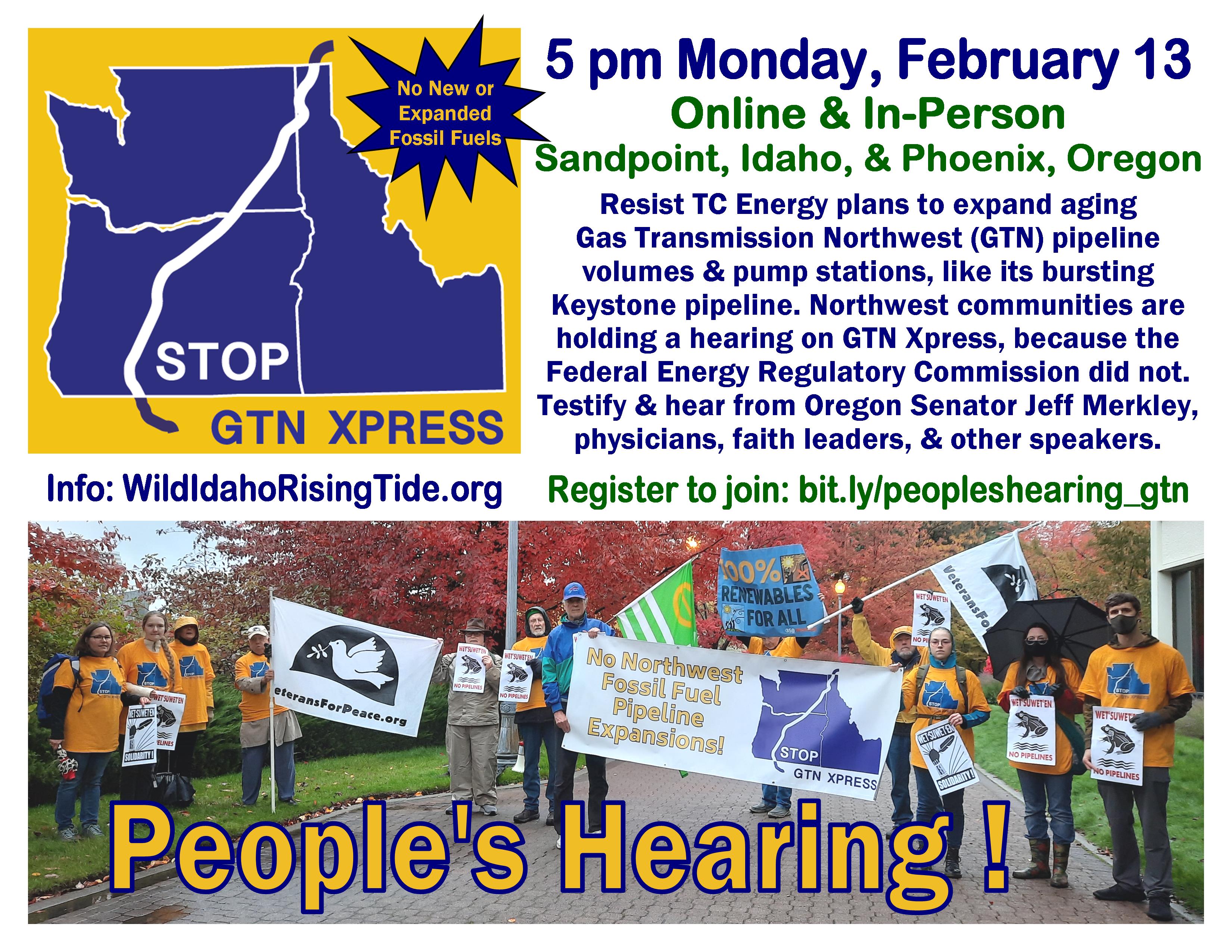
Starting at 5 pm Pacific time and 6 pm Mountain time on Monday evening, February 13, a Northwest coalition of nonprofit organizations, including 350 Deschutes, 350 PDX, Columbia Riverkeeper, Rogue Climate, Washington Physicians for Social Responsibility, and Wild Idaho Rising Tide (WIRT), will host a People’s Hearing on Canadian company TC Energy’s proposal to expand fracked “natural” gas exported through the aging Gas Transmission Northwest (GTN) pipeline and compressor stations that span north Idaho, eastern Washington, and central Oregon.  This hybrid town hall, convened online and in-person at the Gardenia Center (400 Church Street in Sandpoint, Idaho) and at the Rogue Climate office (205 North Phoenix Road, Suite G, Phoenix, Oregon), offers participants opportunities to learn about the potential impacts of the GTN Xpress expansion project and to provide testimony recorded and sent to the Federal Energy Regulatory Commission (FERC) for the project docket.

Among concerned, regional community members and environmental and climate advocates sharing their insights and stories, the People’s Hearing on GTN Xpress will feature these key speakers:

* U.S. Senator Jeff Merkley of Oregon

* Audrey Leonard, staff attorney of Columbia Riverkeeper

* Peter McCartney, climate campaigner of Wilderness Committee

* Dr. Annemarie Dooley, physician and board member of Washington Physicians for Social Responsibility

* Naghmana Sherazi, activist and board member of Earth Ministry/Washington Interfaith Power and Light

Please RSVP and register to join this virtual conference at bit.ly/peopleshearing_gtn and/or gather at the Gardenia Center or Rogue Climate office and contact WIRT for further information [1].  Timely input from citizens and local elected officials to FERC before its possible decision on this project on Thursday, March 16, is crucial to halting the GTN Xpress fossil fuels onslaught [2].  Along with commenting and/or testifying to FERC, help support this resistance by amplifying a new video recently launched by the grassroots coalition, through social media posts email messages, and other methods [3].  Also reach out to any of the partner groups, if your organization is interested in joining the fight to #StopGTNXpress.  Within the next few days, WIRT will add to this post and send further descriptions of pipeline expansion impacts and issue updates, to assist involvement in this campaign. Continue reading

Oppose Collaborative Deforestation around Lake Pend Oreille!

Featured


The U.S. Department of Agriculture Forest Service (USFS) and compromised, north Idaho Big Greens involved in the Panhandle Forest “Collaborative” have agreed to massive deforestation of steep mountains on the remote, wilder, east side of Lake Pend Oreille, promoted as “restoration” projects to reduce wildfires and insect and disease outbreaks [1, 2].  Over the next few years, the Sandpoint Ranger District of the Idaho Panhandle National Forests (IPNF) and timber companies plan to excessively build roads and log over 175,000 acres of Lake Pend Oreille slopes, which would degrade water and air quality, wildlife habitat, protected areas, and recreational opportunities.  A complex of three contiguous logging projects, the 57,000-acre Buckskin Saddle, 43,000-acre Chloride Gold, and 43,500-acre Honey Badger, extends 45 miles from the Clark Fork River on the north, throughout eastern lake forests, and south to the Hayden Lake area.  Government proposals and decisions on these unnecessary forays into carbon-sequestering forests overlap temporally, while the middle Chloride Gold project also overlaps spatially with the area of the Kaniksu Winter Recreation environmental assessment (EA).  These USFS overlaps are called “stacking National Environmental Policy Act (NEPA) documents,” an illegal rush and overburden of public scrutiny.

Located to the south of federal agency-finalized Buckskin Saddle project destruction, currently stalled by Johnson Creek bridge replacement near the Clark Fork River delta between September 2022 and May 2023, and potential litigation by grassroots groups, the Chloride Gold (CG) project proposes to conduct “vegetation management,” “hazardous fuels reduction,” and other activities to “manage invasive plants, roads, trails, recreation, wildlife habitat, and improve fish passage under roads … [and] overall landscape resiliency to disturbances” [2-6].  Pre-scoping ideas suggested that the USFS planned to push approximately 23.8 miles of new, “temporary” road construction and over 12 square miles of forest “regeneration” cuts in the area, which would remove the vast majority of trees in over 17,000 acres (26.6 square miles), through logging, road building, and controlled burning, even in inventoried roadless areas (IRAs).  According to the December 1, 2022, Chloride Gold scoping notice signed by Sandpoint District ranger Jessie Berner, over 22,500 acres would undergo “vegetation treatments” including large clearcuts and prescribed burns.  The scoping letter requests public review and comments by Monday, January 16, 2023, for USFS consideration in drafting only an environmental assessment (EA), not the full environmental impact statement (EIS) required and necessary for the CG onslaught.

On September 27, 2022, in preparation for a public presentation and field trip refuting this logging project, provided by regional, climate activist collective Wild Idaho Rising Tide (WIRT) in spring or summer 2023, Northern Rockies wildlands and wildlife activist and GIS researcher Paul Sieracki and two WIRT board members visited the Chloride Gold logging project area [7].  With precise maps in hand while exploring CG forests, these citizen monitors found a highly impacted landscape, crossed by a spaghetti network of roads and all-terrain vehicle (ATV) and motorcycle trails, devastated by huge logged areas, and immersed in road dust and subsequent lake haze.  They documented and publicly offered their observations with photographs and descriptions, noting several situations in which further CG ravages could severely disturb flora, fauna, and roadless areas [7].  For the Wednesday, January 11, 2023, Climate Justice Forum, weekly radio program produced by WIRT and recorded and posted on the WIRT website, Paul graciously expounded on his knowledge of the probable damages of the lakeside Chloride Gold scheme [8].  WIRT shares a summary of these insights in the following sections intended to further inform and assist public input resisting this CG cause of regional climate chaos. Continue reading

Stop Uinta Basin Railway Solidarity Action

Featured


Stop Uinta Basin Railway Solidarity Action FlyerWild Idaho Rising Tide (WIRT) and climate activists throughout the West are organizing solidarity protests of oil trains and infrastructure, for a day of action against the Uinta Basin Railway (UBR), supporting campaigns against the Utah oil-by-rail scheme and in north Idaho, denouncing completion of BNSF Railway’s second, almost mile-long, rail bridge across the state’s largest, deepest lake: mountainous Lake Pend Oreille.  Utah and Colorado comrades are calling for community-led actions on Saturday, December 10, 2022, to show that concerned citizens object to the devastating UBR project, and to pressure federal lawmakers, state representatives, and local governments to prevent building of the Uinta Basin Railway.  They ask everyone to explore the #StopUintaBasinRailway action toolkit with information about the UBR and action coordination, sign a letter to Agriculture Department Secretary Tom Vilsack, demanding that he revoke the U.S. Forest Service permit for the railway, participate in actions happening in a dozen locations, register to join a remote phone bank on Tuesday, December 13, at 10 am Pacific time, and tell UBR opponents that you are interested in assisting this campaign [1-2].

To involve local communities across the United States in advocating against UBR permits and their potential disasters for climate and environmental justice, Colorado groups held a public, online, action training on November 10 [3].  Organizers with years of experience shared ideas about planning effective actions and helped participants learn about the UBR oil trains that would threaten lives and livelihoods along rail routes from Utah to Oklahoma, Texas, and Louisiana, and around the southern Northwest, Union Pacific Railroad (UP) line across southern Idaho and eastern Oregon to western Washington.

Most of WIRT and allied resistance to behemoth oil and coal train shipments has successfully focused on dozens of BNSF Railway fossil fuels pipeline-on-rails routes from the Great Plains to the West Coast.  We rarely demonstrate against Union Pacific, except while decrying its few weekly, Northwest, tar sands trains and myriad derailments, including the Mosier, Oregon, oil train spill and fire in June 2016.  Based on our experiences of BNSF’s ongoing malfeasance, WIRT encouraged and sent extensive comments on the draft environmental impact statement (EIS) in 2021, opposing the Uinta Basin Railway, and talked about the issue during recent years on our weekly, Climate Justice Forum, radio program [4].  WIRT remains steadfast in our thorough monitoring, reporting, and protesting of daily, BNSF, Bakken crude oil trains across north Idaho, as we gratefully accept dedicated co-workers’ invitations to alert our regional neighbors to the impending dangers and direct action opportunities of Utah oil transport across the Northwest.

Uinta Basin & BNSF Railways Protest

As part of countless demonstrations against the fossil fuel causes of the climate crisis and their insidious pollution, risks, and impacts on north Idaho and Northwest rail line communities, we plan to protest both the proposed Uinta Basin Railway oil trains and tracks and the BNSF Railway expansion of its industrial infrastructure into Lake Pend Oreille and Sandpoint, with three second rail bridges and two miles of doubled main line.  Please dress for warmth and dryness, bring your signs and banners, voices and drums, friends and family, and joy and courage, and join WIRT and inland Northwest activists for the Stop Uinta Basin Railway Solidarity Action at 12 noon on Saturday, December 10, at the Serenity Lee trailhead near the East Superior Street and Highway 95 intersection and/or on the public, pedestrian, and bike path to Dog Beach Park in Sandpoint, Idaho.  WIRT will provide on-site action advice and chants and pizza for appreciated participants after the gathering.  Respond in advance with your questions and suggestions, share this event information and flyer among your associates and contacts, and see previous and upcoming, website- and facebook-posted, WIRT newsletters and alerts, for further updates on these issues.

Uinta Basin Railway Opposition Continue reading

November 17-18 GTN Xpress Action, WIRT Talk, & FEIS Release

Featured


Stop GTN Xpress Phone ZapGTN Xpress & Idaho & Northwest Stakeholders

Canadian energy company TC Energy (formerly TransCanada), owner of the notorious Keystone and Keystone XL tar sands pipelines and the Coastal GasLink line under contested construction through unceded, indigenous, Wet’suwet’en territories in British Columbia (B.C.), has applied to the Federal Energy Regulatory Commission (FERC) to increase the “natural” gas pipeline volumes and pressures of three compressor stations along its Gas Transmission Northwest (GTN) pipeline, with the GTN Xpress expansion project from B.C. through north Idaho, eastern Washington, and central Oregon.  The 61-year-old, potentially explosive GTN pipeline passes under Wild Idaho Rising Tide’s (WIRT) fossil fuels pipeline-on-rails frontline community and waters around Sandpoint and Lake Pend Oreille, Idaho, through several rural sacrifice zones, and below the Spokane, Washington, metropolitan area.  One of the GTN compressor stations planned for upgrades stands near dozens of unaware residences and a popular amusement park full of hundreds of visitors in Athol, Idaho [1].

TC Energy and partner fossil fuel corporations propose to increase the capacity for dangerous methane gas in the existing, 1,354-mile GTN pipeline by 150 million cubic feet per day, pushing more gas into the Northwest and locking communities into expensive fossil fuel energy for decades.  If approved by FERC, the GTN Xpress expansion would cause continued fracking in tribal lands in Canada and threaten and harm the health and safety of rural, low-income communities living and working along the pipeline route.  Prone to accidents like leaks, fires, and explosions, the aging infrastructure of pipelines and compressor stations risks exposing nearby residents to cancer-causing pollutants.

Over the last few decades, Northwest citizens have defeated fossil fuels pipelines, processing plants, and export terminals, and organized to pass local and state climate laws, while experiencing record droughts, wildfires, storms, floods, and other climate change impacts.  But sneakier pipeline expansions require different government processes and regulations than new pipeline construction, even though GTN Xpress would exacerbate the greenhouse gas emissions and accelerate the climate crisis contributing to these conditions.  Supplying enough gas to serve 1.2 million households each day, GTN Xpress would contradict Oregon and Washington state policy commitments to reduce climate pollution and end dependence on climate-wrecking fossil fuels.

During summer 2022, over 1,300 people petitioned FERC to deny TC Energy’s plans; Columbia River tribes voiced their resistance; a broad, emerging coalition of Northwest community groups commented against the project; and the attorneys general of California, Oregon, and Washington told FERC that they oppose GTN Xpress, because it clearly conflicts with state and federal climate goals.  With FERC expected to release the scheme’s final environmental impact statement (EIS) on November 18, 2022, and to issue an ultimate decision in February 2023, Northwesterners need to hold FERC accountable, ask that the agency address valid climate, public health, and environmental concerns raised across the region, and demand that FERC reject the GTN Xpress project.

Since April 2022, the WIRT climate activist collective has been informing, networking, and supporting impacted, indigenous, and grassroots groups and individuals and state, county, and city, elected and agency officials about GTN Xpress, along the north Idaho and eastern Washington GTN pipeline corridor and in southern Idaho, where Intermountain Gas customers would receive over half of the additional GTN Xpress methane gas from a Stanfield, Oregon, compressor station diversion.  We have provided extensive comments to FERC on behalf of WIRT’s 3,200-plus contacts, and communicated and urged opposition to the GTN Xpress gas pipeline expansion via social media, email, website, and other online resources, and through WIRT’s weekly, eleven-years-broadcast, community radio program [2].  WIRT plans to continue to raise resistance to this Canadian stranded gas asset invasion of the Northwest, by encouraging citizen involvement in public processes and alternative methods of GTN Xpress rejection.

Stop GTN Xpress Week of Actions Report Continue reading

Stop GTN Xpress Week of Actions

Featured


Stop GTN Xpress Week of Actions FlyerRegional organizations and grassroots activists of 350 Spokane, Idaho Chapter Sierra Club, Palouse Extinction Rebellion, Rogue Climate, Veterans for Peace Spokane Chapter 35, and Wild Idaho Rising Tide (WIRT) request your participation and support of public protests of three corporations pushing the dangerous Gas Transmission Northwest (GTN) Xpress pipeline expansion project.  We are collectively co-hosting these actions in solidarity with sovereign Wet’suwet’en land defenders and water protectors opposing Coastal GasLink pipeline construction through their unceded, indigenous territories in British Columbia, Canada.  Allied groups are planning peaceful, safe, and effective citizen pickets on nearby public walkways outside fossil fuel company offices during early November, to attract a broad range of involvement and responses from the public, issue coalition groups, and media.  Several partner organizations are graciously offering travel funds and providing Stop GTN Xpress/Coastal GasLink logo designs, T-shirts, signs, banners, and other equipment.  Volunteer activists are eager to engage you in resistance to both Northwest gas pipelines owned by TC Energy, notorious for its Keystone XL tar sands pipeline.  Please share this event announcement and flyer and other campaign outreach materials via text, social media, email, and website, invite and bring your friends, family, and protest signs, create props and coordinate carpools and various logistics, and join us at one or all of these lively demonstrations!

Tuesday, November 1, 4 pm PDT at TC Energy, 201 West North River Drive, Suite 505, Spokane, Washington: Meet on the north path along the Spokane River, across from Riverfront Park and between Washington and Division streets

Wednesday, November 2, 4 pm PDT at Cascade Natural Gas, 8113 West Grandridge Boulevard, Kennewick, Washington: Gather on the south sidewalk along Grandridge Boulevard

Friday, November 4, 4 pm MDT at Intermountain Gas, 555 South Cole Road, Boise, Idaho: Converge on the west Cole Road walkway near the Farmers Lateral Canal

Resist plans by TC Energy (formerly TransCanada) and regional “natural” gas utilities to increase methane gas volumes by 150 million (and eventually, incrementally 250 million) cubic feet per day and upgrade the capacity of three compressor stations of the 1,354-mile GTN pipeline that crosses from British Columbia, through north Idaho, eastern Washington, and central Oregon, to California [1, 2].  The 61-year-old, potentially explosive, climate-wrecking gas pipeline is dangerously located under the Spokane, Washington, metropolitan area and below the Schweitzer ski resort parking lot and city of Sandpoint, Idaho.  The Athol, Idaho, pump station proposed for expansion stands only two miles from the popular Silverwood Theme Park, full of hundreds of visitors on precarious rides during spring, summer, and fall days.

GTN has applied to the Federal Energy Regulatory Commission (FERC) for a certificate of public convenience and necessity to permit the GTN Xpress expansion project.  But controversy has continued to grow during and since the too-brief comment period on FERC’s draft environmental impact statement (EIS) that closed on August 22, despite a timely letter from twenty mostly Oregon groups and Wild Idaho Rising Tide, requesting that FERC provide an additional 30 days for the public to review and evaluate the document [3].  As thousands of people across the Northwest rise to oppose GTN Xpress, FERC has received over 1,300 oppositional petition signatures and extensive, informative remarks from concerned citizens, environmental and climate groups, and tribal, state, and federal government officials, denouncing draft EIS deficiencies and the fracked gas pipeline expansion’s significant contributions to worsening climate change, while the Northwest transitions off fossil fuels toward more sustainable, renewable energy sources [2, 4, 5].

Attempting to foist stranded Canadian gas assets on the Northwest, likely aware of its gradually failing product prospects, TC Energy expects to quickly, stealthily secure GTN Xpress approval by FERC and other government regulatory agencies.  It has strategically enlisted contracted, third-party, environmental reviewers with undisclosed conflicts of interests as consulting firms simultaneously working with TC Energy, and has expanded its other pipeline volumes, instead of building new infrastructure that attracts justified direct actions from frontline fossil fuels fighters [6, 7].  With anticipated release of a final EIS on November 18, postponed from October 14, and a pending conclusive FERC decision on GTN Xpress in February 2023, impacted residents and concerned communities must act swiftly to protect the inland Northwest from this proposal [8]. Continue reading