WIRT Newsletter: WIRT Song, Missing Megaload, In-Situ Oil Spill, & More


WIRT SONG

Wild Idaho Rising Tide (WIRT) offers our exuberant gratitude to benefactor Tom Hansen, composer/performer Roy Zimmerman, and musical guide Jeanne McHale, for the uplifting song created for WIRT in May-June 2013, The Tide Is Rising!  Please share freely and revise as your own anthem, Rising Tide activists and friends.

OMEGA MORGAN EVAPORTORS

Missing Megaload! (July 29 Big Country News Connection)

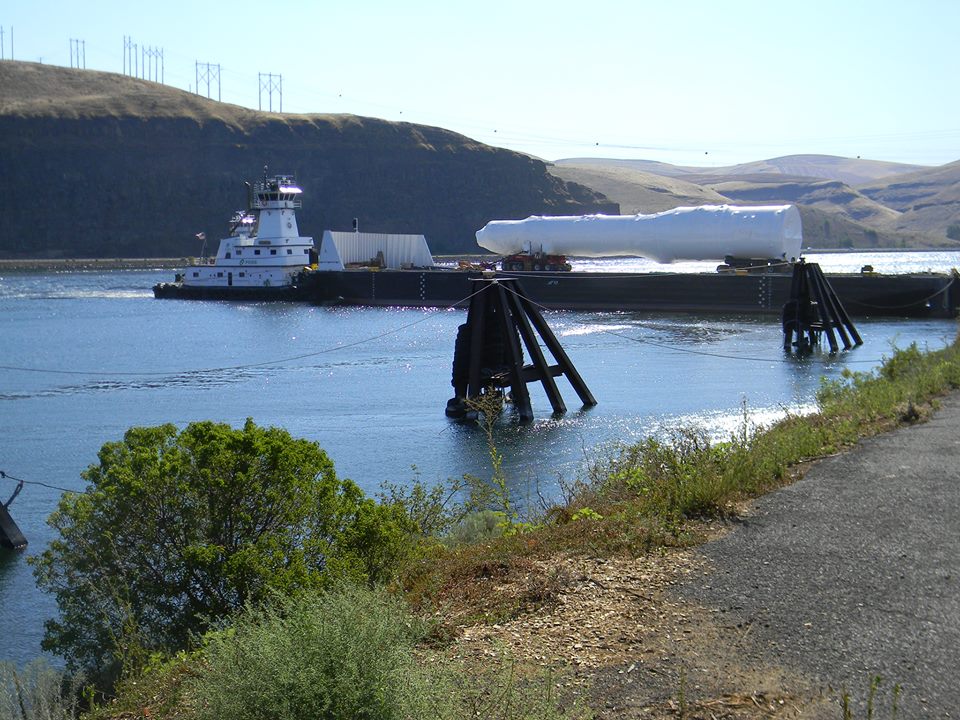
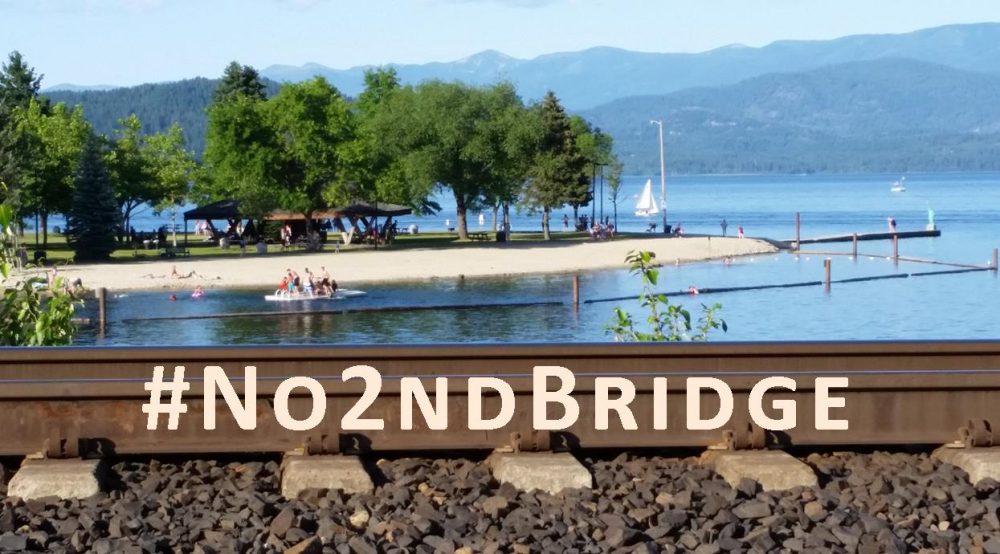
As Portland Rising Tide and 350 posed and hung a bridge banner declaring “Coal, Oil, Gas: None Shall Pass,” WIRT activists arrived at the Port of Wilma to confront two tar sands megaloads that passed under the same bridge the week before the Summer Heat: Columbia River Climate Action.  Unlike in Portland, a few protesters and a Lewiston Tribune reporter showed up at 3:30 pm on Saturday, July 27.  Everyone else likely assumed that the Forest Service and conservationists would keep these evaporators out of the Highway 12 wild and scenic river corridor, although most of the region had failed to stop similar transports to Alberta tar sands operations.  But the three of hundreds of potential protest participants observed that one of the Omega Morgan shipments was missing!  Did it sneak up Highway 12 unannounced?  We questioned the on-site security guard who refused to answer our queries, searched both the Ports of Wilma and Lewiston, contacted our non-activist allies who rarely work during weekends, and alerted and asked multiple associates around the region.  No one in the Kamiah Nez Perce community had seen the missing megaload.  Like during the 2011-12 ExxonMobil/Imperial Oil invasion of Highway 95, we felt betrayed and abandoned by industry, government, and absent allies and protest participants.

We cringed at the same-day juxtaposition of people downriver giddily stating “None Shall Pass,” as they posed against, rather than directly confronted, fossil fuel perpetrators, perhaps assuaging guilt with ‘photo ops’, while a megaload disappeared before anyone but a few diehards bothered to face it on the frontlines.  As we have worked to instigate for years, we hope that Americans will wake up and fight back in time, meeting megaloads with resistance at the coast and all along the 465-mile trip up the Columbia/Snake rivers to Lewiston area ports.  Our activist allies are still wondering why we have not blockaded Highway 12 yet.  On Monday, July 29, Mia Carlson-Simpson of Big Country News solved the missing megaload mystery with a few phone calls.  The module was in a nearby shop at the Port of Wilma, where presumably a crew is installing its insulation (or reducing its height for interstate overpasses?).  This Thursday, an ally noted that “Omega Morgan may have gone down Highway 95.”  With plenty of unverified or unshared information emerging, we remain vigilant of any megaload movement up Highways 12 or 95, not entirely convinced that the Forest Service will hold the line, that conservationist allies would call for an injunction, or that the police will not continue to reinforce social and environmental injustice.

“An oversized load that was delivered to the Port of Wilma just west of Clarkston a week ago has not been transported out of the region, although some people have asked ‘Did it sneak up Highway 12 last week?’  Activists with Wild Idaho Rising Tide showed up on Saturday, to protest the two loads that were unloaded from their barges on July 22, and discovered that there was only one sitting there.  According to Olga Haley, a spokeswoman for transport company Omega Morgan, the load is being ‘stored inside a building at the Port of Wilma.’  Meanwhile, she adds that there is no other news since the company is working with the U.S. Forest Service and the Idaho Department of Transportation on the permit situation.

The water purification vessels were fabricated in British Columbia, weigh about 320 tons each, and could be the first of at least nine loads that the Oregon-based shipping company wants to move east on U.S. Highway 12 to Montana and then up to Alberta, Canada, to the tar sands.  But the loads can’t move until they meet three interim rules set by the Forest Service to protect the Wild and Scenic Middle Fork Clearwater and Lochsa rivers: no traffic can be fully stopped in the corridor, the loads must pass through the corridor in less than 12 hours, and no physical modification may occur of the highway or adjacent vegetation beyond normal highway maintenance.  Omega Morgan has submitted a revised plan that shows the loads meet two of the three rules, but they would still delay traffic.  (Photo courtesy of Wild Idaho Rising Tide)” Continue reading

Commissioners Pass Gas and Oil Ordinance with Amendments


New ordinance reduces 500 foot setback

Payette County Commissioners passed a gas and oil drilling ordinance after a public hearing on Monday at the courthouse.

They heard testimony from Payette County residents, who mostly said the ordinance needed to expand the setback from 200 feet in the new proposed ordinance to the 500 feet that it had been in the previous ordinance.

Several testified that a neighbor who signs a lease allowing drilling to be done on his or her property would force another neighbor to endure the drilling, despite their possible refusal to sign a lease.  They said that 200 feet is not an adequate distance.

New Plymouth resident Tina Fisher said that if one neighbor signs a lease but the other neighbor doesn’t want to, it is unfair to that neighbor.  “Two-hundred feet is woefully inadequate,” Fisher said. Continue reading

Idaho, Feds at Odds on Megaloads


State ready to issue permit; U.S. Forest Service applies the brakes, says study and tribal advice needed

At the request of the Idaho Transportation Department (ITD), the U.S. Forest Service is revising one of its interim criteria designed to define and govern the transport of megaloads through national forest land.

But the change won’t make it any easier for the massively oversized shipments to win approval for travel along U.S. Highway 12 as it passes through the Nez Perce-Clearwater National Forest and its Wild and Scenic River corridors.

The Forest Service is also asking to review megaload applications before permits are awarded by the state and is taking issue with the state’s insistence that it lacks authority to deny the permits.

In February, federal Judge B. Lynn Winmill ruled the Forest Service has authority to review megaload shipments that cross national forest land and pass through the Lochsa and Middle Fork of the Clearwater Wild and Scenic River corridor. Continue reading

Smoke Ranch Well Protest


Gas Well with Bluffs

As oil and gas drilling resumed in Payette County this month after a few years, Alta Mesa Services raised a derrick at the Smoke Ranch natural gas well on June 9 [1].  This directionally drilled well – the focus of the intensive Stop the Frack Attack! campaign of Wild Idaho Rising Tide (WIRT) and Idaho Residents Against Gas Extraction (IRAGE) during June – embodies the myriad infringements of environmental and human health that conventionally-drilled and hydraulically-fractured (“fracked”) oil and gas wells famously impose [2].  The Smoke Ranch well occupies a floodplain, where operators pumped standing water from the well pad before drilling between the Payette River and Big Willow Creek, within a half-mile of a riparian area/wetland wildlife refuge, and only a few miles upstream from the City of Fruitland municipal water intake and the Payette/Snake River confluence.  Its ultimate outcomes could set a precedent for looming drilling/fracking on and under nearby state lands and waters already leased by Alta Mesa and Snake River Oil and Gas.  IRAGE activists have been monitoring the site daily and, along with other information sources in the southwest Idaho region, have observed multitudes of hidden equipment, transport trailers, drill pipes, and well pads awaiting likely escalating utilization, as well as water for Smoke Ranch operations withdrawn from irrigation canals.  They have recently taken unreleased pictures and videos of several Schlumberger tank trucks covered with radioactive warning placards. Continue reading

Climate Justice Forum: Mary Ullrich 7-29-13


The Monday, July 29, Climate Justice Forum radio program hosted by Wild Idaho Rising Tide (WIRT) welcomes Mary Ullrich of the Paradise Ridge Defense Coalition board.  Mary discusses how the Idaho Transportation Department (ITD) tried to control public opinion by presenting false information in its guide to the draft environmental impact statement for the Highway 95 Thorn Creek to Moscow reconstruction project.  She also updates listeners on the current status of ITD and federal review and response to public comments and document revisions.  Broadcast on progressive, volunteer, community station KRFP Radio Free Moscow every Monday between 7:30 and 9:30 pm PDT live at 92.5 FM and online, the show covers continent-wide dirty energy developments and climate activism news, thanks to the generous, anonymous listener who adopted program host Helen Yost as his KRFP DJ.

Does Omega Morgan Know a Mega-Secret?


Marty Trillhaase, Editorial Page Editor, Lewiston

The Lewiston Tribune 7/25/13

Riddle us this, Batman: What does Omega Morgan know that everyone else does not?

The transportation company – at no small expense – navigated two megaloads of equipment manufactured by Ellett Industries up the Columbia and Snake rivers to the Port of Wilma – in anticipation of moving them up U.S. Highway 12 toward the Alberta tar sands.

Which, says Clearwater-Nez Perce National Forest Supervisor Rick Brazell, “is setting us up for a showdown.”

But over what?

If anyone can see any flexibility in Brazell’s recent policy closing U.S. 12 to megaload traffic, please enlighten us.

His authority is rock solid.  It comes from U.S. District Judge B. Lynn Winmill.

So is Brazell’s mandate.  That flows through the National Wild and Scenic Rivers Act of 1968. Continue reading

Omega No More Again


Omega Morgan Megaloads FOC 5 7-22-13

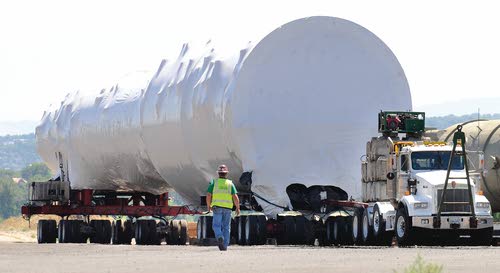
Over the July 20-21 weekend, while climate activists from around the continent concluded the Rising Tide Continental Gathering at a remote Utah desert encampment, regional allies observed gigantic, spaceship-like megaloads traveling by barge up the Columbia and Snake rivers [1].  Manufactured for destructive Alberta tar sands extraction, weighing more than 600,000 pounds and measuring up to 255 feet long, 23 feet tall, and 21 feet wide on specialized trailers, two of at least ten large, cylindrical, pressure vessels arrived and offloaded at the Port of Wilma, Washington, near Lewiston, Idaho, late on Monday afternoon, July 22.  Heavy-haul company Omega Morgan has submitted a revised transportation plan seeking Idaho Transportation Department (ITD) permits for moving these wastewater evaporators across Idaho to Montana on U.S. Highway 12 [2].

But in an early February ruling in response to an Idaho Rivers United lawsuit argued by Advocates for the West, U.S. District Judge B. Lynn Winmill of Boise upheld Forest Service (USFS) authority to review state approval of megaload shipments that would traverse the Nez Perce-Clearwater National Forest and the Lochsa/Middle Fork of the Clearwater Wild and Scenic River corridors [3].  In his June 17, 2013, letter to ITD, Forest Supervisor Rick Brazell suggested interim megaload definitions and USFS approval criteria: Oversized loads should not require traffic to be fully stopped, the roadway or adjacent vegetation to be physically modified, or take longer than 12 hours to cross forest/river lands [4]. Continue reading

Controversial Megaloads Pay Dividends


An evaporator sits idle at the Port of Wilma in Clarkston after arriving by barge. The equipment bound for Alberta will be used to recycle steam for processing tar sands (Lewiston Tribune/Kyle Mills photo).

Industry touts ability of evaporators docked at Port of Wilma to create jobs, conserve resources.

Two megaloads sitting at the Port of Wilma are creating work for Americans and are destined to help an oil company conserve water.

The evaporators were manufactured by Ellett Industries near Vancouver, Canada, which purchased more than $2.5 million in American materials for the project, said Bob Gill, vice president of sales for the company.

American tug boat companies handled the shipments after they entered U.S. waters just south of Vancouver, and the equipment was barged up the Columbia and Snake rivers, Gill said.

The insulation for one of the evaporators is being installed at the Port of Wilma, Gill said, a task that will employ about ten people for two to three weeks. Continue reading

Idaho Rivers United Conservation Director Kevin Lewis Reacts to Positioning of Tar Sands Megaloads at Port of Wilma


Between 23:55 and 10:37 of the July 23, 2013, Evening Report, Idaho Rivers United, KRFP Radio Free Moscow interviews Idaho Rivers United Conservation Director Kevin Lewis about the possible implications of discrepancies between Forest Service authority and interim criteria to regulate megaload traffic through the Highway 12 wild and scenic river corridor and the arrival and push to move two Omega Morgan-hauled evaporators through the wildlands-surrounded route to Alberta tar sands mining operations.

Another Megaload May Be Alberta-Bound


Company may be going through Port of [Wilma] Whitman County; No permits issued yet

Permit or not, a megaload may be headed to the Port of Whitman County for eventual shipment over U.S. Highway 12.

Nez Perce-Clearwater National Forest Supervisor Rick Brazell said he has received dozens of emails with pictures of a barge laden with a pressure vessel making its way up the Columbia River.  He also spoke with Mark Rey, a former undersecretary of the U.S. Department of Agriculture who is working for Omega Morgan, and said the shipments will dock in Washington instead of Idaho.

“They are apparently coming, and they are coming into (the Port of Whitman County) and not Lewiston,” he said.

Two large cylindrical vessels were parked at the Port of Wilma Monday night, though it was unknown if they were megaloads awaiting transport.

The shipping company Omega Morgan wants to move as many as ten pressure vessels – equipment used to extract oil from the Canadian tar sands – from the port to a project area in Alberta.  But it would first need a permit from the Idaho Transportation Department to use the highway and approval from the Forest Service to pass through the Wild and Scenic River Corridor. Continue reading