No Reisenauer Hill Fix


David Hall, Moscow

The Moscow-Pullman Daily News 1/15/15

Oh, a fairy tale from Viola (Letter to the Editor, Van Thompson, December 28): Perhaps we should look at reality here.

Very few Paradise Ridge Defense Coalition members live on Paradise Ridge.  (When someone who does live there speaks up on the issue, people cry “NIMBY.”  When people who do not live there speak out, they are told to stay out of it and let those who are directly affected talk.)

The [proposed] eastern alignment [of U.S. Highway 95] is perhaps shorter by a few hundred feet.  And it is not safer than are other alignments.

Mr. Thompson ignores the fact that the highway, had it been built – illegally – ten years ago, would have left Reisenauer Hill as it is, and accidents would have continued to occur on the hill in that decade.  Were the eastern alignment that ITD prefers to be built now, again Reisenauer Hill would be left, dangerous as it is, likely never to be made safer.  The “family at the bottom of the hill” will continue to have unwanted vehicles in their front yard.

WIRT Newsletter: Recent Idaho & Montana Oil & Coal Train Issues


70281003

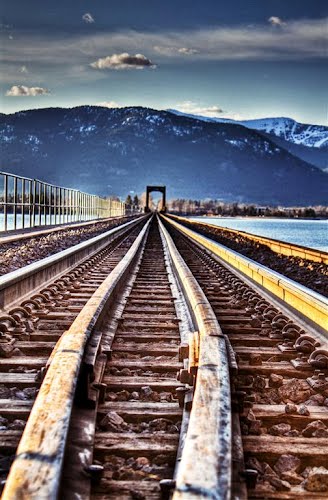
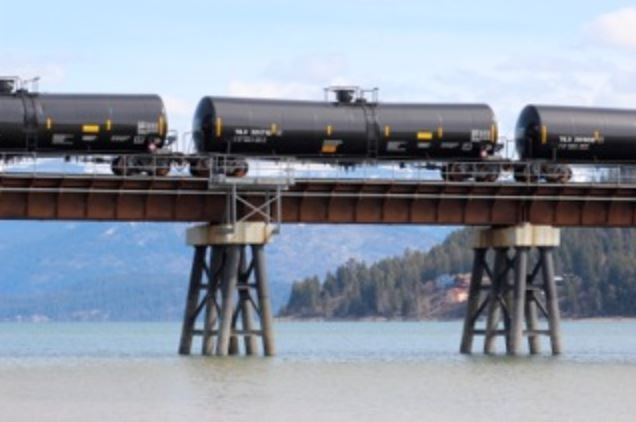
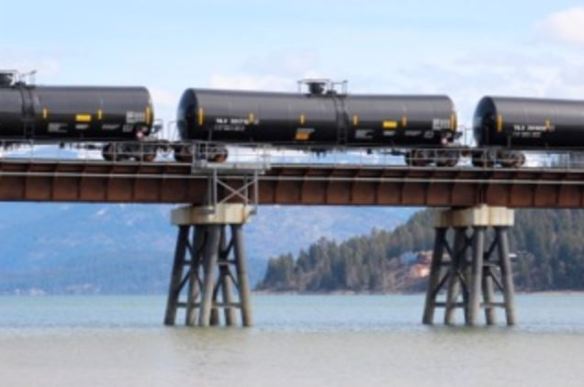
Bakken shale oil trains in northern Idaho travel beside the Kootenai River, through downtown Bonners Ferry and Sandpoint, over and along Lake Pend Oreille, and adjacent to U.S. Highway 95, before heading west into Washington.  Within the nexus of Panhandle tracks carrying greater numbers of dangerous trains every month across crumbling bridges and the lake, residents truly wish to protect their lands, waters, and the future of their children and grandchildren.  They understand the toxic and transient nature of unsustainable fossil fuels among the life of this Earth, and some have been boycotting them at every opportunity for decades.  One derailment on a bridge or over the regional aquifer would ruin the drinking water of thousands of people.  Are the profits of Burlington Northern Santa Fe (BNSF), Montana Rail Link (MRL), and Union Pacific (UP) railroads so imperative that they would chance derailments and bridge collapses near rivers and lakes? [1]  As oil and gas companies scrape the bottom of the easily recoverable barrel to extract the largest possible revenues, they obviously are evading the burdensome infrastructure and operating costs associated with preliminary processing of tar sands and fracked crude.  Without these adequate precautions, Bakken crude oil contains extremely volatile constituents that ignite too readily to be safely transported in bulk.  But North Dakota regulators have only considered or required that crude be conditioned, instead of mandating the more thorough and expensive stabilization procedures and equipment that separate and remove volatile compounds prior to shipment, but that the oil industry has been resisting for years.

Through combinations of these factors, governments and oil and railroad corporations ensure that American citizens passively and endlessly bear (but not accept!) the physical and fiscal risks and costs of oil trains, while these industries and their pet politicians take all the profits.  Flammable oil and dusty coal are transported and stored on a regular basis within some of the largest population centers in U.S., mostly located around railroads.  A leak or spill of volatile Bakken oil constituents from a transfer pipe or railroad tank car could ignite and set the heavier compounds on fire and start an uncontrollable, days-long conflagration that no municipality has the experience or the gear to combat.  Are existing north Idaho politicians and environmental groups determined to safeguard local communities by insisting on prohibition of crude oil train shipments with highly volatile constituents?  The majority of conservation organizations advocate overdue removal from nationwide tracks of aging Department of Transportation (DOT)-111 tank cars – the “riskiest models on the rails for accidents and oil spills” – as demonstrated by a November 2014 trip to Washington, D.C. by Lake Pend Oreille Waterkeeper executive director Shannon Williamson and allied colleagues [2].  They also petitioned for other more rigorous oil train regulations during rulemaking sessions at the U.S. Department of Transportation.

In early December 2014, the public interest environmental law organization Earthjustice, “on behalf of Sierra Club and ForestEthics, challenged the Department of Transportation’s denial in November of the groups’ petition for an immediate ban on the most hazardous DOT-111 rail tank cars carrying explosive Bakken crude oil” [3].  The legal action attests that this type of car, prone to punctures, spills, and fires during train accidents, represents two of every three tankers transporting oil throughout the U.S.  Asserting that it has sufficiently implemented measures to respond to the imminent hazards posed by these rail cars, by only issuing a safety advisory, the Department of Transportation faces growing legal opposition demanding further actions to protect communities susceptible to “bomb train” derailments, leaks, and explosions.

Lives will remain vulnerable until outspoken opponents of oil, coal, and tar sands together raise escalating, cooperating resistance to their transport, in any form or manner, past their homes and businesses.  The inherent dangers of Northwest fossil fuel passage persist, as apparent in the big rock slide that closed a main BNSF rail line in north Idaho, connecting Montana to Washington, and naturally shut down oil and coal trains for a couple days in late November 2014 [4].  Perhaps nature was sending a warning about not just these shipments but about an influx of Canada Pacific freight and tank cars (hauling tar sands oil?) recently seen by Sandpoint residents on local railroad stretches [5].  June 2014 protesters of four of five Montana megaload assembly plants also noticed some of these cars on the Montana High Line east of Glacier National Park, likely utilizing one of only a few international rail entrances into Idaho and Montana.

Upcoming Oil & Coal Train Challenges

The Sandpoint, Idaho area already suffers from both transient and stationary trains fully loaded with hazardous cargo like coal, oil, and tar sands.  Union Pacific has proposed closing the street at Eastgate Crossing, between Idaho Highway 200 and the Bonner Mall, “a highly utilized access point between the commercial and residential areas of Ponderay [6, 7].  While this maneuver may increase public safety, it would prolong response times of ambulance and fire emergency services by several critical minutes.  Concerned citizens and local businesses impacted by diminished highway access and storefront visibility distrust further division of the two sides of Ponderay and reduced public safety from Union Pacific’s subsequent “ability to stack trains…lingering in town while carrying possibly harmful or flammable cargo” [6]. Continue reading

The Numbers on C-3


Kas Dumroese, Moscow

The Moscow-Pullman Daily News 1/14/15

Just because everyone wants an improved U.S. Highway 95 Thorncreek to Moscow doesn’t justify ignoring law, especially by the government.  We still drive on old U.S. 95 because the Idaho Transportation Department (ITD) ignored law concerning selection of E-2, which required an extensive, expensive, and time-consuming Environmental Impact Statement.  Instead, we could be celebrating a decade of driving on an equally well-designed, safe C-3 that uses more of the existing U.S. 95 footprint than E-2 would on the flank of Paradise Ridge.

E-2 is touted by its proponents as having less impact on farming, and is cheaper, shorter, and safer than C-3.  What does ITD’s Draft EIS say?  Compared to C-3, E-2 converts 55 percent more total land, 100 percent more prime farm land, and 36 percent more farmland of state importance (Table 42, pages 147-148).  It also removes 34 percent more land from the Latah County tax base, through new right-of-way acquisitions.  E-2 would cost $4 million more to construct than C-3 (page 11).  For the nearly six miles of new alignment with either alternative, C-3 would be a whopping 475 feet longer than E-2 (Table 52, page 174).  Using ITD’s data (Safety Technical Report Appendix D and page 174) and doing some simple calculations, the chance of safely traversing the “least safe” C-3 route is 99.99951 percent per trip, and it skyrockets to 99.99966 percent if you travel on the “safest” route, E-2.  And your chance of an accident at any access/entry point along E-2 (0.0022 percent) is actually double that for C-3 (0.0011 percent).

If you think those differences in length and safety seem tiny, you might be surprised to hear that ITD agrees with you (page 204): “the travel times and safety between Action Alternatives [C-3 and E-2] do not differ substantially.”

Wednesday Sandpoint Oil/Coal Train Forum & Other Events


Lake Pend Oreille Oil Train

Climate concerned comrades,

This Wild Idaho Rising Tide (WIRT) event alert and upcoming newsletter cover mostly Idaho- and Montana-centric developments in the oil and coal train and terminal issues since late October 2014, in hopes of eventually sharing more news about hundreds-strong turnouts at Spokane and Olympia hearings on the Washington Marine and Rail Oil Transportation Study in October, along with stories about several blockades of train tracks and a state agency by our great Rising Tide and allied comrades in the Pacific Northwest, since WIRT’s mid-July Sandpoint “bomb train” protest and regional actions with Spokane Rising Tide.

Postponed Keystone XL Pledge of Resistance Trainings

After scrutinizing bus schedules, car rentals, and travel logistics over the weekend, WIRT activists have discussed and decided to postpone announcing and staging the Keystone XL Pledge of Resistance training workshops in five regional cities until February 2015.  Thanks for your patience with this situation.  We just do not have the $250 to $300 travel funds or the survival-drained, physical energy to make this rigorous tour happen.  Allowing a week for response, we have not received a reply from the larger, national organizers of the trainings, who garnered almost 100,000 pledges and presumably would supply some of the training materials and share much needed inland Northwest contacts.  While we would appreciate attracting with these workshops some of the middle ground of the climate movement from Big Green bandwagons toward more assertive, local direct actions, we must remain focused on more pressing regional fossil fuels resistance during January, which only a few grassroots groups are supporting.

Although we will miss commemorating the informal fourth anniversary of WIRT (January 17) with a similar Moscow training in our former meeting space, The Attic, we will likely reschedule Sandpoint/Spokane, Boise/Moscow, and Missoula trainings on three successive February weekends, depending on venue availability.  By then, various colleges and universities will have rejoined the academic year, and activists may already be in these areas for protests or hearings, as we together raise the hundreds of dollars required in advance for trainer transportation.  Attendees may especially benefit from the legal expertise of much appreciated attorneys leading “know your rights” portions of these workshops.  Thanks to all of the participants in the Third Annual Stand Up! Fight Back! Against Fossil Fuels in the Northwest! meetings, who have graciously provided input and worked on arrangements for these trainings [1].

Sandpoint Oil/Coal Train Public Forum

The City of Sandpoint, Idaho, is finally sponsoring a community forum on north Idaho coal and oil train issues at 5:30 pm on Wednesday, January 14, 2015, in Sandpoint City Council Chambers at 1123 Lake Street [2].  Sandpoint Mayor Carrie Logan called for this public meeting in mid-December, to provide an opportunity to hear current information about expanding coal and oil rail traffic and to discuss the risks, challenges, and possible solutions of citizen and community safety and wellbeing currently compromised by air, water, and noise pollution, crossing delays, economic impacts, and potential train derailments.  The city has invited the public and local, state, and federal representatives, along with spokespersons of Burlington Northern Santa Fe (BNSF), Montana Rail Link (MRL), and Union Pacific (UP) railroads.  As tentatively scheduled, Chris Bessler, owner and publisher of Sandpoint Magazine, will offer an issue overview and introductions and moderate presentations by Casey Calkin and Jim Lewis of MRL, Bob Howard of Bonner County Emergency Services, Ross Lane and Gus Melonas of BNSF, Mayor Carrie Logan, citizen advocate Gary Payton, and Jared Yost of the Sandpoint Mapping and GIS Department.  Anticipating a lively evening with good citizen turnout, the government/railroad panel will accept written questions, comments, and concerns collected from the audience and asked by the moderator.  Contact the Mayor’s office at 263‐3310 or cityclerk@ci.sandpoint.id.us, for further information about this event. Continue reading

Spokane FBI Article/Protest Photo Shoot at 10 am Thursday 1/8/15


WIRT activists and allied comrades,

The co-author of the Portland Rising Tide/Wild Idaho Rising Tide (WIRT) chapter Resistance to Alberta Tar Sands Transports in Idaho and Beyond in his anthology about land-based struggles, Grabbing Back, the remarkable writer and friend Alexander Reid Ross consistently shares with the world collective stories of often obscure but always earnest Northwest confrontations with climate change perpetrators and their local, state, and federal facilitators, like the Federal Bureau of Investigation (FBI).  A colleague referred him to Defending Dissent Foundation, which published his latest, extensive essay on their Newswire site, revealing ongoing covert and recently overt FBI harassment, local arrest, and attempted repression of anti-fossil fuel activists in the Northwest [1].  During the last three days, his article has appeared in seven esteemed, online journals, including Climate Connections hosted by the Global Justice Ecology Project, who noted that his excellent story about the FBI contact of core WIRT activists Herb Goodwin in Bellingham, Helen Yost in Moscow, and Deep Green Resistance members in Washington and the Payette County public meeting arrest of Idaho Residents Against Gas Extraction (IRAGE)’s Alma Hasse in early October “works through individual stories that show the effects of harassment on people’s lives, and also provides the larger context of the movement as it continues to evolve” [2-7].

Rising Tide North America (RTNA) and Tar Sands Blockade have widely circulated these pieces, via facebook meme posts and Tweets, about the FBI finally contacting WIRT activists after surveilling us for three and one-half years (maybe because we have been unusually quiet over the last three months, making their snoop fixes difficult).  Our RTNA comrades assert that:

Billy Bragg once said, “If you’ve got a blacklist, I want to be on it.”  Well, we’re definitely on somebody’s list.  In 2014, the federal harassment of Rising Tide activists in the Northwest continued, this time in Idaho and Bellingham, Washington.  The feds harassed activists fighting fossil fuel infrastructure in the Northwest with “knock and talks” and surveillance.  But, of course, the @$$holes who crashed the economy on Wall Street in 2008, and their monstrous clients in the fossil fuel industry who poison and pollute communities on a daily basis with oil, gas, and coal, carry on with business-as-usual.  It’s not a flaw in the system that allows this to happen: it was designed that way.

WIRT offers our sincere praise to all the folks who interviewed and wrote this article like Alex, Alma Hasse, and Herb Goodwin, but especially everyone who has participated in this awe-inspiring movement striving for a better, fossil fuels-free world, like Cascadia Forestdefenders, IRAGE, Spokane Rising Tide, Portland Rising Tide, Rising Tide Seattle, Rising Tide Vancouver-Coast Salish Territories, Rising Tide Bellingham, other Rising Tide groups, Seattle Raging Grannies, and all of our outrageous, indigenous, and climate comrades around the continent. Continue reading

Climate Justice Forum: Chris Wahmhoff 1-5-15


The Monday, January 5, Climate Justice Forum radio program hosted by Wild Idaho Rising Tide (WIRT) gratefully welcomes Chris Wahmhoff, the InterOccupy and Michigan Coalition Against Tar Sands (MICATS) organizer who skated deep into an Enbridge tar sands pipeline in June 2012, to protest and stall expansion of the same line that leaked the largest, non-marine, oil spill in U.S. history, one million gallons into the still unremediated Kalamazoo River and tributaries.  Chris will discuss subsequent lawsuits, his November 2014 election campaign, spill health impacts and deaths, and upcoming summer actions.  Broadcast on progressive, volunteer, community station KRFP Radio Free Moscow every Monday between 7:30 and 9:30 pm PST, live at 90.3 FM and online, the show also covers continent-wide, grassroots, climate activism and community opposition to industrial, dirty energy invasions, thanks to the generous, anonymous listener who adopted program host Helen Yost as her KRFP DJ.

FBI WIRT Inquiries


December 10 & 19, 2014

Federal Bureau of Investigation (FBI) special agent Travis Thiede placed missed phone calls from Coeur d’Alene cell phone number 208-661-0316 to Wild Idaho Rising Tide (WIRT)/Helen Yost three times on December 10, 2014, at 8:10 am, 11:21 am, and 1:07 pm [1-3].  Mr. Thiede called WIRT during the Third Annual Stand Up! Fight Back! Against Fossil Fuels in the Northwest! meetings, likely drawn, with his agency, to these gatherings in Sandpoint, Idaho, on December 8, in Spokane, Washington, on December 9, and in Moscow, Idaho, on December 10 [4].  Helen did not notice these three missed calls until about 3 pm on December 23, 2014.

A little before 10 am on Friday morning, December 19, 2014, WIRT/Helen received another missed, incoming phone call from the same Coeur d’Alene cell phone.  After this fourth call at 9:47 am, Mr. Thiede messaged the WIRT phone, and Helen replied via the following text messages:

TT (12/19, 9:51 am): “Helen, I am trying to get a hold of you to speak with you.  An issue has come up, and I need to speak with you.  Please give me a call.  I am an FBI agent.  SA Travis Thiede.  208-661-0316”

HY (12/19, 9:59 am): “NO!”

TT (12/19, 10:03 am): “OK, I understand, just wanted to have a conversation with you.  Thanks.”

HY (12/20 next day, 9:17 am): “I do not wish to speak with you or any of your associates about anything.”

The December 23, 2014 Morning Mix and Evening Report radio news programs of KRFP Radio Free Moscow ran an interview about the situation with core WIRT activist Helen, by station manager Leigh Robartes [5].  The news story discussed FBI conversation requests and offered updates on the Paradise Ridge Defense Coalition (PRDC) petition and demonstration advocating safety measures for U.S. Highway 95 before re-routing south of Moscow, Idaho.  During the December 23 midnight interview, Helen read directly from the text messages on the cell phone, still unaware of previously attempted FBI contact.  The interview implied that the special agent had called concerning December 17 WIRT comments on the PRDC highway safety petition submitted to various agencies and/or about December 19 WIRT remarks about our motivations for this campaign [6, 7].  A PRDC/WIRT co-activist noticed at least two unmarked cars observing the December 19 PRDC safety demonstration, which occurred only 3 1/2 hours after the FBI text messages [8].

October 9, 2014

Despite WIRT awareness of likely surveillance since September 2011, these encounters represent the second/third recent instances of direct contact.  Late in the morning of October 9, 2014, the FBI came to the door of a distant, core WIRT activist in Bellingham, Washington, wanting to ask questions about the activities of another group, Deep Green Resistance (DGR) [9].  Our great comrade correctly declined giving answers, which resulted in the agents leaving.  That evening (at about the same time as Payette, Idaho police arrested Alma Hasse of Idaho Residents Against Gas Extraction at a county meeting), he graciously provided this description of his FBI interactions: Continue reading

Report on Highway 95 Safety Petition & Demonstration


PRDC Safety Petition

Thanks to everyone who signed, circulated, and wrote compelling comments for the Paradise Ridge Defense Coalition (PRDC) petition advocating safety measures and sensible re-routing for dangerous U.S. Highway 95 south of Moscow, Idaho! [1]  In just three weeks, almost 500 Idaho and American taxpayers contributed their signatures and thoughts to this community effort.  Tim Hatten, a PRDC board member, wrote a much appreciated letter to the editor of the Moscow-Pullman Daily News, inviting petition signatures before the 11 pm Wednesday, December 17 deadline [2].  PRDC organizers and board members Diane Baumgart, Stephan Flint, Joann Muneta, Mary Ullrich, and Helen Yost worked hours of outreach to collectively gather 230 hard-won, hand-written signatures, almost matching the 257 online signatures.  On Thursday, December 18, Diane and Mary sent 487 copies of the paper and online petition signatures via overnight mail to the Idaho Transportation Department (ITD) in Lewiston and to ITD Director Brian Ness and the Federal Highway Administration, both in Boise.  Unfortunately, the half dozen reporters who covered the December 19 PRDC safety demonstration underquoted signature tallies or only mentioned 270 online signatures, as supporters continue to sign the PRDC safety petition.

During the culminating week of this safety campaign, KRFP Radio Free Moscow station manager Leigh Robartes thoroughly covered the background of PRDC’s petition and upcoming Friday demonstration targeting ITD inaction and PRDC proposed resolutions of Highway 95 traffic safety problems [3-5].  The December 16, 17, and 18 KRFP Evening Reports offered excellent, full news stories and an interview with PRDC board member Steve Ullrich, exploring regionally shared concerns about Highway 95 safety and re-routing impacts on native Palouse Prairie remnant habitat and wildlife.

In 2003 and again in 2013, PRDC wrote to ITD, requesting that the state agency implement additional, site-specific, safety measures to mitigate U.S. Highway 95 conditions in the Reisenauer Hill area south of Moscow, Idaho.  PRDC suggested flashing caution signs and enforceable, reduced speed limits to improve safety on the notoriously dangerous stretch of U.S. 95 prone to numerous traffic accidents and fatalities.  Because these previous requests have not produced ITD results, PRDC prepared the current petition urging ITD to immediately take these and other appropriate, interim actions and to consider public safety and highway realignment options that ITD has neglected for decades.  Such efforts could save traveler lives and property, especially during inclement and winter weather, and could preserve the unique, rare, native Palouse Prairie ecosystem that Highway 95 re-routing may soon threaten.

PRDC Safety Demonstration

Regional media and residents and PRDC members made and brought signs and/or gathered on the Highway 95 sidewalk around the Palouse River bridge, south of Palouse River Drive in Moscow, between 1:30 and 4:00 pm on Friday, December 19 [6-8].  The resulting public, roadside demonstration in rotating shifts highlighted shared citizen concerns and supported PRDC-proposed measures to improve public safety on U.S. Highway 95 south of Moscow. Continue reading

Climate Justice Forum: Payette County Bomb Train Station Hearing 12-22-14


The Monday, December 22, Climate Justice Forum radio program hosted by Wild Idaho Rising Tide (WIRT) will air an in-depth report and testimony highlights of the most attended, contentious, and divided public appeal hearing before the Payette County Commission, in Payette, Idaho, on a natural gas processing and railway “bomb train” transportation facility, on December 4, 2014.  Broadcast on progressive, volunteer, community station KRFP Radio Free Moscow every Monday between 7:30 and 9:30 pm PST, live at 90.3 FM and online, the show also covers continent-wide, grassroots, climate activism and community opposition to industrial, dirty energy invasions, thanks to the generous, anonymous listener who adopted program host Helen Yost as her KRFP DJ.

Drastic Action Needed


Tom Fellows, Lewiston

The Lewiston Tribune 12/21/14

Recently three individuals, one being Walt Minnick, formed The Partnership for Responsible Growth (see http://www.partnershipforresponsiblegrowth.org).

Its purpose is to lobby Congress to approve a carbon tax on fossil fuels.  After reading the recent Intergovernmental Panel on Climate Change report on climate change titled “Risky Business,” they believed doing nothing could result in an uninhabitable planet.  They wrote: “This is not the legacy any of us wish to bequeath to our children and grandchildren.”

They stated the reports said without acting now the world “may have as little as 15 years” to keep the planet’s temperature at a tolerable level.  They failed to mention that all of the IPCC reports have underestimated the rate at which the climate is changing.  They also believe that “carbon-funded tax-cuts” will solve the problems caused by carbon emissions.

Continue reading