Montana Governor’s Office Occupation 7-12-11


Anti-oil protesters swarm the Montana governor's office and beat on drums, sing, dance, and chant during a demonstration against oil pipelines and megaloads (Independent Record/Dylan Brown photo).

Activists rally in the Montana governor's office (Northern Rockies Rising Tide photo).

Activists wearing “lock boxes” at the office of Montana Governor Brian Schweitzer (Northern Rockies Rising Tide photo)

Montana Governor Brian Schweitzer talks with anti-pipeline/megaload protesters who swarmed his office at the Capitol (Independent Record/Dylan Brown photo).

Activists of Northern Rockies Rising Tide and Wild Idaho Rising Tide lock down in a mock pipeline in Governor Brian Schweitzer’s office (Northern Rockies Rising Tide photo).
Oil Pipeline Protest at Capitol Tuesday 7-12-11


Oil Pipeline Protest at Capitol Tuesday

A vocal and visual display at the Montana state capitol Tuesday as activists protest the Keystone XL pipeline and tar sands megaload shipments.

(By Jess Armstrong, Beartooth NBC, Helena, Montana)

Protesters Call Trimming Root of Evil


Project to make way for oil refinery equipment traveling on U.S. 95

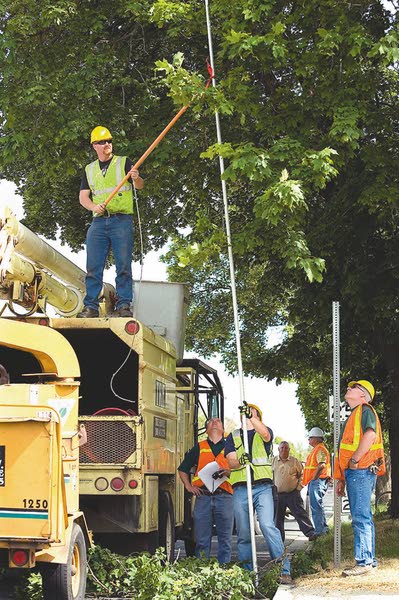
Moscow Parks and Recreation staff and T.R.E. Tree Services were shadowed Monday by protesters condemning the trimming of 18 trees along Washington Street to make room for the transport of two loads of refinery equipment by Imperial Oil/ExxonMobil up U.S. Highway 95 and Interstate 90 to its Kearl Oil Sands Project in Alberta, Canada.

T.R.E., contracting with the oil company, was granted the tree trimming permit Friday by Parks and Recreation, which oversaw the work that started at 9 a.m. Monday and finished around 1:20 p.m.

A small number of protesters, many affiliated with the grassroots conservation group Wild Idaho Rising Tide, came out to protest the city’s allowance of the trimming, which they said would encourage many more oversized loads to make their way to the tar sands project, which they see as a pending ecological disaster, using Moscow as an industrial corridor. Continue reading

Tar Sands Project an Ecological Disaster


Jean M. Chapman

Moscow-Pullman Daily News 6/28/11

There are two commercials on television touting how we “have all the natural gas we need right here in North America.” We probably do, but at what cost to our rivers, land and air?

We all follow the megaloads that are going and proposed to go through our area. This equipment is going up into northeastern Alberta and to the Athabasca oil sands. Why there? This is where Trans-Canada Oil is mining the tar sands. It is mined in two ways: Either by strip or open pit mining, or injecting steam deep into the earth to make the tars increase their fluidity, so that they can be pumped to the surface.

Tar sands are a mixture of clay, sand, water and bitumen – a heavy, black, viscous oil. In the process, cadmium, iron, lead, mercury and arsenic are released into the soil. Large amounts of hydrogen sulfide enter the atmosphere, the gas that gives Yellowstone geothermal features the “rotten-egg” smell. This one operation is the largest contributor to Canadian greenhouse gases. Continue reading

Hearing Officer Recommends OK for Megaloads


More than 200 megaloads of Korean-made oil equipment bound for Canada should be given the go-ahead to roll across northern Idaho’s scenic U.S. Highway 12, an Idaho state hearing officer ruled Monday.

Retired state Judge Duff McKee, in a 63-page ruling, discounted every protest against the megaloads from a group of residents and business owners along the twisting, two-lane highway, from safety to business interruptions to environmental harm.  His ruling is a recommendation to the Idaho Transportation Department; there’s still an opportunity for motions for reconsideration, a process that could take weeks more.

“I conclude there was no error in procedure on the part of ITD in the issuance of the permit in this case, or any other basis to interfere with the executive determinations of the department in issuing the permits in this case,” McKee wrote in his ruling.

Imperial Oil/ExxonMobil wants to ship more than 200 giant loads of oil field equipment across the Idaho highway, en route from the Port of Lewiston to the Alberta oil sands.  The loads are so large that they’ll block both lanes of the two-lane road, creating a rolling roadblock.

Read more: Hearing Officer Recommends OK for Megaloads

(By Betsy Russell, The Spokesman-Review)

Megaloads to Roll through Valley


COEUR d’ALENE – En route to northern Alberta, two “megaload” tractor-trailers will soon be passing through Coeur d’Alene.

And despite assurances from oil company spokesmen, local environmentalists are concerned about accidents and delays.

On Friday, the Idaho Transportation Department issued a pair of oversized-load permits that will allow Imperial Oil/ExxonMobil to transport large oil equipment on U.S. Highway 95 and Interstate 90. Continue reading

Activists Protest Oil Sands, Oversized Loads


About a dozen protesters weren’t discouraged Saturday by the news that the Idaho Transportation Department will soon allow at least two oversized loads of oil refinery equipment to travel through Moscow on U.S. Highway 95.

Members of Wild Idaho Rising Tide (WIRT) organized the demonstration that began mid-morning where Southview Avenue meets the highway south of downtown Moscow.  Protesters marched north on the highway through the city while carrying a 208-foot-long rope outline of one of the loads, which in real life is 23 feet wide, 208 feet long, 13.6 feet tall, and weighs 410,300 pounds.

The Idaho Transportation Department issued two permits Friday for Imperial Oil/ExxonMobil to transport the loads from the Port of Lewiston into Montana via U.S. Highway 95 and Interstate 90 beginning June 27.  The equipment is destined for the company’s oil sands project in Alberta, Canada. Continue reading

Global Protests Against Tar Sands


One day after the Idaho Transportation Department green lighted two mega-loads to travel through Idaho toward the Kearl Oil Sands in Alberta, protests against the controversial Canadian project will be staged across the globe.

Scores of protests are scheduled for London, Copenhagen, Vienna, 11 Canadian cities, and 25 cities in the United States.  A group calling itself Wild Idaho Rising Tide (WIRT) will be protesting in Moscow, where at least two of the mega-loads will roll by later this month.

Read more: Global Protests Against Tar Sands

(By George Prentice, Boise Weekly)

Oil on Lubicon Land: A Photo Essay


Melina Laboucan-Massimo, a member of the Lubicon Cree First Nation and a climate and energy campaigner with Greenpeace, describes the impacts of oil and gas developments and the recent oil spill in the traditional territory of the Lubicon Cree in northern Alberta.