Protests Planning Meetings
While TC Energy desperately seeks to offload its stranded Canadian gas assets on the Northwest with the GTN Xpress expansion project proposed for the Gas Transmission Northwest (GTN) pipeline, and pits elected Idaho politicians against their western Democrat neighbors, dozens of nonprofit organizations are coordinating authentic, public opposition to GTN Xpress. These community groups, including Wild Idaho Rising Tide (WIRT), assert that the project is inconsistent with regional efforts to transition away from reliance on polluting, planet-warming fossil fuels. Resistance to GTN Xpress continues to grow, as thousands of Northwest residents work together to demand that the Federal Energy Regulatory Commission (FERC) deny this risky plan and responsibly uphold regionally legislated goals for diminishing use of climate-changing, fracked gas. With a final FERC decision on the project expected as early as March 16 (postponed from the commission’s third Thursday, monthly meeting on February 16), we again invite you and your friends, family, and colleagues to join us in active rejection of this unnecessary fossil fuels invasion of the Northwest, as TC Energy and its subsidiary GTN scheme to increase the volume and pressure in their 62-year-old pipeline, just like TC Energy did in the decade-old Keystone tar sands pipeline, before it burst in Kansas on December 7, 2022.
In preparation for a possible March 16, FERC decision, WIRT and allies in three cities are holding in-person planning meetings to organize the next pipeline protests with eager activists across the inland Northwest. We hope that you will participate in these gatherings and encourage your trusted comrades to attend.
* Saturday, March 4, at 3 pm at The Attic, up the back stairs of 314 East Second Street in Moscow, Idaho
* Sunday, March 5, at 1 pm at the Community Building, 35 West Main Street in Spokane, Washington
* Monday, March 6, at 7 pm at the Gardenia Center, 400 Church Street in Sandpoint, Idaho
For further information, please see and share the linked coalition videos about GTN Xpress resistance and the February 13 People’s Hearing, send your written comments sharing your concerns about GTN Xpress (Docket CP22-2-000) to FERC soon, peruse the enclosed and linked information promised with the People’s Hearing announcement and covering four months of campaign activity from mid-November 2022 until mid-February 2023, contact WIRT with your questions and suggestions, and expect further updates about upcoming, responsively scheduled protests and other urgent actions. WIRT and partner groups appreciate your work and input on this crucial issue that requires even more public participation, especially in the environmental and political sacrifice zones of Idaho.
Stop GTN Xpress, January 30, 2023 Rogue Climate
People’s Hearing to Stop GTN Xpress, February 14, 2023 350PDX
How to File a Comment, Federal Energy Regulatory Commission
FERC Online: Web Applications, Federal Energy Regulatory Commission
Pipeline Impacts & Winter Updates Continue reading
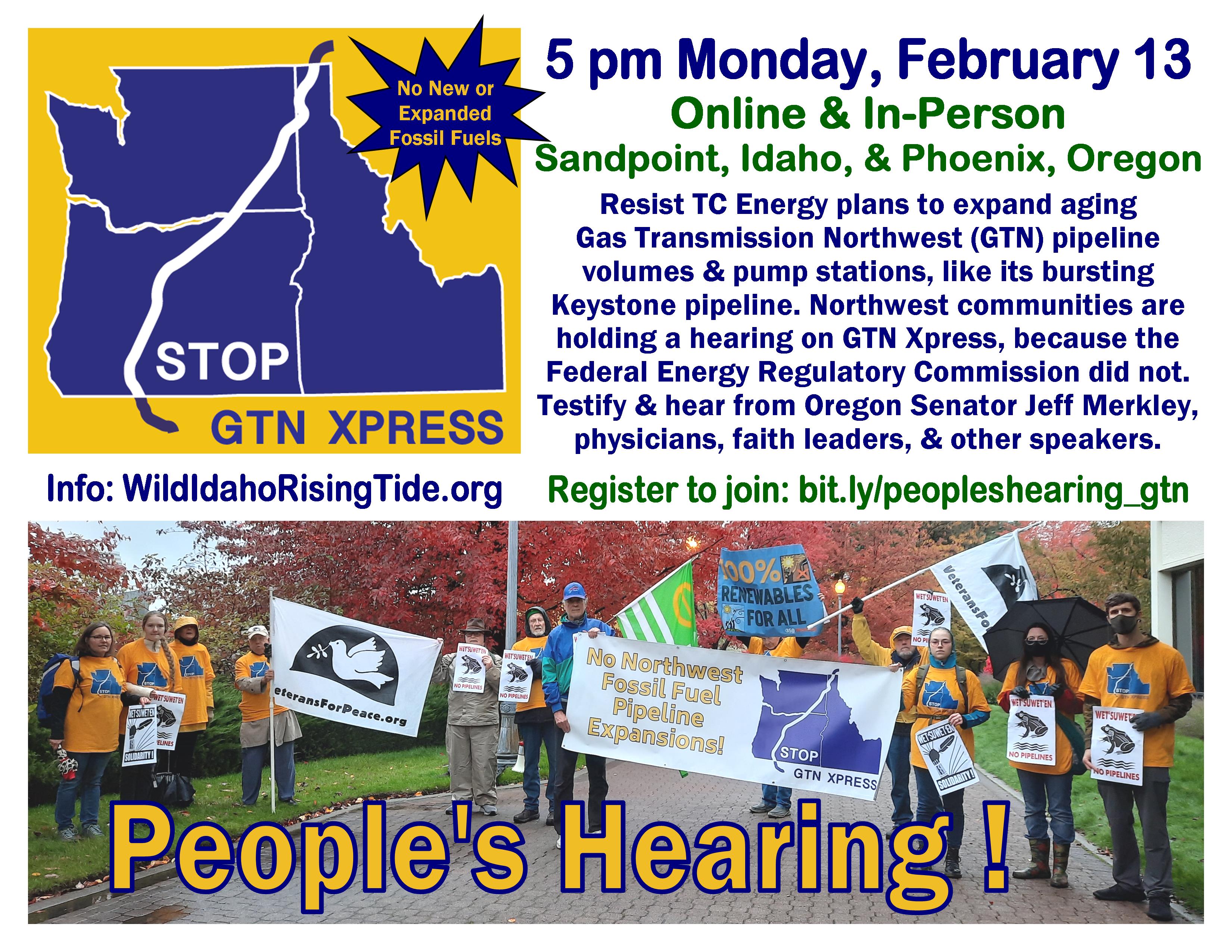

 Wild Idaho Rising Tide (WIRT) and climate activists throughout the West are organizing solidarity protests of oil trains and infrastructure, for a day of action against the Uinta Basin Railway (UBR), supporting campaigns against the Utah oil-by-rail scheme and in north Idaho, denouncing completion of BNSF Railway’s second, almost mile-long, rail bridge across the state’s largest, deepest lake: mountainous Lake Pend Oreille. Utah and Colorado comrades are calling for community-led actions on Saturday, December 10, 2022, to show that concerned citizens object to the devastating UBR project, and to pressure federal lawmakers, state representatives, and local governments to prevent building of the Uinta Basin Railway. They ask everyone to explore the #StopUintaBasinRailway action toolkit with information about the UBR and action coordination, sign a letter to Agriculture Department Secretary Tom Vilsack, demanding that he revoke the U.S. Forest Service permit for the railway, participate in actions happening in a dozen locations, register to join a remote phone bank on Tuesday, December 13, at 10 am Pacific time, and tell UBR opponents that you are interested in assisting this campaign [1-2].
 GTN Xpress & Idaho & Northwest Stakeholders
 Regional organizations and grassroots activists of 350 Spokane, Idaho Chapter Sierra Club, Palouse Extinction Rebellion, Rogue Climate, Veterans for Peace Spokane Chapter 35, and Wild Idaho Rising Tide (WIRT) request your participation and support of public protests of three corporations pushing the dangerous Gas Transmission Northwest (GTN) Xpress pipeline expansion project. We are collectively co-hosting these actions in solidarity with sovereign Wet’suwet’en land defenders and water protectors opposing Coastal GasLink pipeline construction through their unceded, indigenous territories in British Columbia, Canada. Allied groups are planning peaceful, safe, and effective citizen pickets on nearby public walkways outside fossil fuel company offices during early November, to attract a broad range of involvement and responses from the public, issue coalition groups, and media. Several partner organizations are graciously offering travel funds and providing Stop GTN Xpress/Coastal GasLink logo designs, T-shirts, signs, banners, and other equipment. Volunteer activists are eager to engage you in resistance to both Northwest gas pipelines owned by TC Energy, notorious for its Keystone XL tar sands pipeline. Please share this event announcement and flyer and other campaign outreach materials via text, social media, email, and website, invite and bring your friends, family, and protest signs, create props and coordinate carpools and various logistics, and join us at one or all of these lively demonstrations!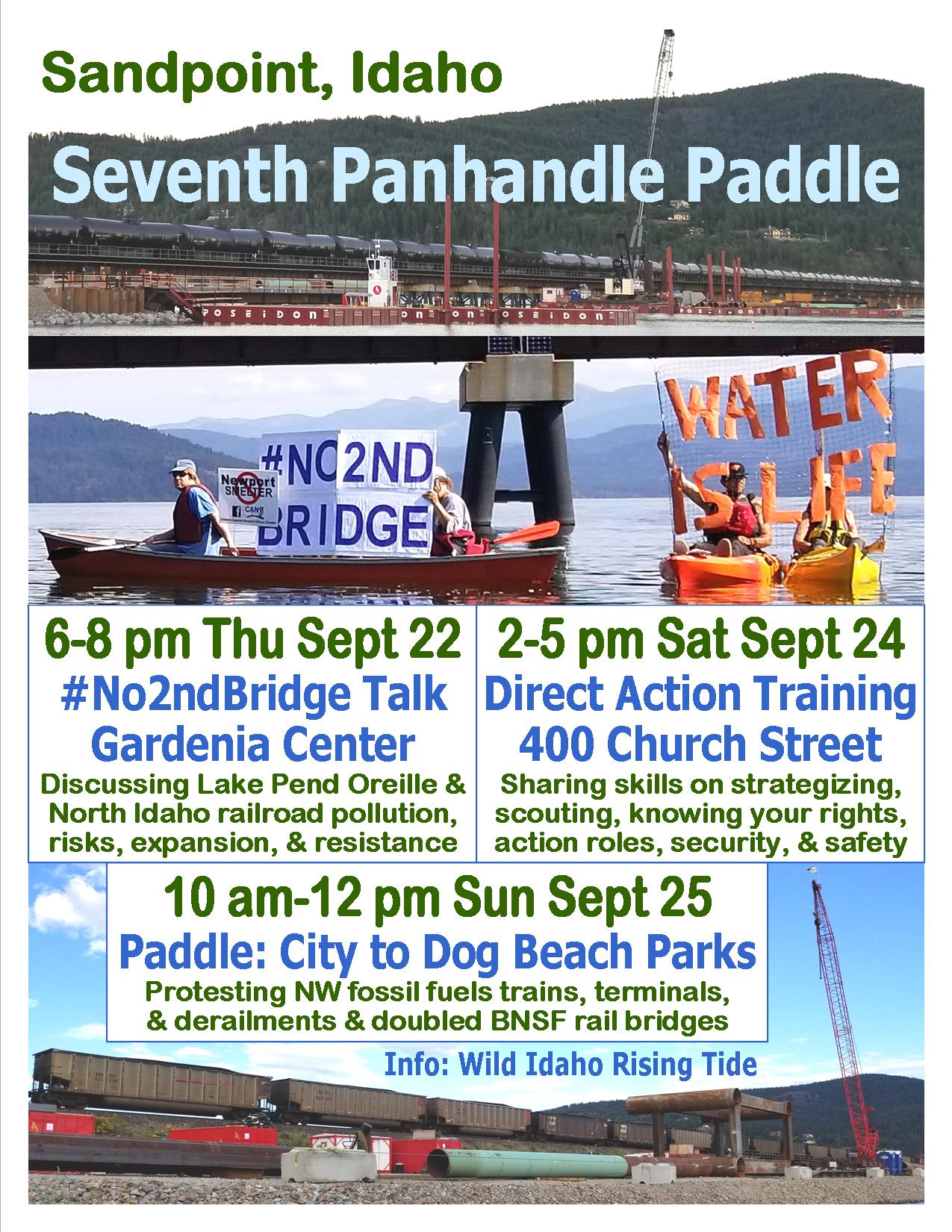
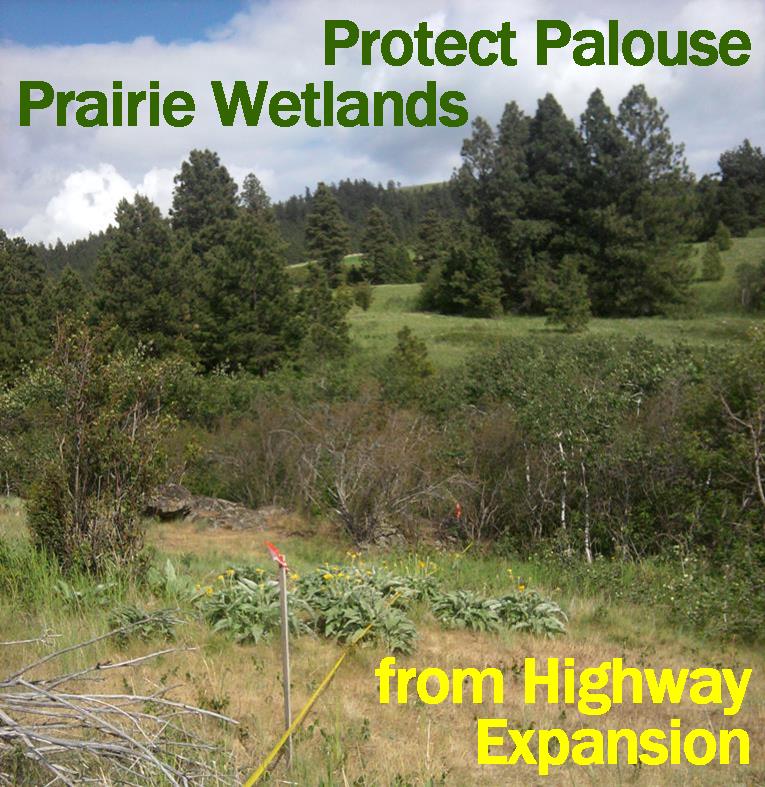 Protect Palouse Prairie Wetlands from Highway Expansion
 On Tuesday, August 2, through Saturday, August 7, Kalispel and regional tribal members and the River Warrior Society are holding the annual Remember the Water canoe journey [1]. The paddle usually voyages between Qpqpe (Sandpoint, Idaho) and the Qlispe (Kalispel) Tribal Powwow Grounds, during the days before and beginning the yearly Kalispel Powwow and around the time of the Festival at Sandpoint music concerts. Families and friends are again paddling over 35 miles in traditional, dugout, wooden and sturgeon nose canoes, through their home lands and waters in the tributaries, lake, and river of the Pend Oreille watershed. While oil and gas pipeline expansions and fossil fuels pipeline-on-rails infrastructure and transportation impose and risk further harms to indigenous people and places across Turtle Island (North America), Native neighbors continue to revive, uphold, and practice their ancient cultures and sustainable ways, through admirable endeavors like this canoe journey and culminating powwow.
