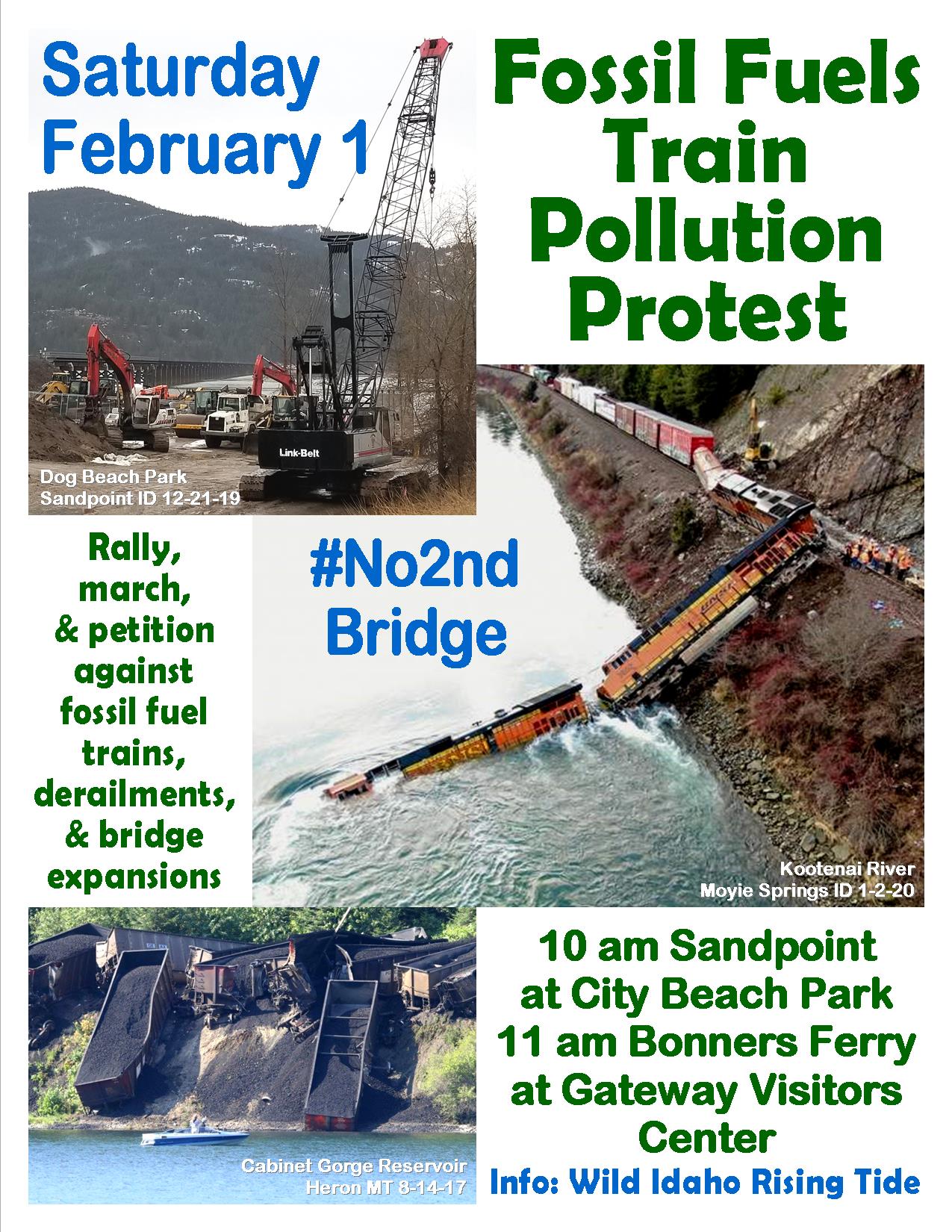
 On Saturday, February 1, please join Wild Idaho Rising Tide (WIRT) climate activists, members, friends, supporters, and allies for rallies and marches in Bonner and Boundary counties, objecting to fossil fuels and hazardous materials train pollution and risks to public and environmental health and safety, and to railroad infrastructure expansions and ongoing incidents increasing these threats, such as the rockslide derailment of two Burlington Northern Santa Fe (BNSF) Railway, mixed freight train locomotives onto the banks and submerged and leaking at least 2,100 gallons of diesel fuel and engine oil into the Kootenai River near Moyie Springs, north Idaho, since January 1, 2020.
To commemorate the one-month anniversary of this major environmental disaster, which prompted multiple, emergency response agencies to rescue both a two-person, BNSF crew and a remote, forested, international river, we are gathering at 10 am around the City Beach Park pavilion in Sandpoint, Idaho, for a brief, information sharing rally. Carpooling to the Gateway Visitors Center in Bonners Ferry, Idaho, near the city parking lot off U.S. Highway 2 and 95, we are marching at 11 am and returning to Sandpoint by 1 pm, to accommodate participants attending a later event.
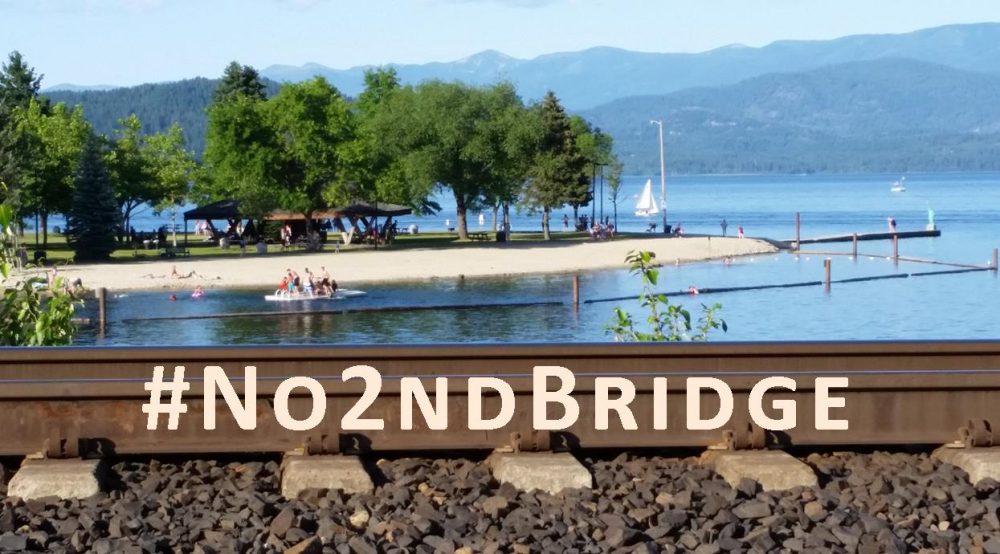
Respond early with your intentions to participate in this protest, bring your friends, family, relevant signs and banners, and warm, winter and rain gear, and contact us if you can assist with sign creation, event transportation, #No2ndBridge petition signatures, and attorney recruitment for a legal challenge insisting on a full, #No2ndBridge, environmental impact study and statement. We are demanding that government agencies enforce the remedial and preventative measures described in this announcement, as we express our resistance to further ecosystem and economic devastation imposed on rural communities, either through disaster or design, by the private profiteers of inherently perilous, fossil fuels pipelines-on-rails. Frontline, WIRT activists and allies will not relent in opposing BNSF bridge and track expansion across Sandpoint, Sand Creek, and almost one mile over Lake Pend Oreille.
Sign the Petition to Deny and Revoke Permits for the BNSF Sandpoint Junction Connector Project, and see the BNSF Kootenai River Wreck and Spill facebook album for almost 70 photos, links to nine previously posted, WIRT articles, and forthcoming updates on fisheries impacts, spill “cleanup,” and engine removal, describing the Kootenai River derailment situation closely scrutinized by WIRT [1, 2]. Local and industry news outlets printed some of the last WIRT newsletter, and we are working on media releases and comments to agencies, offering the dissenting side of this catastrophe story [3, 4].
Regional Fossil Fuels & Hazardous Materials Trains
Across the Idaho Panhandle, BNSF hauls about six each, loaded and residually empty, Powder River Basin coal and Bakken crude oil unit trains every day; Union Pacific carries three-plus Canadian tar sands and Bakken oil unit trains per week; and both pull numerous, fossil fuels and hazardous materials tank cars, intermixed with other freight, daily between interior, hydrocarbon extraction fields and West Coast refineries, power plants, and crude export terminals. Just one derailment of any of these trains could devastate entire communities and watersheds with deadly, explosive, fiery, and inhalation hazard chemicals and toxic cargo spills in the rugged river canyons of north Idaho and western Montana, vulnerable to floods, avalanches, landslides, and wildfires. First responders trained and funded by the perpetrators of anticipated derailments attempt to protect rail line communities from the harms of such tragedies, but they cannot prevent them with emergency preparation. Despite litigation to enforce better railroad procedures, hundreds of pounds of coal dust fly off uncovered coal cars every day, into the regional river sources of socioeconomic vitality.
A Decade of Idaho & Montana Derailments Continue reading
 Wild Idaho Rising Tide