Climate activists collective Wild Idaho Rising Tide (WIRT) is again rallying support for Citizens Allied for Integrity and Accountability (CAIA) and especially citizens of Payette County, southern Idaho, one of the few Columbia Basin communities directly suffering the impacts of fossil fuels extraction. We encourage you to comment by the deadline of 5 pm MDT on Friday, April 17, against the second application for a methane gas well drilling permit in 2026, filed in late March by Snake River Oil and Gas (SROG) and posted for public review on April 3 by the Idaho Department of Lands (IDL) and Idaho Oil and Gas Conservation Commission (IOGCC), as required by Idaho Code §47-316(1)(c) [1, 2]. These state agencies have opened the comment period for only ten business days. Please send your written opposition to this egregious drilling plan to comments@idl.idaho.gov or through the online contact form, with a subject line mentioning the SROG Miller 1-15 drilling application and permit [3].
Our regional allies organizing in the Treasure Valley urgently need your support to help stop this dangerous, impending, oil and gas well drilling located incredibly close to Fruitland residents, whom the state is forcing to lease their privately owned mineral resources to SROG. Although IDL and IOGCC have yet to respond to any public comments sent by citizens and groups about past permits, the current situation requires immediate, vigorous, legal pressure and broad participation in this public process, to halt this deceitful invasion of Idahoans’ rights and properties. CAIA raised concerns among organizational members of the Stop Northwest Gas Expansion coalition on March 29: Please read this enclosed call to action written by CAIA board of directors president Shelley Brock, and email CAIA at info@integrityandaccountability.org to receive further, vital comment suggestions. We also invite you to revisit our previous forced pooling comment alert and listen to testimony provided by Fruitland area citizens, at a packed, IDL, public hearing on the SROG application to force hundreds of property owners to lease their gas and allow nearby drilling against their will. WIRT recorded their passionate input and aired it on the December 24, 2025, Climate Justice Forum program broadcast at 90.3 FM and online by progressive, volunteer, community station KRFP Radio Free Moscow [4, 5].
Although actively offering solidarity to courageous, fossil fuels frontline communities of resistance should motivate and elevate all of our shared work, this proposed, SROG, Miller 1-15 methane well could not only drill in close proximity to crucial Fruitland infrastructure, but could also supply the nearby Northwest gas pipeline system that Williams Companies is attempting to expand with new pipes in the Columbia River Gorge and central Washington, toward an envisioned, water- and energy-intensive data center in Quincy [6]. TC Energy’s connected Gas Transmission Northwest (GTN) pipeline network has already experienced three major compressor station snafus, mostly in Idaho, since its GTN Xpress project increased methane volumes and pressures in mid-December 2024. In all of these related issues, the potential for illegal harms imposed by SROG, state permitters, and pipeline owners on local people and their air, water, and places necessary for life loom too large to ignore. Please assist CAIA in building a case against this force pooled methane well, by responding with your comments and loading the public record with documents challenging a permit for this recklessly located methane well.
Well Drilling Permit Background
From Citizens Allied for Integrity and Accountability (CAIA)
“CAIA is an Idaho, all-volunteer, nonpartisan nonprofit formed in 2015 primarily to protect citizens from irresponsible oil and gas development in residential areas and near our iconic rivers and sensitive wildlife areas. Since then, our mission has expanded to include several other issues involving the privatization of public water systems, the discharge of recycled municipal wastewater containing per- and polyfluoroalkyl substances (PFAS) and other contaminants of emerging concern (CECs) into our irrigation systems and consequently into our drinking water aquifers, and the injection of ‘processed’ landfill methane gas that has not been tested for PFAS into natural gas pipelines for distribution into homes and businesses.
In 2015, we won a precedent-setting, federal lawsuit based on the constitutional rights of citizens to receive just and reasonable terms in oil and ‘natural’ gas integration (forced pooling) contracts. It took us nearly three years of exhaustive outreach and fundraising to see that lawsuit through to a successful conclusion. That success somewhat leveled the playing field for objecting landowners for several years, by influencing regulators to establish better terms on subsequent integration orders, which included no hydraulic fracturing (‘fracking’) treatments of wells, shorter term leases, no surface or subsurface use on integrated properties, etc.
However in 2023, the state legislature passed H120, an industry-sponsored bill designed to hobble CAIA and objecting property owners, by handing oil companies the authority to dictate which terms objectors are entitled to when they are integrated (i.e., which terms are ‘just and reasonable’). It also gives oil companies the authority to occupy the surface of integrated properties, now mimicking laws for split estate land, by requiring that operators try to avoid surface occupation to the maximum extent possible. But if both parties don’t come to a surface use agreement within a short period of time, the company can simply pay the bond and move in with their equipment.
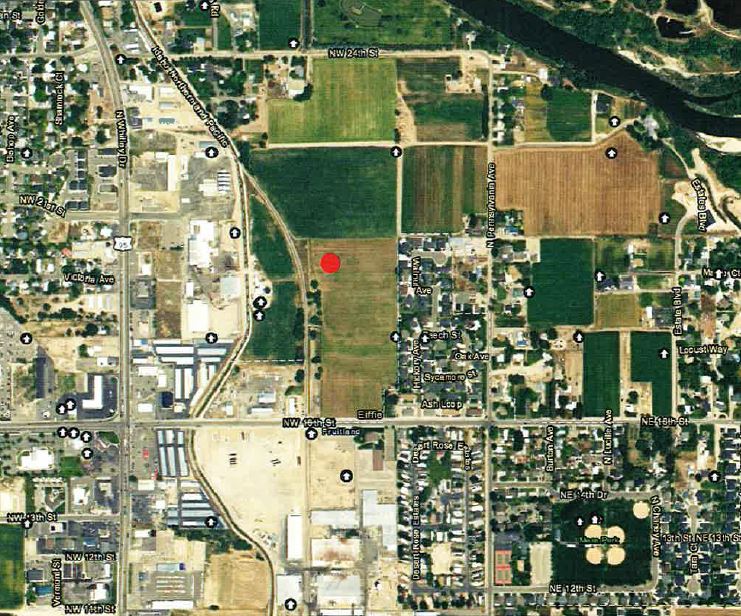
The latest integration application filed in September 2025, Docket No. CC-2025-OGR-01-005, was the first major test of this legislation. Arkansas-based Snake River Oil and Gas (SROG) sought to integrate literally hundreds of objecting residential properties and businesses in the center of the City of Fruitland, surrounding a sliver of Payette County land where the well is slated to be drilled.
CAIA jumped into action when we saw the application and how many families could be directly affected by volatile drilling and infrastructure only a few hundred feet away from their homes in high-density subdivisions, along with the low-income housing units, assisted living centers, Saint Luke’s and Saint Alphonsus medical centers, emergency rooms, and cancer treatment and hospice facilities, churches, childcare centers, schools, playgrounds, and sports complexes all within one-half to one mile away.
Our attorney, James Piotrowski, filed an objection on behalf of a group of CAIA members, who are among the integrated property owners, which triggered a hearing before Judge Scott Zanzig with the Office of Administrative Hearings in December. We rallied citizens and media for the hearing. James was powerful, as always, in his presentation and had both SROG landman Wade Moore and CEO Richard Brown on their heels through much of the hearing. He was able to pressure them into admitting on the record that they should know within the first year of drilling whether or not this well would produce (to justify shorter leasing terms), that they shouldn’t need to frack the well or traverse either the surface or subsurface of objectors’ properties, that they didn’t need to use adjacent public roads to access the well site, that everyone should be getting paid more than the standard $150 per acre signing bonus, and suggested that objectors should be paid more than the statutory one-eighth minimum royalty in Idaho.
SROG’s total indifference to the plight of objecting property owners was illustrated repeatedly throughout the hearing, including when Richard Brown was unable to identify on the map from his own integration application where the planned well site was, without his landman’s help. He also feigned ignorance when our attorney asked him what the bond would be for this well (it’s a measly $6,000 per well in Idaho).
The Fruitland city administrator complained that drilling a well in that location could dramatically affect the value and development potential of adjacent city owned land. Other comments were impressive and demonstrated how angry and concerned homeowners were about a well being drilled so close to their homes, water wells, and businesses. In fact, this company has drilled other hydrocarbon wells right next to the Payette River and under the City of Fruitland’s water intake and wastewater treatment plants, despite the city’s heated protests.
Throughout the hearing, Judge Zanzig seemed really tuned in to our comments and sympathetic to James’ badgering of the SROG representatives, even denying several objections from their attorney and extending the public comment period another week and the deadline for briefs out two weeks. We were all feeling cautiously optimistic by the end of the hearing. We took advantage of the extended comment period, by loading the record with documentation about the risks of drilling so close to homes, the threats it presents to streets, water wells, and public health, and the evidence of SROG’s irresponsible behavior for years, concerning acidizing and recompleting wells without permits, ignoring U.S. Environmental Protection Agency (EPA) notices of violations for illegal emissions from their facilities, etc.
When the attorneys’ briefs were filed, we discovered that the City of Fruitland was protesting nearly two dozen acres of land that SROG was counting as leased, although the city has steadfastly refused to ever lease to them, and over 21 of those acres were actually public roads that SROG had leased from Highway District 1, even though they were under city jurisdiction and not the Highway District. Fruitland submitted both a public comment and their brief, arguing that these were bogus leases and shouldn’t count in SROG’s 55 percent voluntarily leased quota required for integration. They also suggested that the state should halt the process and review all of SROG’s leases, since there were clearly additional, questionable leases in their application. SROG argued that Fruitland was basically too late in their protest, that they should have noticed it sooner, and that, even without the acres in question, they had secured barely enough (56.1 percent) leases to validate integration, so their protests should be disallowed. We highlighted these discrepancies in our brief, too. Shortly thereafter, Highway District 1 sent a letter to SROG, which all the involved parties were copied on, demanding that they terminate the lease, and complaining that the company had lied to them to get them to sign.
On January 15, much to our disappointment, the judge presented his final ruling recommending that the Idaho Department of Lands (IDL) approve the integration application with basically the only suggested change of an increase in the minimum signing bonus [7]. He completely ignored the city’s arguments and commented that citizens should protest the actual drilling permit when it’s filed, rather than the integration application. We were monumentally disappointed that the hearing officer had relied only on the amended statute, repeatedly falling back on the state’s interpretation (through H120) of the term ‘just and reasonable’ to justify his ruling. We suspect that he caught hell from Governor Little and Attorney General Raul Labrador, for showing us as much leeway as he did during the hearing, and for extending the public comment and brief filing deadlines.
On January 28, the oil and gas division administrator for IDL issued the order for integration. On February 16, CAIA filed an appeal to the integration order, on behalf of the objecting owners. On February 23, Snake River Oil and Gas filed an objection to our appeal and requested its dismissal, based on their opinion that it was filed ‘untimely.’ On March 13, our appeal was heard by the Idaho Oil and Gas Conservation Commission (IOGCC) at a special meeting, where our attorney James Piotrowski and SROG attorney Michael Christian presented arguments. On March 18, the commission, by unanimous vote, denied the appeal and dismissed it as being untimely. While our attorney still believes he filed in time, he doesn’t think that we have any chance for judicial review and that we would exhaust our funds trying.
This leaves us with one last hope: Fighting the drilling permit that SROG was undoubtedly positioned to submit on March 30. We are sincerely hoping and praying that you might be able to help us block approval of the permit. Once the application is filed, we only have ten business days to object, so we are working to have all our ducks in a row after that filing occurs. Please let us know if we can provide any additional information that might influence you to lend us a hand right now, whether it’s merely sharing advice you have garnered from similar battles you’ve fought or taking an active part in helping to file objections to the permit. We have never faced such an outrageous drilling proposal as the one in front of us, and we really feel that if we can’t stop this one, any future efforts to protect Idaho from irresponsible oil and gas operations may hit a brick wall. This truly could be the end of the trail for us on the oil and gas front.
Thanks for your consideration, and God bless you for everything you are doing to protect those of us here now and future generations.” ~ CAIA
[1] Application for Permit to Drill Miller 1-15, April 3, 2026 Snake River Oil and Gas/Idaho Oil and Gas Conservation Commission
[2] Permit Applications, 2026 Idaho Oil and Gas Conservation Commission
[3] Contact Us, 2026 Idaho Oil and Gas Conservation Commission
[4] Comment by 12/24 Opposing Forced Idaho Gas Drilling!, December 23, 2025 Wild Idaho Rising Tide
[5] Climate Justice Forum: Idaho Oil & Gas Forced Leasing Testimony & New Highway 95 Weather Hazards near Moscow, Jindalee Oregon Lithium Mine Approval & Impacts 12-24-25, December 24, 2025 Wild Idaho Rising Tide
[6] New Gas Pipelines in Gorge, Eastern Washington Could Directly Supply Data Centers, March 26, 2026 Columbia Insight
[7] Findings of Fact, Conclusions of Law, and Recommended Order (CC-2025-OGR-01-005), January 15, 2026 W. Scott Zanzig, Lead Administrative Law Judge/Hearing Officer


No Idaho Force-Pooled Gas Well Drilling Permit!